
During the medieval period from the point of view of antiquity, continuity, variety, extent and beauty, Rajasthan is rich in prose-writing. Prose may be divided into the following heads: (1) Religious, (2) Historical, (3) Creative, and (4) Miscellaneous, including translations.
Religious Prose
Religious writings by the Jains, particularly in the form of Balavbodh and Tabba are important. They are written to explain the Sanskrit and Prakrit religious texts.
In Balavbodh the main point is elucidated. In order to make it intelligible to lay readers, popular contextual kathas or stories are given. Such kathas are notable not only as aids to understanding but also occasionally provide examples of creative prose. They provide material for study of linguistic developments.
In Tabba mostly the word-meanings or literal translations are given.
The early available specimens of prose writing are those of Jains.
Besides the incorporation of kathas a number of rhymed prose were written in the medieval age.
Historical Prose
Jain chronicles of sects, gacchas, Acharyas, caste or family, etc., are important for history but the literary element is negligible in them. Historical and heroic prose has been written in abundance. It is important from the point of view of history, culture and literature, and is available in various forms such as (1) Vansa-wali, (2) Pidhiyawali, (3) Pattawali, (4) Khyat, (5) Vat or Bat, (6) Vigat, (7) Hakigat, (8) Hal, (9) Vacanika, and (10) Dawavait. The first three are genealogical in nature. Khyat is history and includes Vansawall. Generally it consists of connected narratives and descriptions. Vat means a story and provides description or short history of some person, event, community, context etc. Vigat gives an account of any place, object etc. Sometimes it is difficult to make a clear distinction between Khyat, Vat and even Vansawall. These are all descriptive, narrative or informative in nature. Lively and touching descriptions are sometimes found in such works.
Creative Prose
Vag Vilas and Acaldas Khici ri Vacanika, already mentioned, are the earliest examples of creative prose. Both are in vacanika style. The Vat or Bat literature ranks high in this field. Vats are meant for actual story-telling in a particular style. There existed a sort of personal touch between the talker and the listeners. The `hunkara` or to utter `him` to express assent was essential from one of the listeners. Their main purpose was pastime but they also abound in knowledge. They are portraits of individual characters, descriptions of community or assemblage and description or narration of events, places and situations. The vats are to be fully enjoyed in their environmental entirety, such as the skill of the talker, the style, curiosity of the listener and the time. In fact, they belong, to folk-literature and have been changing with the march of time.
The themes of the vats are heroism, love, humour, niti (ethics), curiosity and nirved (detachment). The plots of the vats are (1) historical, (2) semi-historical or (3) imaginary. The first deals with genealogies, and historical characters or events in detail.
The style of a vat is interesting. Certain vats are excellent literary compositions, for their brevity, selective diction, vivid description, suggestiveness and depth of emotion. Many `proverb-based stories` are a unique feature of the vat literature.
Though the katha is a synonym to vat, it primarily deals with the religious and mythological topics. The language of the vats is mostly Rajasthani and Rajasthani mixed with Khadi Boll and Urdu and that of katha is Rajasthani and Rajasthani mixed with Braj.
Besides these, good examples of prose are found in various records, letters, inscriptions, recollections and reminiscences. Rajasthani versions of Vaital Pancvinstika and other such story books are available. Deidan Naita`s Vaital Paccisi is one such example.
Thus prose during the medieval period in Rajasthan is rich and varied with its religious, historical and creative variety.
Medieval Rajasthani Prose
Medieval Rajasthani Prose is antique in nature and at the same time is known for its richness with a plethora of various types of prose.
Recently updated articles in Indian Literature
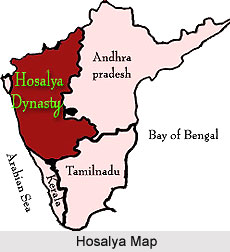
Gadyakarnamrita
Gadyakarnamrita is a 13th-century Sanskrit literary work written mainly in prose. It describes the ninety-day battle at Srirangam between the Hoysala...
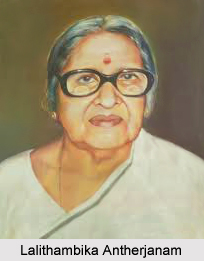
Women Writers in Malayalam Literature
Women writers in Malayalam literature have worked incessantly to make a place for their literary works. In the earlier periods, they were completely o...
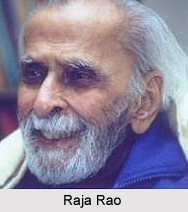
Comrade Kirillov, Novel by Raja Rao
Comrade Kirillov, a distinctive creation of Raja Rao, is presented as a brief yet incisive novelette that offers an ironic portrayal of the self-contr...
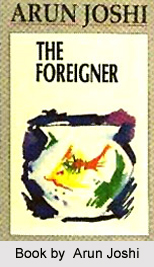
The Foreigner, Novel by Arun Joshi
“The Foreigner” is a book authored by Arun Joshi and published by Vision. It is an illustrious creation in the entire career of Arun Joshi, the famous...
Short Story in Telugu Literature
Short Story in twentieth century Telugu Literature was extremely popular and growing in and developing in a major way. Their popularity was greatly fa...
Related articles in Indian Literature
Mythological Themes in Indian Literature
Mythological themes in Indian literature have been integral to every ancient and contemporary writer and their path to f
Literature During Gupta Age
It is during the Gupta Age literature in the form of poetry, epos and drama gained a colossal importance.
Literature of Aravidu Dynasty
Sanskrit and Telugu were the popular literary medium of communication during Aravidu dynasty.
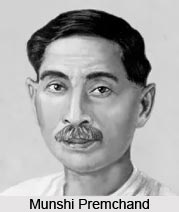
Munshi Premchand
Munshi Premchand was a legendary Indian writer notable for his modern Hindustani literature. A writer of a very high caliber, Premchand`s writings hav...
Sanskrit Poets
The names of some of the Sanskrit Poets are Bharavi, Devarshi Ramanath Shastri, Jayadeva and Srinivas Rath.