
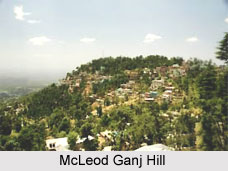
 McLeod Ganj is a suburb of Dharamshala in Kangra District of Himachal Pradesh. McLeod Ganj is the headquarters of the Tibetan government in exile and the residence of His Holiness the 14th Dalai Lama.
Mcleod Ganj
McLeod Ganj is a suburb town of Dharamshala in Kangra District of Himachal Pradesh. There are many tourist places here that attract tourist from different places.
Introduction
McLeod Ganj is a suburb of Dharamshala in Kangra District of Himachal Pradesh. McLeod Ganj is the headquarters of the Tibetan government in exile and the residence of His Holiness the 14th Dalai Lama.Location of McLeod Ganj
McLeod Ganj has an average elevation of 2,082 metres (6,831 feet). McLeod Ganj was named after Sir Donald Friell Mc Leod, a Lieutenant Governor of Punjab. Mc Leod Ganj is known as "Little Lhasa" or "Dhasa" because of its huge population of Tibetan refugees. The Tibetan government-in-exile is headquartered in McLeod Ganj.
History of Mcleod Ganj
 History of McLeod Ganj covers with the rich history of Sikhs rule to the British era.
In March 1850, McLeod Ganj was annexed by the British East India Company after the Second Anglo-Sikh War, and soon a subsidiary cantonment for the troops stationed at Kangra District of Himachal Pradesh was established on the slopes of Dhauladhar Mounatin Range, on empty land, with a Hindu rest house or dharamshala; hence the name for the new cantonment, Dharamshala.
During the advent of British rule in India, McLeod Ganj was a hill station where the British spent hot summers, and around the late 1840s, when the district headquarters in Kangra District became overcrowded. The British officials moved two regiments to Dharamshala.
A cantonment was established in 1849, and in 1852 Dharamshala became the administrative capital of Kangra district of Himachal Pradesh. By the year 1855, McLeod Ganj had two important places of civilian settlement, McLeod Ganj and Forsyth Ganj, named after a Divisional Commissioner.
In the year 1860, the 66th Gurkha Light Infantry, later renamed the historic 1st Gurkha Rifles was moved to Dharamshala. Soon 14 Gurkha paltan villages were established nearby and the Gurkhas patronised the ancient Shiva temple of Bhagsunath.
Lord Elgin, the British Viceroy of India (1862-1863), liked the area so much that at one point he suggested it be made the summer capital of India. He died at Dharamshala while on a tour there, on 20th November 1863, and lies buried at the St. John in the Wilderness at Forsyth Ganj, just below McLeod Ganj. His summer residence, Mortimer House, became part of the private estate of Lala Basheshar Nath of Lahore and was acquired by the Government of India to house the official residence of the Dalai Lama.
The original Tea House built by Lord Elgin and catered to by a local grocery store called Nowrojee and Sons continues to prosper to this date as a hangout for visitors to McLeodGanj.
In March 1959, Tenzin Gyatso, the 14th Dalai Lama, fled to India after the failed uprising in 1959 in Tibet against the Communist Party of China. The Indian Government offered him refuge in Dharamshala, where he set up the Government of Tibet in exile in 1960, while McLeod Ganj became his official residence and also home to several Buddhist monasteries and thousands of Tibetan refugees. Over the years, McLeod Ganj evolved into an important tourist and pilgrimage destination, and has since grown substantially in population.
Towns of Forsyth Ganj and McLeod Ganj
The twin towns of Forsyth Ganj and McLeod Ganj, continued to grow steadily in the coming years, and by 1904 had become important centres of trade, commerce and official work of Kangra District. But much of the town was destroyed by the devastating earthquake on April 4, 1905 which occurred in the Kangra valley. The earthquake destroyed most buildings in Kangra, Dharamshala, and McLeodGanj - even the Bhagsunag Temple was destroyed. Thereafter district headquarter offices were shifted to a lower part. In March 1959, Tenzin Gyatso, the 14th Dalai Lama, came to India after the failed uprising in 1959 in Tibet against the Communist Party of China. The Indian Government offered him refuge in Dharamshala. With time McLeod Ganj became his official residence, and also home to several Buddhist monasteries and thousands of Tibetan refugees. Over the years, McLeod Ganj evolved into an important tourist and pilgrimage destination, and has since grown much in population.
Tourism in McLeod Ganj
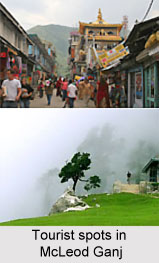
Tourism in Mcleod Gang is dealing with the tourist sectors of both landscape beauties, ancient temples of Hindu Gods and goddess. These tourist sectors are the Buddhist Monasteries, Dalai Lama Temple, Mani Lakhang Stupa, St. John in the Wilderness, Triund Hill and Dal Lake.
The tourist sectors in McLeod Ganj complete the wanderlust of adventure, pilgrimage and nature tourism. The tourism is an important industry in McLeod Ganj region. This region is a small hilly hamlet in Himachal Pradesh.
Most of the tourists and the people come here to study Tibetan-Buddhism, culture, crafts and traditions. The town is also known for Tibetan handicrafts, thangkas, Tibetan carpets, garments and other souvenirs.
Tibetan Sites in McLeod Ganj : The most important Buddhist site in the town of McLeod Ganj is Tsuglagkhang or Tsuglag Khang, which is also known as Dalai Lama`s temple. It has statues of Shakyamuni, Avalokitesvara, and a statue of Padmasambhava (Guru Rinpoche). Other Buddhist and Tibetan sites in McLeod Ganj include the Namgyal Monastery, the Tibetan Institute of Performing Arts, Gompa Dip Tse-Chok Ling (a small monastery), the Library of Tibetan Works and Archives, Gangchen Kyishong (called Gangkyi for short by Tibetans and the premises of the Tibetan government-in-exile), Mani Lakhang Stupa, Nechung Monastery, and Norbulingka Institute, which is 8 kilometres away. The 17th Karmapa, Ogyen Trinley Dorje, lives near Dharamshala, in Gyuto monastery in Sidhbari. Dharamshala International Film Festival (DIFF) Dharamshala International Film Festival (DIFF) is debuted in McLeod Ganj during the first four days of November 2012, showing recent Indian and world cinema, including fiction, documentaries and shorts. The panel discussions and master classes with filmmakers from India and abroad also took place. Dharamshala International Film Festival (DIFF) was presented by White Crane Arts & Media trust, established by filmmakers Ritu Sarin and Tenzing Sonam to promote contemporary Indian, Pan Asian and European art, cinema and independent media practices in the Himalayan Mountainous region.
Other Tourists Towns in McLeod Ganj : The major towns near Mc Leod Ganj include Dharamshala, Palampur, Kangra, Tatwani and Machhrial. Other nearby spiritual attractions in McLeod Ganj include Chinmaya Tapovan (a Hindu retreat centre), Osho Nisarga (an Osho retreat centre), and Chamunda (a pilgrimage place for Hindus). Other tourist spots include Trinud Hill, Galu Temple, Dharmakot and Dhauladhar Mountain Range. From Mc Leod Ganj, one can see Dhauladhar Mountain Range very near.
Triund Hill in McLeod Ganj : Triund Hill is a ridge that overlooks the Dhauladhar Mountain Region, where the sanctuary is located. This sanctuary is one of the most important tourist locations in Mc Leod Ganj. Triund Hill ridge has an elevation between 2,810 and 2,875 metres. It is a one-day trek 10 kilometres (one way) from McLeod Ganj bus stand and under 6 kilometres (one way) from Galu temple near Dharamkot. The trail is rocky and cut in steps at some places. From Galu temple the trail starts as a gentle ascend till Magic View café. After the café, the ascent is a tad steeper, finally cumulating in a steep final one kilometre stretch through a forest of Deodars and Rhododendron. This final stretch through the woods is known as 22-curves, because of the 22 switchbacks that one has to walk through to get to Triund Hill Range.
St. John in the Wilderness : St. John in the Wilderness is an Anglican church which is located in the forest near Forsyth Ganj. The Neo-Gothic stone building of the church was constructed in the year 1852 that is during the rule of British East India Company. St. John in the Wilderness also has a memorial of the British Viceroy in India, Lord Elgin, and an old graveyard. The church building is also noted for its Belgian stained-glass windows donated by Lady Elgin.
Dal Lake : Dal Lake is focused by all the tourists of Indian and foreign while visiting this place. This is small lake located around three km from Mc Leod Ganj. While visiting this place St. John in the Wilderness and Dal Lake one can see the village school of Tibetan children. An annual fair is held here in August or September, and is attended mainly by the Gaddi Community of Mc Leod Ganj. There is a small spring and an old temple near Dal Lake.
The tourist sectors in McLeod Ganj complete the wanderlust of adventure, pilgrimage and nature tourism. The tourism is an important industry in McLeod Ganj region. This region is a small hilly hamlet in Himachal Pradesh.
Most of the tourists and the people come here to study Tibetan-Buddhism, culture, crafts and traditions. The town is also known for Tibetan handicrafts, thangkas, Tibetan carpets, garments and other souvenirs.
Tibetan Sites in McLeod Ganj : The most important Buddhist site in the town of McLeod Ganj is Tsuglagkhang or Tsuglag Khang, which is also known as Dalai Lama`s temple. It has statues of Shakyamuni, Avalokitesvara, and a statue of Padmasambhava (Guru Rinpoche). Other Buddhist and Tibetan sites in McLeod Ganj include the Namgyal Monastery, the Tibetan Institute of Performing Arts, Gompa Dip Tse-Chok Ling (a small monastery), the Library of Tibetan Works and Archives, Gangchen Kyishong (called Gangkyi for short by Tibetans and the premises of the Tibetan government-in-exile), Mani Lakhang Stupa, Nechung Monastery, and Norbulingka Institute, which is 8 kilometres away. The 17th Karmapa, Ogyen Trinley Dorje, lives near Dharamshala, in Gyuto monastery in Sidhbari. Dharamshala International Film Festival (DIFF) Dharamshala International Film Festival (DIFF) is debuted in McLeod Ganj during the first four days of November 2012, showing recent Indian and world cinema, including fiction, documentaries and shorts. The panel discussions and master classes with filmmakers from India and abroad also took place. Dharamshala International Film Festival (DIFF) was presented by White Crane Arts & Media trust, established by filmmakers Ritu Sarin and Tenzing Sonam to promote contemporary Indian, Pan Asian and European art, cinema and independent media practices in the Himalayan Mountainous region.
Other Tourists Towns in McLeod Ganj : The major towns near Mc Leod Ganj include Dharamshala, Palampur, Kangra, Tatwani and Machhrial. Other nearby spiritual attractions in McLeod Ganj include Chinmaya Tapovan (a Hindu retreat centre), Osho Nisarga (an Osho retreat centre), and Chamunda (a pilgrimage place for Hindus). Other tourist spots include Trinud Hill, Galu Temple, Dharmakot and Dhauladhar Mountain Range. From Mc Leod Ganj, one can see Dhauladhar Mountain Range very near.
Triund Hill in McLeod Ganj : Triund Hill is a ridge that overlooks the Dhauladhar Mountain Region, where the sanctuary is located. This sanctuary is one of the most important tourist locations in Mc Leod Ganj. Triund Hill ridge has an elevation between 2,810 and 2,875 metres. It is a one-day trek 10 kilometres (one way) from McLeod Ganj bus stand and under 6 kilometres (one way) from Galu temple near Dharamkot. The trail is rocky and cut in steps at some places. From Galu temple the trail starts as a gentle ascend till Magic View café. After the café, the ascent is a tad steeper, finally cumulating in a steep final one kilometre stretch through a forest of Deodars and Rhododendron. This final stretch through the woods is known as 22-curves, because of the 22 switchbacks that one has to walk through to get to Triund Hill Range.
St. John in the Wilderness : St. John in the Wilderness is an Anglican church which is located in the forest near Forsyth Ganj. The Neo-Gothic stone building of the church was constructed in the year 1852 that is during the rule of British East India Company. St. John in the Wilderness also has a memorial of the British Viceroy in India, Lord Elgin, and an old graveyard. The church building is also noted for its Belgian stained-glass windows donated by Lady Elgin.
Dal Lake : Dal Lake is focused by all the tourists of Indian and foreign while visiting this place. This is small lake located around three km from Mc Leod Ganj. While visiting this place St. John in the Wilderness and Dal Lake one can see the village school of Tibetan children. An annual fair is held here in August or September, and is attended mainly by the Gaddi Community of Mc Leod Ganj. There is a small spring and an old temple near Dal Lake.
Recently updated articles in Hill Stations in India
History of Male Mahadeshwara Hills
The history of the Male Mahadeshwara Hills is deeply rooted in legend and devotion, tracing back nearly six centuries. Associated with Saint Mahadeshw...
Kullu - Himachal Pradesh
Kullu is located in Kullu District of Himachal Pradesh. Kullu is one of the most beautiful hill stations of the country. Kullu is popularly known as t...
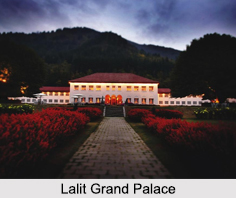
Lalit Grand Palace
Lalit Grand Palace is 5 Star Hotel, which was earlier the summer residence of Maharaja Pratap Singh of Dogra Dynasty.
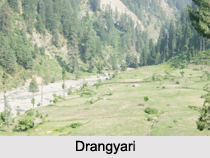
Drangyari
Drangyari is hill station in Kashmir Valley of Jammu and Kashmir which attracts tourists for the natural beauty.
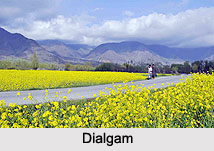
Dialgam
Dialgam is a hill station in Jammu and Kashmir. For its location, this hill station is noted to the tourists as the spot of refreshment.
Related articles in Hill Stations in India
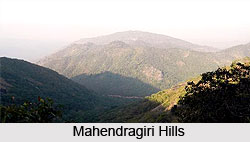
Mahendragiri Hill
Mahendragiri is a place of great scenic beauty. The place is surrounded on three sides by hills and thick growth of wild trees.
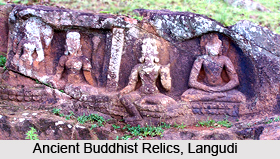
Langudi Hill
Langudi Hill, Odisha is a significant Buddhist archaeological site containing ruins of Pushpagiri University, rock-cut caves, Buddhist stupas and nume...
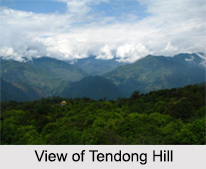
Tendong Hill
Tendong Hill in South Sikkim is located at an altitude of 8530 ft. The hill is deeply revered by the local villagers.
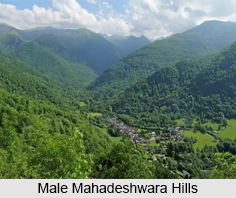
Male Mahadeshwara Hills
The Male Mahadeshwara Hills is one of the popular sites of tourism in the state of Karnataka and is known for the sacred Male Mahadeshwara Hills Templ...
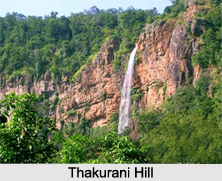
Thakurani Hill
Thakurani Hill is a residual sedimentary hill in Odisha and it is the place of attraction in Keonjhar District.