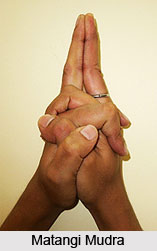
 Matangi Mudra releases stress and strengthens the breathing cycle of the body. Matangi is referred to the "God of Inner Harmony" and royal ruler ship. It is performs to be therapeutic for many health troubles. Matangi Mudra strengthens the breathing rhythm around solar plexus and balances energy in this area. This mudra also soothes the hampered digestion process. People with high blood pressure should do this mudra in moderation.
Steps for Matangi Mudra
Matangi Mudra can be done when feeling low energy or low enthusiasm. This can be done as and when required or 3 times a day for 4 minutes each time.
•Fold hands in front of the solar plexus (stomach area).
•Now extend both middle fingers and join them at the tips.
•Start breathing up to diaphragm and observe the solar plexus and breathing at a same time.
•Direct attention to the breath in the stomach area.
•This mudra is extremely useful for overall inner harmony of mind and body.
Benefits of Matangi Mudra:
Matangi Mudra basically serves to be effective practice for digestion. Apart from this, Matangi mudra helps to cure other traumatic diseases.
1. Activates solar plexus and digestion.
2. This mudra strengthens the breathing impulse in the solar plexus and balances the energies in this area.
3. This mudra helps to induce the wood element which is the representation of new beginning and the earth element which is the representation of the intensity of life.
4. Matangi mudra facilitates the heart, stomach, liver, duodenum, gallbladder, spleen, pancreas and kidneys.
5. This mudra calms down the heart and resolve inner tension.
6. Practising this mudra helps to relieve vague pain and tension in the jaw.
This article is a stub. You can enrich by adding more information to it. Send your Write Up to content@indianetzone.com