
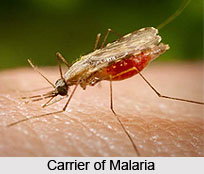
 Malaria or intermittent fever is a mosquito-borne serious infectious disease caused by protozoa Plasmodium. The word malaria comes from the Italian "mala aria", meaning bad air as it was once supposed to be caused by bad air. It is one of the most widespread diseases in the world, especially in tropical and subtropical regions and people living in marshy areas are more prone to this disorder.
Malaria
Malaria is a mosquito-borne serious infectious disease that causes the enlargement of liver, spleen and anaemia.
Introduction
Malaria or intermittent fever is a mosquito-borne serious infectious disease caused by protozoa Plasmodium. The word malaria comes from the Italian "mala aria", meaning bad air as it was once supposed to be caused by bad air. It is one of the most widespread diseases in the world, especially in tropical and subtropical regions and people living in marshy areas are more prone to this disorder.Symptoms of Malaria
There are three main types of malaria and it is caused depending upon types of parasites, causing it, viz vivax, falciparum and malariae, commonly called tertian fever, quarten fever and the malignant tertian malaria. The most common symptom of all types of malaria is high fever, which may come every day, on alternate days or every fourth day. The malarial attacks may or may not have all the characteristic stages of rigour, high fever and profuse sweating, but the temperature goes as high as 41.5C. Violent chills, headache, vomiting, extreme thirst, shivering and pain in the limbs accompany the fever.
The most likely effects of the disease are the enlargement of liver and spleen and anaemia as the parasite mainly attacks the red blood cells. The temperature comes down after some time with profuse sweating. Other complications of the disease are kidney failure and dysentery. The diagnosis of the disease can be well confirmed by a thick blood smear. This blood testing shows various stages of the parasite.
The most likely effects of the disease are the enlargement of liver and spleen and anaemia as the parasite mainly attacks the red blood cells. The temperature comes down after some time with profuse sweating. Other complications of the disease are kidney failure and dysentery. The diagnosis of the disease can be well confirmed by a thick blood smear. This blood testing shows various stages of the parasite.
Causes of Malaria
Plasmodium, a tiny parasite causes Malaria. The parasites grow in the liver of a person for a few days and then enter the bloodstream where they invade the red blood cells. The disease is spread from a sick person to a healthy one by the female anopheles mosquito. She draws a small quantity of blood containing the parasites, when she bites a person who has malaria. These parasites then pass through several stages of development within the mosquito`s body and finally find their way to its salivary glands. There they lie in wait for an opportunity to enter the bloodstream of the next person the mosquito bites.
As in case of other infectious diseases, the reason for malaria is wrong feeding habits and faulty style of living, resulting in the system being clogged with accumulated systemic refuse and morbid matter. It is on this soil that the malaria germs breed. The liberal use of denatured foods of today such as white sugar, white flour and products made from them, as well as tinned foods, strong tea, coffee and alcoholic beverages, lower the vitality of the system and paves the way for the development of malaria.
As in case of other infectious diseases, the reason for malaria is wrong feeding habits and faulty style of living, resulting in the system being clogged with accumulated systemic refuse and morbid matter. It is on this soil that the malaria germs breed. The liberal use of denatured foods of today such as white sugar, white flour and products made from them, as well as tinned foods, strong tea, coffee and alcoholic beverages, lower the vitality of the system and paves the way for the development of malaria.
Malarial Research In British India
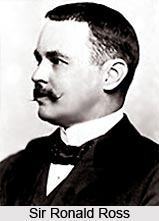 Malarial research in British India began under the auspices of a luminous and respected personality, Sir Ronald Ross, who became incidental to carry forward the established legacy. Conferences were held to know the exact reason of increasing number of patients. Hygiene and cleanliness were identified as the key defence to the issue. Malaria could only be stopped with a proper attitude to disease, including awareness to check it by not letting contamination to push through.
During the years of 1896-1902, Sir Ronald Ross (1857-1932) conducted a series of laboratory experiments in Calcutta and Secunderabad which determined that the anopheline mosquito carried the malaria parasite. For this discovery he was awarded the Nobel Prize for Medicine in 1902. Ross`s significant headway towards a grave problem did much to aid in scientific research in British India, perhaps saving India from future calamities.
In October 1909, the Imperial Malaria Conference convened at Shimla. The Conference made recommendations which led to the establishment of a Central Malaria Committee to investigate the epidemiology of malaria. It also created a new Journal Paludism, in which malaria research findings were published.
After a series of fruitful scientific researches by Britishers in India, and with the turn of the century, even more exhaustive researches were to take place. In 1889, the Cantonment Act was passed with the intent to inspect, segregate and treat Indian prostitutes thought to be infected with venereal disease.
In 1894, the Indian Medical Congress convened for the first time in Calcutta. As a result of this conference, the Home Department of the Government of India created an Indigenous Drugs Committee to investigate the value and use of indigenous drugs.
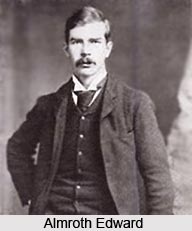
Within the period of 1898-99, Almroth Edward Wright (1861-1947) of the Royal Army Medical College at Netley researched and developed an anti-typhoid vaccine which was tried on 4502 British soldiers in India with victorious results.
From the time of 5 May to 27 July 1903, Rogers conducted in London studies of the physiological impact of snake venoms. His work resulted in the development of the Brunton lancet which employed a process calling for the use of a ligature to prevent the spread of venom, an incision at the local of the snake bite and the rubbing for crystals of permanganate into the wound. This process did indeed come to much later use to cure a snake bite using anti-venomous measures. This precise scientific research by British scientists paved India to fight for more deadly diseases.
On 11 March 1905, Lord Ampthill (1869-1935) opened the King Institute of Preventive Medicine at Madras and in 1906 the Central Research Institute at Kasauli.
In 1906, the Asiatic Society of Bengal formed a Medical Section. This provided an important forum for the discussion of current medical research in India. Also in 1906 the Calcutta Medical Club formed to provide a place for medical dialogue.
In 1907, a vaccine Institute was established at Belgaum in the Bombay Presidency capable of producing 200,000 doses of smallpox vaccine a year.
Scientific researches under British India were by now a necessary thing for speedy recovery. With such intelligent men joining to make India almost infection-free, natives provided much to slowly turn to a positive side. In 1911, the first All-India Sanitary Conference was held in Bombay under the leadership of Sir Harcourt Butler (1869-1938), Education Member of the Viceroy`s Council.
In the same year, Butler and Sir Charles Pardey Lukis (1857-1917), Surgeon-General, established the Indian Research Fund Association for the purpose of recruiting medical researchers and for carrying out research programmes. Its medical findings were to appear in the Indian Journal of Medical Research and the Indian Medical Research Memoirs.
 In 1912, the Medical Registration Act was passed in Bombay Legislative Council. The Act established a Medical Council and a registration list of medical practitioners, who in future would list only those physicians allowed to hold appointments in hospitals or in government service. This measure served as an important predecessor to the 1933 All India Medical Council and its responsibility for the regulation of medical qualifications and training in Indian Medical Schools.
In March of the same year, Rogers successfully used emetine injections to cure amoebic dysentery. This was a smart move towards advanced scientific research by British in India.
Within the period of 1910-21, Rogers initiated planning for the established of the Calcutta School of Tropical Medicine to institutionalise scientific medical research in India. It was modelled greatly on the schools of tropical medicine located in London and Liverpool. On February 24, 1914 Lord Carmichael (1859-1936) laid the school`s foundation stone. The school began its operations in 1921.
In 1913, the Government of India accepted the fact that the incidence of tuberculosis was of sufficient magnitude. The government also acknowledged that it began to consider measures to guarantee the purity of milk.
In 1919, the Government of India transferred medical education, medical care and public health to the provincial governments under the terms of dyarchy. Here, it was placed under the guidance of an Indian Minister. One notable consequence embraced ministerial support for mass cholera and plague inoculation of Indians. In times when the Jalianwalabagh Amritsar massacre was at its peak and Indian nationalists were raging full-time war against English bastion, scientific researches suffered to a length. British men were no longer believed as gospel, Indians tried to better English people in every aspect and were successful. As such scientific researches under the shadow of British India presented a dichotomy.
In the period within 1920-21, the provincial governments of Bengal and Madras acquiesced to Indian demands to establish committees of inquiry to investigate the usefulness of indigenous medical systems. In October 1921 the Madras committee, chaired by Mohammad Usman, issued a report making a case for ayurveda, or Hindu medicine, except for the acceptance of Western surgery. In consequence, the Government of Madras opened a School of Indian Medicine, with G. Srinivasa Murti as its Director.
On 12 July 1923, the British Empire Leprosy Relief Association was founded in a meeting of supporters at the India Office. The new organisation named former Indian Viceroy, Lord Chelmsford, as its President. The Association financed research, advised medical officers and missionaries and supplied drugs to India and throughout the British Empire.
In December 1932, the All-India Institute of Hygiene and Public Health opened in Calcutta with the aid of a 648,000-dollar grant from the Rockefeller Foundation.
In October 1943, the Government of India created a committee headed by Sir Joseph William Bhore (1878-1960) to examine provisions for public health in India after the Second World War concluded. Its 1946 report criticised past British efforts in public health and medical research and called for more broadly available public health measures for the Indian people.
In 1945, Lieutenant-Colonel C. K. Lakshmann, Chairman of Industrial Health Advisory Committee, recommended the establishment of a system of medical inspections for Indian industries and mines.
Natural Remedy for Malaria
 In the Natural Remedy for Malaria diet is of supreme importance. In the beginning of the treatment the patient should keep a fast on orange juice and water for seven to fifteen days depending on the severity of the fever. The tepid water enema should be administered on a daily basis during this period to cleanse the bowels. After the fever has subsided, the patient should be placed on an exclusive fresh fruit diet for more three days. In this course of therapy, he should take three meals a day, at five hourly intervals, of fresh, juicy fruits, like grapefruit, apple, pineapple, oranges, grapes, mango and papaya. Milk may be added to the fruit diet after this period and this diet may be continued for a further few days.
Subsequently, the patient may embark upon a well balanced diet of natural foods consisting of seeds, nuts and grains. The patient should stay away from strong tea, coffee, refined and processed foods, fried foods, condiments, sauces, pickles, white sugar, white flour, and all products made from them. He should also avoid all meats, alcoholic drinks and smoking. The best way to lessen temperature naturally, during the course of fever, is by means of the cold pack, which can be applied to the whole body. This pack is made by wringing out a sheet or other large square piece of linen material in cold water, wrapping it right round the body and legs of the patient ( twice round would be best ) and then covering from top to bottom with a small blanket or similar warm material. This pack should be applied every three hours during the day while temperature is high and kept on for an hour or so. Hot water bottles may be applied to the feet and also against the sides of the body.
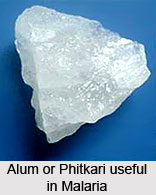 Certain home remedies have been found advantageous in the cure of malaria. One such remedy is the use of grapefruit. This substance can be extracted from the fruits by boiling a quarter of the grapefruit and straining its pulp. Lime and lemon are beneficial in the treatment of quarter type of malaria fever. About three grams of lime should be dissolved in about 60 ml. of water and juice of one lemon added to it. This water should be taken before the onset of the fever. Cinnamon is regarded as a successful cure for all types of colds, as well as malaria. It should be crudely powdered and boiled in a glass of water with a pinch of pepper powder and honey. This can be used constructively as a medication in malaria. Alum (phitkari) is also useful in malaria. It should be roasted over a hot plate and powdered. It should be taken about four hours before the expected attack and every two hours after it. This will give great respite to the patient.
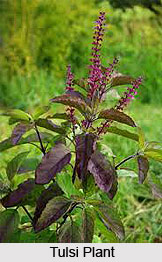
The preventive facet in malaria is as important as the curative one. The best way to defend against malaria is to take on all measures required for preventing mosquito bites. For this purpose, it is very important to maintain cleanliness of surroundings, environmental sanitation and to eradicate stretches of stagnant water. As the mosquito generally perches itself on the walls of the house, after biting a person, it would be advisable to spray the walls with insecticides. The leaves of the holy basil ( tulsi ) are considered valuable in the prevention of malaria. An infusion of some leaves can be taken on a daily basis for this purpose. The juice of about eleven grams of tulsi leaves mixed with three grams of black pepper, powder, can be taken beneficially in the cold stage of the malarial fever. This will check the severity of the disease.
Preventive Measures for Malaria
The preventive aspect in malaria is as important as the curative one. The best way to protect against malaria is to adopt all measures necessary for preventing mosquito bites. For this purpose, it is essential to maintain cleanliness of surroundings, environmental hygiene and to eradicate stretches of stagnant water with kerosene oil emulsion and use of mosquito nets in mosquito-infested areas. As the mosquito generally perches itself on the walls of the house, after biting a person, it would be advisable to spray the walls with insecticides.
The leaves of the holy basil (tulsi) are considered beneficial in the prevention of malaria. An infusion of some leaves can be taken daily for this purpose. The juice of about 11 grams of tulsi leaves mixed with three grams of black pepper, powder, can be taken beneficially in the cold stage of the malarial fever. This will check the severity of the disease.
The leaves of the holy basil (tulsi) are considered beneficial in the prevention of malaria. An infusion of some leaves can be taken daily for this purpose. The juice of about 11 grams of tulsi leaves mixed with three grams of black pepper, powder, can be taken beneficially in the cold stage of the malarial fever. This will check the severity of the disease.
Recently updated articles in Naturopathy in India
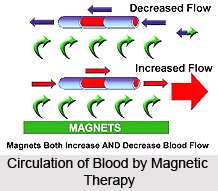
Effect of Magnets on Human Body
Magnets have a stimulating effect on various body systems such as digestive, urinary, respiratory. Magnet has its affect on blood and hence it influen...
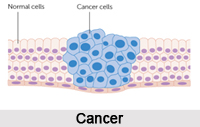
Cancer, Disease
Cancer is a malignant in which a group of cells display uncontrolled growth.

Principles of Massage
Principles of Massage are consisted of proper intricacies and sequence.

Foot Massage
Foot Massage is an extremely healing and effective therapy in Ayurveda, which can eliminate several problems in the entire body.

Eye Massage
Eye Massage helps to make the eyes cool and calm making the muscles stronger.
Related articles in Naturopathy in India
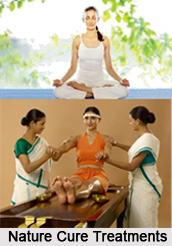
Nature Cure Treatments
Nature Cure Treatments comprise the use of natural elements and healthy lifestyle for healing various ailments and staying fit.

Water Therapy
Water therapy is an alternative therapeutic method that cures many diseases.
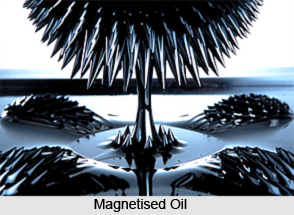
Magnetized Oils
Magnetized Oils are prepared either on the North Pole or the South Pole.