 Mostly grown and not built the living Root Bridges of Meghalaya takes almost a decade or more to become strong and sturdy. In Meghalaya, the original architects of this natural bridge building technology are the forefathers of the Khasi tribe, who are one of the three major tribes in this hill state.
Overview of Living Root Bridges of Meghalaya
These living Root Bridges of Meghalaya are handmade from the aerial roots of rubber figs and stretches over a total length of 50 m and a width of over 1.5 m. They can carry up to 50 people at a time. These living Root Bridges take around 15 to 20 years to grow and become stronger with age. The life of these bioengineering wonders is estimated to be 500 years, which is more than the life span of most of manmade modern bridges.
Location of Living Root Bridges of Meghalaya
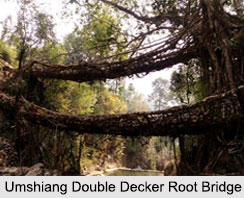
The most famous Umshiang Double Decker root bridge in Nongriat village, south of Cherrapunji about 70 km from the capital Shillong is estimated to be two centuries old. Some of the other living Root Bridges of Meghalaya are the Ummunoi Root Bridges, Ritymmen Root Bridge in the Nongthymmai village, Umkar Root Bridge and the Mawsaw Root Bridge. These living Root Bridges of Meghalaya makes for prime tourist attraction in the north east and are recognized by the UNESCO as a World Heritage Site.
Method of creating Living Root Bridges of Meghalaya
Built across a stream of river by guiding the pliable roots of the rubber fig trees, which are tied or twisted together and using the process of inosculation, these roots are combined with one another. The rubber fig trees are used for building these living Root Bridges since they are well suited to anchoring itself to steep slopes and rocky surfaces. And the roots of this plant can take hold on the opposite sides of river banks.
When constructed by hand, these living Root Bridges are built without the aid of scaffolding or any other natural or manmade materials. Occasionally, these root bridges are formed by wrapping outside over scaffolds made from wood and bamboo, which are perishable and are replaced many times over the years as the root bridges becomes stronger.
The living Root Bridges of Meghalaya are mostly native to the state and are an architectural marvel that have attracted people to visit from all over.