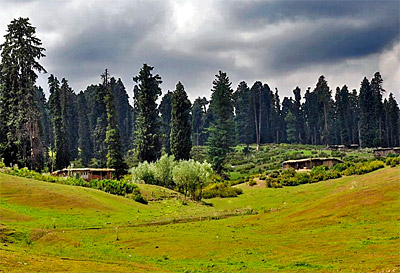
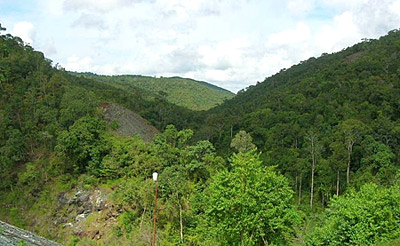
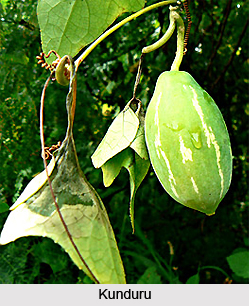
 The medicinal plant Kunduru is commonly found in the dry forests in the foothills of the Western Himalayas, from Rajasthan to Bihar and from central India to Andhra Pradesh. These medicinal plants are very common in the dry, rocky hills of central and western India in association with some other medicinal plants like Sterculiaceae, Anacardiaceae and Cochlospermaceae. The tree is usually gregarious, and in some forests the tree forms almost pure stands.
The botanical name of Kunduru tree is Boswellia serrata Roxb. It is also known as Butseraceae and Indian frankincense tree. It is commonly known as Kundur in Bengali, Indian olibanum tree in English, Luban in Hindi, Chitta in Kannada, Kunturukkam in Malayalam, Sallai in Marathi, Loban in Oriya, Salhi in Punjabi, Kunduru in Sanskrit, Kundurukkan in Tamil, and Kundur in Urdu.
Kunduru is a medium to large sized, deciduous tree, up to 18 m tall. The bark of this tree is ash-coloured, smooth, papery flakes, resinous inside. It peels off in thin sheets; the young shoots and leaves of this medicinal plant are pubescent. Leaves are alternate, imparipinnate and are 20 cm to 45 cm long. The leaflets present in 8-15 pairs, which varies from 2.5-6.3 cm in length. The lowest pair of the leaflets is often smaller than the others. These are sessile, variable in shape, ovate, and the base are rounded. Flowers of these medicinal plants are small, and white in colour. Petals are 5 mm long, ovate, pubescent to the outside. Fruits or drupes of Kunduru trees are 12 mm long which are divided into 3 valves. The pyrenes are compressed, hard and winged. Two varieties of this species have pubescent leaves with crenate-serrate margins and bear glabrous leaves with entire margins.
Kunduru trees are important for its medicinal properties. Numerous parts of this tree are used to prepare medicines for different diseases. The gum exuded from the cut bark, a fragrant, golden-yellow oleo-gum-resin known as Indian olibanum is used as incense, which is also credited with astringent, stimulant, expectorant, diuretic, diaphoretic, ecbolic and antiseptic properties. It is useful for the treatment of ulcers, tumours, goitre, breast cysts, diarrhea and dysentery, piles and skin diseases. This gum is also used in the preparation of an ointment for sores. This non-phenolic fraction of the oleo-gum-resin possesses anti-tumour, sedative and analgesic activity. The bark is thought to be useful in the treatment of diarrhea, piles, skin diseases, ulcers and coughs. In several parts of India, the stem bark is chewed to relieve toothache and to check pus formation in the mouth; a lukewarm paste of the bark is applied externally to relieve eye inflammations, whereas in some other parts of India people use a decoction of the stem bark is taken to treat dysuria, and a paste of the dried, ground bark is applied to the forehead to cure headache. In folk medicine the powdered flowers are used to cure colds and fevers. Apart from the medicinal values this tree also yields as a valuable timber.