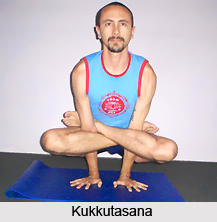
 Kukkutasana is a Yoga posture that putatively resembles a cock`s pose, and which uses the well known Padmasana as its starting point. It was first described in the Ahirbhudnya Samhita (200 BC), though it was the Hatha Ratnavali that built significantly on it, devising five variations on the basic posture.
Meaning of Kukkatasana
Kukkutasana means `Cock` in Sanskrit, and the posture and its five variations mimic varied poses of the cock.
Yoga Texts and Kukkatasana
First mentioned in the Ahirbhudnya Samhita (200BC), Kukkutasana was thenceforth not mentioned or described in many of the yoga related texts that followed, until the Hatha Yoga Pradipika (1400 AD), a major Yoga manual, included it in its compendium of asanas. It was thenceforth mentioned in some of the Upanishads, and the Hatha Ratnavali (1600 AD) devised several variations of the posture.
Practice of Kukkutasana
A sequential process for performing Kukkutasana follows.
* Sit in Padmasana
* Insert the hands in the space between the thigh and calves near the knees. Start with the fingers and gradually push the hands down up to the elbows
* Exhale, raise the body off the floor and balance on the palms keeping the thumbs together. Maintain the balance as long as you can with normal breathing.
* Rest on the floor, release the hands, change the crossing of the legs and repeat the pose
Effects and precautions of Kukkutasana
Kukkutasana strengthens the wrists and abdominal walls. As it starts with Padmasana, it also tones the inner thigh region and must be practiced with the same caution applicable to Padmasana. Those suffering from chronic knee pain, and who are prone to get calf muscle cramps should refrain from practicing the Kukkutasana.
This article is a stub. You can enrich by adding more information to it. Send your Write Up to content@indianetzone.com