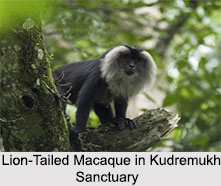
 The Kudremukh Wildlife Sanctuary was established in 1987 and is the 2nd largest Wildlife Protected Area. It is located in the Chikkamagaluru district of Karnataka. Kudremukh National Park comes under the Global Tiger Conservation Priority-I, under the format developed jointly by the Wildlife Conservation Society (WCS) and World Wide Fund-USA. The sanctuary mainly came into existence to conserve the endangered lion-tailed macaque, which were used as a flagship species to conserve the entire biotic community in the Karnataka region.
This national park is situated in the Western Ghats and cover a massive area of around 600 sq. m of the tropical evergreen wet forest. There are 3 important rivers- the Tunga, the Bhadra and the Nethravathi, that are said to have their origin from this region.
Climatic Conditions of the Kudremukh Wildlife Sanctuary
Surrounded by lush greenery and magnificent hills, the Kudremukh Wildlife Sanctuary has a temperate climate with temperature mostly ranging from 19 degree Celsius to 25 degree Celsius, which makes it a perfect place to visit throughout the year. Due to the presence of evergreen vegetation, Kudremukh receives an average annual rainfall of 7000mm.
Flora and Fauna of the Kudremukh Wildlife Sanctuary
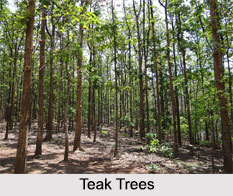
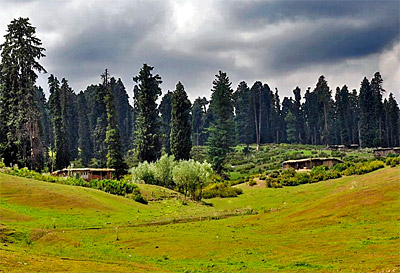
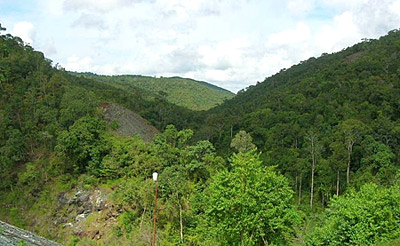
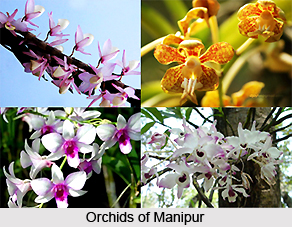
The Kudremukh Wildlife Sanctuary is spread partly over the thick hilly forests near the coastal plains on the western portion and the shola vegetation on the Western Ghats uplands. The Tunga river and Bhadra river flow freely through the parklands. The hills, which bear the brunt of the severe monsoon winds, preclude any tree growth added to that the region is known for its rich low grade magnetite soil which primarily inhibits plant growth. As a result, the landscape is covered with grass. The valleys which are tucked in, have reasonable protection from wind and has a deep soil profile, as a result of which stunted evergreen forests exist creating a unique microclimate, rich with mosses, orchids, etc.
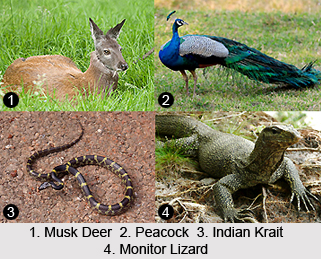
The animals found here are the Malabar civet cats, wild dogs, sloth, and spotted deer. A diverse assemblage of endangered large mammals is found in the park supporting 3 large mammal predator species such as the tiger, leopard and wild dog. The important tiger prey base found within the park is gaur, sambar, wild pig, muntjac, chevrotain, bonnet macaque, common langur and the lion-tailed macaque.
Visiting Information on the Kudremukh Wildlife Sanctuary
The nearest airport is at Mangalore at a distance of 1130 km from the sanctuary. The Mangalore railway station is around 100 km away from the Kudremukh wildlife sanctuary.