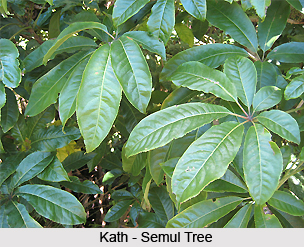
 The stout epiphytic shrub, Kath-Semul is a common Indian medicinal plant having adventitious roots and young branches that are covered with densely matted filaments. The leaves of the plant are alternate, palmately compound and have a length of 7.5-19 cm and width of up to 9 cm. The plant`s petioles are 8-23 cm long; with 5-7 leaflets and their shape is elliptic-oblong. They are shortly acuminate at apex with prominent veins, while the petiolules are 2.5-5 cm long. The plant has 25 cm long panicles and its umbels are 2 cm across. The yellowish-green or cream-coloured or pink flowers of the plant have flower stalk to 2 cm long. The plant`s fruits are rounded, 5-ribbed, of brownish-black colour and they have a diameter of 0.6 cm. The plant usually flowers between the months of March and April and fruits in May and June in central India. However, it flowers from April to June and fruits during the rainy season in Karnataka. The plant is commonly found throughout most of tropical and subtropical India to an altitude of 1800 m. The plant is typically found on trees near villages in peninsular India and it is also a common plant in moist deciduous and evergreen forests of the eastern slopes of the Western Ghats.
Though not many, Kath-Semul has some medicinal properties and usages, as well. A mixture of the roots of this plant and rice is eaten by the Mundas as a remedy for dropsy. The inhabitants of the Gandhamardan Hills in Orissa apply a warm paste of the bark, leaves and twigs externally, for getting relief from swellings. They also use a bath prepared by boiling the twigs for relieving rheumatic pains.