 History of Jhummir Dance
Jhummir dance, an old folk dance form which took birth in Baluchistan (named after the native Baloch tribes) in Pakistan. The dance was spread by traders and camel drivers and became popular in west Punjab (now in Pakistan).
After partition Jhummir dance was on the verge of extinction in the Indian Punjab, except some parts of the Ferozepur district. There the practice of Jhummir dance was continued by some of the Rai Sikh migrants from Pakistan.
Style and types of Jhummir Dance
Today, Jhummir dance plays a significant role in the weddings of Muzaffargarh district. The dance is not strictly relegated to only marriage ceremonies but also performed in other occasions where people gather for celebrations and festivity.
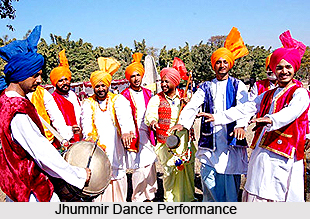
Unlike the fast-paced bhangra, Jhummir is a slower and more rhythmic dance. Jhummir dance is generally performed by men but it also involves certain feminine actions. The dance is accompanied by a dhol or drum.
It is a simple dance performed by forming a usual circle accompanied by musicians as well as clapping of hands of the performers. With time the patterns of the dance have developed some intricacies. A man not being able to perform the Jhummir dance is viewed in low esteem.
There are mainly three types of Jhummir dance. Each of the style bears a different mood. All three styles have been designed to suit different situations and occasions.
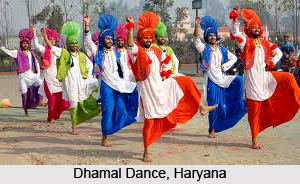
The costumes of Jhummir dance are the same as that of the Bhangra.
Role of Pokhar Singh in Jhummir Dance
Jhummir dance has been greatly popularised by Pokhar Singh. At the time of partition, around five-lakh-strong Rai Sikh migrants settled in the Ferozpore district of Punjab. Pokhar Singh was one of them. Pokhar and his clan were the only one who continued Jhummir dance. In the year 1993, the Punjab Government honoured him for preserving this traditional dance form.