
The second yoga sutra speaks about the copious flow of nature`s energy and metamorphoses a sadhaka towards the process of evolution. Just like other elements, afflictions and wavering can also be subdued by crushing avidya. Nature`s free flow in specific areas enables the consciousness to be altered and reside in a state of dynamism. This induced energy slowly metamorphoses a yogi into an immortal.
jatyantara in another class, change of birth, another state of life
parinamah change, transformation
prakrti nature, creative cause, nature`s energy
apurat becoming full, being full, abundant flow
The abundant flow of nature`s energy brings about a transformation in one`s birth, aiding the process of evolution.
Just as water can be transformed into vapour or ice, and gold into ornaments, likewise, sufferings and fluctuations can be brought under control and transformed by crushing avidya.
In iv. i, Patanjali explained that nature`s energy flows in such abundance that their consciousness is transformed, enabling them to live in a pure vibrant state in this present life. (If a sadhaka fails to reach perfection during this life, nature may abundantly permeate and perfect his sadhana in the next, so that he may then experience freedom).
Due to the power of his practices, nature`s energy flows such force as to transform him into an immortal. This accords with the theory of evolution. It is fascinating to note also that nature itself is the powerhouse for spiritual evolution.
Buddha, Adi Shankara, Sri Ramanujacarya, Jnanesvar, Tukaram and Nandanar reached kaivalya during their lives here on earth without yogic sadhana, because of the fruits of yogic practices in their previous lives (jatyantara parinama).
Equally, acaryanis Maitreyi, Gargi, Arundhati, Lilavati, Sulabha, Sarada Devi, yogini Lalla of Kashmir and yoginl Motibai of Jaipur, everybody achieved liberation through jatyantara parinama.
Jatyantara parinamah prakrtyapurat
This is the second yoga sutra that is incorporated in the fourth phase of the Patanjali Yoga Sutras.
Recently updated articles in Yoga
Khanda Manda Yoga
Khanda Manda Yoga is a difficult form of yoga where the Yogi cuts off his own arms and legs with a sharp cleaver, that is axe-like knife, and throws t...
Kaivalya Pada
Kaivalya Pada, the fourth chapter of Patanjali Yoga Sutra denotes an absolute, indivisible state of existence of the Yogi. The Kaivalya Pada is someti...
Vibhuti Pada
Vibhuti is the Sanskrit term for “power” or “manifestation.” In this third chapter, Patanjali introduces the final three limbs of Aṣṭanga Yoga, collec...

Sadhana Pada
Sadhana Pada in Patanjali Yoga Sutra denotes the idea of practicing yoga that leads to spiritual illumination. Sadhana, the Sanskrit term for “practic...
Samadhi Pada
Samadhi Pada is the first chapter of Patanjali Yoga Sutra. In this chapter, the author explains the essence of yoga, the nature of samadhi, and the me...
Related articles in Yoga
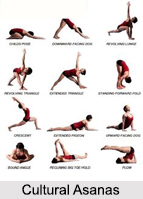
Cultural Asanas
Cultural Asanas refer to the daily physical exercise postures that train the body and mind in Yoga Practice.
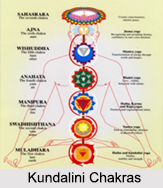
Kundalini Chakras
Kundalini Chakras are psychic energy centres or vortices, which connect between our psychic and physical energy systems.
Patanjali Yoga Sutras
Patanjali’s Yoga Sutras presents a foundational guide to the philosophy and practice of yoga. Through concise aphorisms, it outlines the nature of the...
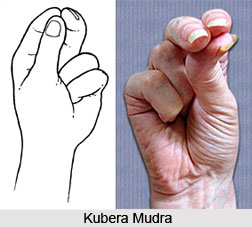
Kubera Mudra
Kubera Mudra, a form of Hatha Yoga, leads to the elevation of mental peace and physical relief by proper practice and cleanses frontal sinuses.