
Ind-Parab, held in the month of Bhado i.e. during July-August, is mostly celebrated by the villages that came under the influence of Hindus. The festival is celebrated on the day succeeding the Karam feast. No particular date is appointed for the celebration of the festival but it is generally celebrated latest before the Desai feast. A postponement in the celebration may be caused by a sudden illness, death or an epidemic in the village.
For the celebration of the festival a thick pole of Sal tree is planted at the centre of a high ground chosen for the purpose. Two other huge poles are also planted parallel to it maintaining a distance from the central pole known as Indi Khunta. A horizontal pole is then tied to these three vertical poles. At cetain places, at the foot of these three vertical posts a horizontal log of wood is also fastened.
On the festive day the Munda Tribe assemble at the Ind Pole early in the morning. The Pahan invited for the festival brings with him a fowl or in some cases a goat for sacrificing it at the Ind pole in honour of the Chandibonga. It is commonly believed by the Mundas that the planting of a stick feathered with a Kareba will guarantee a good crop and high production. The Pahan is thus, requested to plant them in their individual fields. After the sacrifice the Pahan emerges from his house with an umbrella like structure made of bamboo sticks and wrapped with cloth. The villagers gather around him and march for a procession towards the Ind pole followed by beating of drums. Upon reaching the spot the structure resembling the umbrella is fixed to the wooden frame tied to the Ind pole. The villagers residing nearby are also invited to partake in the celebration. However, mostly youths and maidens attend this festival. Married people do not generally take part.
This festival chiefly constitutes only of the dancers and the spectators. This festival provides a platform for the villagers to mingle with each other and develop a close relationship. The close relatives of the villagers are also invited on this occasion and offered rice beer together with taben. On the seventh day, the Ind pole is withdrawn and an offering of rice beer is made to the Chandibonga again. It is believed that this festival is celebrated in the memory of the first Nagbansi landlord.
Ind-Parab
Ind-Parab is celebrated in the month of Bhado i.e. during July-August on the day succeeding the Karam feast. The festival is marked by dancing, singing and merry making.
Recently updated articles in Tribes of India
Arakh Tribe
Arakh Tribe is one of the ancient tribes located in several parts of central India. Their origin dates back to the Tughlaq era. Arakh tribe appears to...
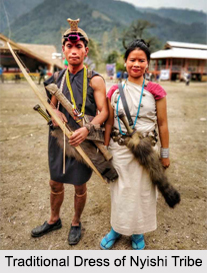
Traditional Dress of Nyishi Tribe
Traditional Dress of Nyishi Tribe is worn during festivals and social gathering. Men wear a cane helmet surmounted with the beak of the great Indian H...
Pasi Community
Pasi is an aboriginal race of India and are mainly distributed over the northern region of the country. The traditional occupation of Pasi is the extr...

Bhojas
Bhojas have been described as a very important tribe in the Aitareya Brahmana. Historical records have said that the Bhojas were settled towards the s...
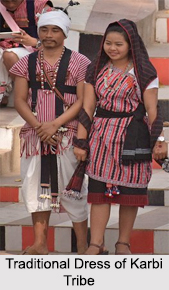
Traditional Dress of Karbi Tribe
Traditional Dress of Karbi Tribe can be easily recognized by the artistic designs inherited from their forefathers. Karbis have their own traditional...
Related articles in Tribes of India
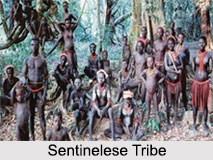
Sentinelese Tribe
Sentinelese tribal community is one of the most isolated and secluded tribes that are found in the whole world.
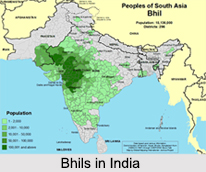
Bhil Tribe
The people of the Bhil tribe are the most widely distributed tribal groups in India.
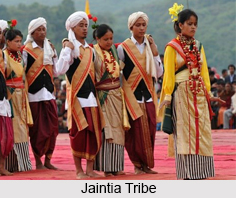
Jaintia Tribe
Jaintia Tribes are located in the Jaintia Hills of Meghalaya. They are also called the Pnars. They are famous for weaving of carpet, making of musical...
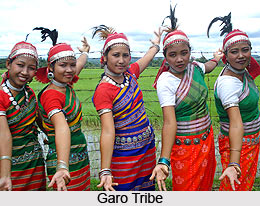
Garo Tribes
Garo Tribes are one of the matrilineal tribes of North-East India who reside in the Garo hills of Meghalaya. Historically, the tribe originated in Tib...
Garasia Tribe
The Garasia tribal community holds a significant position within Indian culture, renowned for their distinctive way of life and rich cultural heritage...