Illuminating Mooladhara Chakra
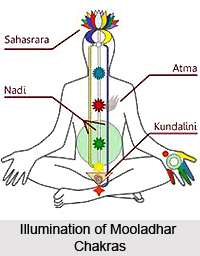
Illuminating Mooladhara Chakra passes through several stages before it attains its final stage. The God of this chakra is Lord Brahma.

Share this Article:

Illuminating Mooladhara ChakraThe Mooladhara Chakra meaning the root chakra symbolizes the world. One can enter it from above only with reluctance. After experiencing all the sensual pleasures and passions, one is exhausted from the world. Yet as one tries to transcend it, he has to re-enter it. He is old in wisdom and the world is full of folly. The signposts for illuminating the base chakra are as follows:

Symbol: The symbol of the chakra is the four petals that remain on a flowering tree or on the dying lotus. Only four petals remain. They are symmetrically arranged that point in the four directions of the world. The petals are old and direct one to select one direction and proceed for it.

Location: The location of the chakra is at the perineum, base of spine or coccygeal plexus.

Colour: The colour of the chakra resembles the colour of autumn in a deciduous forest. The colour of the leaves is deep red and brown. The person here is surrounded by the death of the old. From death life is reborn.

Emotion: The emotion is contentment after fulfilment. It is like having a fight with a loved one and then reconciling.

Element: The element of the chakra is fertile earth. The earth is black and damp. It is warm, granular and rich in texture.

Function: The function of the chakra is survival and grounding.

Sound: The sound resembles beating of drums in some distant place. It is in perfect rhythm with the whole world. The people dancing get turned on by the drums. The mantra here is LAM. The L is like a beat on a drum, rounded and full.

Sense: The sense of the chakra is smell.

Animal: The animal of the chakra is an elephant. The elephant here is under complete control carrying out heavy labour, lifting logs and placing them in a neat stack. The only sound here is the dull sound of the elephant`s feet and the dull thump as the log goes down.

Material: The material of the chakra is sandstone. It colour is red because it has a high iron content. There are also many streaks which indicate water has run over it.

Texture: The texture of the chakra is that of the good earth.

Taste: The taste of the chakra is like that of the earth. It resembles a carrot that has been lightly cooked. The taste has all the earthy goodness of nature.

God: The god of the chakra is Lord Brahma who is the aspect of Lord Shiva. People are so considered about the sensuality of the earth that do not even bother to listen to him but still he goes on to preach them. He does not lose his patience and imparts education with much kindness and love. He uses many symbols and stories in teaching his wisdom to worldly people.
Share this Article:

Related Articles

More Articles in Yoga


Meditative Asanas
Meditative Asanas are essentially designed to aid one’s meditation and concentration, and formed the basis for several other Asanas in creating a complete physical culture.
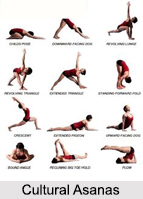
Cultural Asanas
Cultural Asanas refer to the daily physical exercise postures that train the body and mind in Yoga Practice.
Soma Chakra
Soma Chakra is a minor chakra in the seventh chakra which is located above the third eye, in the centre of the forehead.
Jihva-Bandha
Jihva Bandha is one of the cultural asanas that improves the nervous and circulatory system. It means tongue-lock which strengthens the muscles of the neck and the cervical nerves.
Nauli Kriya
Nauli Kriya is a cultural asana where the Yogi rotates the abdomen speedily like a rotating whirlpool.
Tantra Kundalini
The Kundalini Tantra is the awakening of the vital force according to the Kundalini.
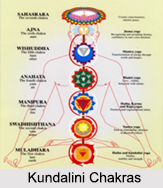
Kundalini Chakras
Kundalini Chakras are psychic energy centres or vortices, which connect between our psychic and physical energy systems.
Tadasana Yoga Asana
Tadasana, or the Mountain Pose is a standing Yoga posture with feet together and hands at the sides of the body, and improves one`s height and flexibility.
Asanas in Sitting Position
Asanas in Sitting Position help in aligning the spine and develop a sense of stability required for practice of pranayama and meditation.
Types of Yoga
Types of Yoga benefits the practitioner mentally, physically and spiritually. However, speculating the right Yoga as per the need of an individual is very important.
Siddhasana Yoga Asana
Siddhasana is one of the most well known meditative postures, and is termed ‘the chief of all Asanas’ in the Hatha Yoga Pradipika.
Asanas in Standing Pose
Asanas in Standing Pose are generally held for shorter times than other poses, and tend to be more energetically uplifting and opening.
Patanjali Yoga Sutras
Patanjali’s Yoga Sutras presents a foundational guide to the philosophy and practice of yoga. Through concise aphorisms, it outlines the nature of the mind, the eightfold path of discipline, and the means to attain inner stillness. Its teachings continue to inspire modern yoga, meditation, and spiritual exploration.
Vakrasana - Yoga Asana
Vakrasana is a simplified form of the Ardha Matsyendrasana, an asana named after Matsyendranath, the founder of Hatha Yoga. It stretches the thigh and tones the abdomen.
Types of Yoga Asanas
Types of Yoga Asanas are stated on varied bases like postures, methods and objectives. The practice of yoga asanas provides a wide range of mental and physical benefits.
Impact of Yoga on Excretory System
Impact of Yoga on excretory system is indefinable as it not only helps the particular system but the body.
Yoga Asanas
Yoga Asanas are comfortable and peaceful postures that make the physical body ready for the higher and more spiritual levels of Yoga practice.
Surabhi Mudra
Surabhi Mudra is a powerful and effective mudra that helps in breaking barriers and achieving ultimate meditation.
Yoga - Discipline for Complete Health
Yoga is the traditional physical and mental disciplines in India that aims to keep body and mind fit.
Kubera Mudra
Kubera Mudra, a form of Hatha Yoga, leads to the elevation of mental peace and physical relief by proper practice and cleanses frontal sinuses.
Asanas in Lying Position
Asanas in lying position are known as Supine pose which are helpful to relax the body as well as to strengthen the muscles.