
Regarded exceedingly sacred by the Parsi and Zoroastrian community, Udvada bears substantial historical and legendary documentations to attract thousands of Parsis to come to the place again and again. Their sanctified fire preserved since time immemorial, is known to have been brought from Persia after several crusades by believers. Such is its power that, even the sceptics at times decide to go by it.
Udvada is a town in Gujarat, celebrated for the Iranshah ?tash Bahr?m, the oldest and most famous of the Parsi (Zoroastrian) Fire Temples. Udvada is a coastal town, 200 km north of Mumbai, approximately 8 km off the national highway NH8. Udvava literally stands for `grazing ground of camels`, which was actually the town`s condition, prior to becoming a fishing village. People are of the faith that the holy fire of the Parsi community is kept in Udvada, that was also brought directly from Persia. This fire is also an instance of one of the oldest. Udvada is precisely located in the district of Valsad, with its geographical co-ordinates as 20° 29` 0" North, 72° 53` 0" East.
Udvada
Primarily a coastal town, Udvada is located in state of Gujarat, with legends topping its historical contour.
Introduction
History of Udvada, Gujarat
Consequent to the fall of the Persian Sassanid Empire, several Zoroastrians fled to other regions with the expectation of upholding their religious tradition. According to the Qissa-i-Sanjan (Story of Sanjan), some Zoroastrians were conceded conditional asylum by a Gujarati ruler Jadi Rana. The refugees established the colony of Sanjan come time during the 8th or 10th century. According to legend, they had carried with them an urn with ash frmm a sacred fire, which a priest Nairyosang Dhaval is believed to have used for the bed of the Sanjan fire when it was sanctified in 721 CE. An associated legend recounts that this fire was hallowed as modern ?tash Bahr?m fires are, i.e. out of 16 fires, including that of a funeral pyre, a shephard`s hearth, a goldsmith`s hearth, a potter`s kiln and from a fire caused by lightening.
Some centuries after their arrival (possibly during the late 14th century), Sanjan was raided by troops of the Delhi Sultanate (perhaps by those of Muhammad bin Tughluq) and the Parsis fled again, into the caves in the closeby Barhot hills, 14 km south of Sanjan. The sacred fire again went with them. Numerous years later it was installed in Navsari. During the 18th century, a decision was finalised to return the flame to Sanjan, but along the way, the priests opted to stay back in Udvada, where the fire temple was sanctified in 1742.
As the name of the fire and of the fire temple in India, the term Iranshah was not authenticated before the 20th century. Before this date, it was just called the `Udvada ?tash Bahr?m`. The first registered use of the name in reference to the fire there comes along in a 1905 piece by Jivanji Modi, who made several allusions to the "Iranshah Fire" within the span of two pages. In 1920, when Shahpurshah Hodivala published his English translation of the Qissa-i-Sanjan, he presumed that this was the original name of the fire, even though it was still stranger among the Parsis. Later, an explanation germinated "that it had been so called because it was Zoroastrian king of Iran - an explanation which runs counter to what is said in the Qisse about the particular reason for establishing the Fire". At present, this logic is accepted by almost all god-fearing Parsis, and even the few non-believers among them incline to refer to the fire as the Iranshah.
Some centuries after their arrival (possibly during the late 14th century), Sanjan was raided by troops of the Delhi Sultanate (perhaps by those of Muhammad bin Tughluq) and the Parsis fled again, into the caves in the closeby Barhot hills, 14 km south of Sanjan. The sacred fire again went with them. Numerous years later it was installed in Navsari. During the 18th century, a decision was finalised to return the flame to Sanjan, but along the way, the priests opted to stay back in Udvada, where the fire temple was sanctified in 1742.
As the name of the fire and of the fire temple in India, the term Iranshah was not authenticated before the 20th century. Before this date, it was just called the `Udvada ?tash Bahr?m`. The first registered use of the name in reference to the fire there comes along in a 1905 piece by Jivanji Modi, who made several allusions to the "Iranshah Fire" within the span of two pages. In 1920, when Shahpurshah Hodivala published his English translation of the Qissa-i-Sanjan, he presumed that this was the original name of the fire, even though it was still stranger among the Parsis. Later, an explanation germinated "that it had been so called because it was Zoroastrian king of Iran - an explanation which runs counter to what is said in the Qisse about the particular reason for establishing the Fire". At present, this logic is accepted by almost all god-fearing Parsis, and even the few non-believers among them incline to refer to the fire as the Iranshah.
Tourist spots in and around Udvada
Significant with the curious mores and tradition, the visiting places around Udvada speak an entirely different language, just like the history and customs of this hugely minority community. The spots carries a separate breathe of their own, which were also admired by legendary mighty rulers and kings from significant dynasties. They have however, regrettably been reduced down to banality, with the dazzle and sparkle of the community almost gone forever.
Navsari (80 km) : Udvada may be the focal point of Parsi pilgrimage, but Navsari demands an earlier claim. It was the home of the Iranshah for 250 years. This Gujarat town, north of Udvada on NH8 past Pardi and Chikhli, or five stops after Udvada on the Flying Ranee from Mumbai Central Station, is still home to the Vadi Darb-e-Mehr, thought to have been consecrated in 1151 A.D. It is the oldest existing fire temple outside Iran, as well as the oldest (and for some most revered), initiation centre for martab, the prerequisite needed by priests to perform the higher liturgy. Navsari comes a very close second to Udvada in devout status. So, one should offer a machi prayer here, as well. (In the machi, sticks of sandalwood are piled together like a throne before being offered to the fire in the shrine. A priest can only execute this.).
The Fire Temple :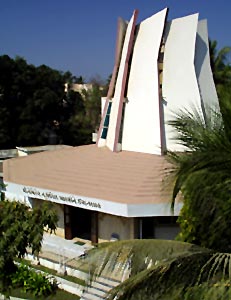 Navsari`s present-day Atash Behram was sanctified in 1756, 16 years after the Iranshah left, and the original building was practically replaced in 1925. In fact, in one form or the other, this town has had an Atash Behram for the longest period of time - more than 500 years. A well in the boundaries stands in the sanctified place where the Iranshah had been `enthroned`.
Enormous powers are attributed to this fire temple. The visitor is told the legend of the learned and many-powered first Dastur Meherjirana, who was elected chief priest in 1579. The imprint of his face suddenly surfaced one day some years ago, in the grain of a marble slab opposite the sanctum sanctorum. The high priest had been summoned by Akbar in 1578 to Delhi to explain the tenets of Zoroastrianism for the emperor`s eclectic faith, Din-i-Ilahi. Akbar was so struck that he reportedly ordered fire to be kept burning in his court day and night, as was done by the Iranian kings, and from 1581 he openly reverenced the sun and fire with ritual prostrations.
After Dastur Meherjirana, the high priesthood of the Navsari Atash Behram became hereditary. His sons (many of them adopted in the absence of natural male heirs) continue to have exclusive rights to conduct the higher sacrament.
Religious schools : Apart from the 12th century Vadi Darb-e-Mehr, which imparts the higher martab degree, Navsari also had set up religious schools along the lines of the gum-shishya system. The pupil brought a thali of sugar and one rupee as dakshina, and the dastur imparted upon him the knowledge of the scriptures over a period of years. The Zend Madressa at Motafalia now performs this hallowed duty.
Parsi vads : In the present day, the Parsi heritage is as ramshackled as the otla - a porch on which sits the Alzheimer-ed remnants of a once-bustling community. The Parsi vads {colonies), which bore the name of the sprawling family that lived there - Kutar Vad, Desai Vad, and Karkaria Vad - have fallen to pieces. Modernity have heavily struck on their every aspect of daily life, and almost every olden custom have been dumped back to follow the alluring charm of malls, multiplexes. Several of the moneymaking Gujarati community have even gone away to try their fortune in different regions in other parts of the world. As a result, Parsi community is disastrously bitting the dust of reality. Their heyday has dimished gradually.
First Dastur Meherjirana Library : Among the rare manuscripts and books housed at the First Dastur Meherjirana library is the document given by Emperor Akbar to the first Dastur Meherjirana, besides ancient scripts in Avesta, Pazend, Pahlavi, Persian, Arabia and Gujarati languages. At present, the London-based Zoroastrian Trust Funds for Europe is involved in preserving and restoring its collection.
But there is still hope. Not in the old quarter, but in the colonies that have come up with Hong Kong Parsi magnanimity on the other side of town. The World Zoroastrian Organisation also runs an old age facility here for the middle-class elderly, whose families form the growing Zoroastrian Diaspora in North America, Australia and New Zealand.
Navsari (80 km) : Udvada may be the focal point of Parsi pilgrimage, but Navsari demands an earlier claim. It was the home of the Iranshah for 250 years. This Gujarat town, north of Udvada on NH8 past Pardi and Chikhli, or five stops after Udvada on the Flying Ranee from Mumbai Central Station, is still home to the Vadi Darb-e-Mehr, thought to have been consecrated in 1151 A.D. It is the oldest existing fire temple outside Iran, as well as the oldest (and for some most revered), initiation centre for martab, the prerequisite needed by priests to perform the higher liturgy. Navsari comes a very close second to Udvada in devout status. So, one should offer a machi prayer here, as well. (In the machi, sticks of sandalwood are piled together like a throne before being offered to the fire in the shrine. A priest can only execute this.).
The Fire Temple :
Navsari`s present-day Atash Behram was sanctified in 1756, 16 years after the Iranshah left, and the original building was practically replaced in 1925. In fact, in one form or the other, this town has had an Atash Behram for the longest period of time - more than 500 years. A well in the boundaries stands in the sanctified place where the Iranshah had been `enthroned`.
Enormous powers are attributed to this fire temple. The visitor is told the legend of the learned and many-powered first Dastur Meherjirana, who was elected chief priest in 1579. The imprint of his face suddenly surfaced one day some years ago, in the grain of a marble slab opposite the sanctum sanctorum. The high priest had been summoned by Akbar in 1578 to Delhi to explain the tenets of Zoroastrianism for the emperor`s eclectic faith, Din-i-Ilahi. Akbar was so struck that he reportedly ordered fire to be kept burning in his court day and night, as was done by the Iranian kings, and from 1581 he openly reverenced the sun and fire with ritual prostrations.
After Dastur Meherjirana, the high priesthood of the Navsari Atash Behram became hereditary. His sons (many of them adopted in the absence of natural male heirs) continue to have exclusive rights to conduct the higher sacrament.
Religious schools : Apart from the 12th century Vadi Darb-e-Mehr, which imparts the higher martab degree, Navsari also had set up religious schools along the lines of the gum-shishya system. The pupil brought a thali of sugar and one rupee as dakshina, and the dastur imparted upon him the knowledge of the scriptures over a period of years. The Zend Madressa at Motafalia now performs this hallowed duty.
Parsi vads : In the present day, the Parsi heritage is as ramshackled as the otla - a porch on which sits the Alzheimer-ed remnants of a once-bustling community. The Parsi vads {colonies), which bore the name of the sprawling family that lived there - Kutar Vad, Desai Vad, and Karkaria Vad - have fallen to pieces. Modernity have heavily struck on their every aspect of daily life, and almost every olden custom have been dumped back to follow the alluring charm of malls, multiplexes. Several of the moneymaking Gujarati community have even gone away to try their fortune in different regions in other parts of the world. As a result, Parsi community is disastrously bitting the dust of reality. Their heyday has dimished gradually.
First Dastur Meherjirana Library : Among the rare manuscripts and books housed at the First Dastur Meherjirana library is the document given by Emperor Akbar to the first Dastur Meherjirana, besides ancient scripts in Avesta, Pazend, Pahlavi, Persian, Arabia and Gujarati languages. At present, the London-based Zoroastrian Trust Funds for Europe is involved in preserving and restoring its collection.
But there is still hope. Not in the old quarter, but in the colonies that have come up with Hong Kong Parsi magnanimity on the other side of town. The World Zoroastrian Organisation also runs an old age facility here for the middle-class elderly, whose families form the growing Zoroastrian Diaspora in North America, Australia and New Zealand.
Recently updated articles in Cities of India
Places of Interest in Deogarh Uttar Pradesh
A place of historical and archaeological significance, Deogarh is a site with few popular places of interest.
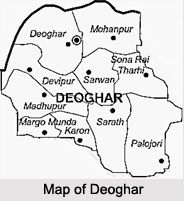
Deoghar in Jharkhand
Deoghar is the divisional headquarters of Santhal Parganas located in Jharkhand and is popular for the famous Baidyanath temple and Shiva Temples.
The Asiatic Society of Mumbai
Asiatic Society in Mumbai is the temple of Asian Studies from the time of British rule in India.
Vasco da Gama / Vasco City
Vasco da Gama / Vasco is the biggest city of Goa and is one of the most visited for its perfect amalgamation of business as well as leisure options.
Agriculture of Ladakh
Agriculture in Ladakh is primarily practiced in the short summer season due to its cold desert climate. Farmers grow hardy crops like barley, wheat, p...
Related articles in Cities of India
Holy Cities of North India
Holy Cities of North India are having the rich history of Hinduism and the entire civilization was grown up with the hands of beliefs, rituals and the...
Holy Cities of South India
Holy Cities of South India gives the detailed cultural formation of Dravidians from the early era, which later developed to the world by the Pallavas...
Holy Cities of West India
Holy Cities in West India were established by the rulers of Rajputs and the Satvahana Dynasty and the medieval rulers of Junagadh.
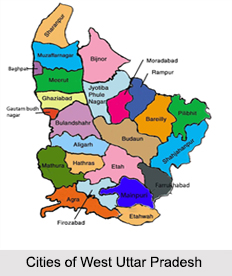
Cities of West Uttar Pradesh
Cities of West Uttar Pradesh include Meerut, Bulandshahr, Ghaziabad, Saharanpur, Muzaffarnagar, Bijnor, Bareilly, Rampur, Agra, Aligarh, Mathura and m...

Port Cities of South India
Port Cities of South India are developed from the early phase of colonial era when the Portuguese and the French traders came to India