Punjabi Drama

Punjabi drama is a combination of both Sanskrit as well as western plays, though the influence of English drama is seen more. The advent of properly structured and successful dramas is said to have started with the works of Ishwar Chander Nanda.

About Punjabi Drama

Punjabi DramaPunjabi drama has always been a mixture of the elements of English as well as Sanskrit drama. However, the impact of English drama, especially of Shakespeare, has been greater than that of traditional Sanskrit drama. In fact, Sanskrit drama and poetics, though they flourished in this land in ancient times, ironically, did not have much influence in shaping the drama developed in the twentieth century.

The writing of Punjabi plays had already started in the early part of the twentieth century. Some of the playwrights and works during this time include Bhai Vir Singh (Raja Lakhdata Singh, 1910), Kirpa Sagar (Maharaja Ranjit Singh and Dido Jamval), Bawa Budh Singh (1878-1931) (Chander Hart and Mundri Chhall (The Magical Ring)), Charan Singh (1853-1908) (Rani Sarab Kaur), Gurbax Singh Barrister (Mohan Bhaia, 1912), Brij Lai Shastri (Puraan Natak, 1919, Partigya, Vasva Datta, 1925). However, the first successful plays in Punjabi which was written in a realistic style along the lines of Western drama was by Ishwar Chander Nanda (1892-1966). His predecessors did follow models of Sanskrit plays, but Nanda started writing under the direct influence of Western drama. He came in contact with Norah Richards and Philips E. Richards of Dayal Singh College, Lahore, during his student days and started writing short plays in Punjabi. Dulhan (The Bride) and Bebe Ram Bhajni were Nanda`s two one-act plays, which pioneered modern Punjabi drama.

Nanda`s first one-act-play was staged in 1914, and his full-length play Subhadra was published in 1920. He has written two other full-length plays, War Gharjan Lily da Viah (1938) and Social Circle (1953), and a Punjabi adaptation of Shakespeare`s Merchant of Venice entitled Shamu Shah (1928). Besides these, he wrote over a dozen one-act plays, published in two collections, Jhalkare (Reflections, 1949) and Lishkare (Flashes, 1956).

The main themes of Nanda`s plays were the various social problems of the day. In Subhadra, he deals with the problem of widow remarriage; in Var Ghar Jan Lily da Viyah, he contrasts love marriage and arranged marriage; and in Social Circle, he portrays the urban, middle-class elite who arrange their "social meets" merely to promote their narrow commercial interests.

The most important contribution of Nanda`s plays is that, with them, Punjabi drama is freed from religious and mythological themes. He propagated new values through young men and women educated in schools and colleges. That is why he highlights mutual conflict between the two generations of the Punjabi middle class. To Nanda`s credit, while adopting Western techniques of drama, he made full use of the folk theater tradition of Punjab, blending the two in a brilliant pattern. His presentation of marriage scenes, religious ceremonies, superstitions, the ignorance of the village folks, folk songs and folk dances, and so on invests his plays with a Punjabi character.
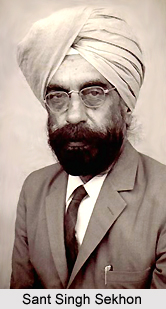
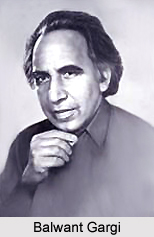
Punjabi DramaThe later playwrights of Punjabi drama were greatly influenced by Nanda. They were the ones responsible for shaping the future Punjabi drama into a theater moulded and motivated by Western drama on realistic lines. Those who followed him included Joshua Fazal-ud-din (1903-73), Harcharan Singh (1914), Sant Singh Sekhon (1908), Balwant Gargi (1916), and a few others. The writers who were almost contemporaries of Nanda were Gurbakhsh Singh Preet Lari (1895-1978), Mohan Singh Dewana (1899-1984), Harcharan Singh, Gurdial Singh Khosla (1912), Roshan Lai Ahuja (1904-87), and Gurdial Singh Phul (1911-88).

It may be noted that some of the writers of this generation were writing in other genres, and so drama and theater was not their stronghold. They were primarily writing drama only for enriching this form also; otherwise, they distinguished themselves in other forms of literature. For example, Dewana gained fame in poetry and literary scholarship, Gurbakhsh Singh in prose, and Sant Singh Sekhon in fiction and literary criticism, but a few of them devoted themselves wholeheartedly to drama. Except for Sant Singh Sekhon, most of these playwrights contributed to the growth of popular drama nurtured by Harcharn Singh. It was taken forward by Gurdial Singh Khosla, Roshan Lai Ahuja, and Gurdial Singh Phul, all playwrights of the first generation. These playwrights wrote on contemporary social, historical, and mythological themes. The dramatization of Sikh cultural ethos was also a favorite subject of these playwrights. The defining feature of these playwrights was their farcical or melodramatic impact, which did not rise above the level of Ram Lila performances. The various plays of this generation gained great popularity with the audience and their art remained untouched by modernism.
History of Punjabi Drama

Amrik SinghHistory of Punjabi drama shows a colourful progress of this literary genre. Since its very inception, Punjabi drama has always been a mix of English as well as Sanskrit elements of drama. However, the influence of English drama has always been more profound and the structure followed in Punjabi plays has mostly followed the English model. The earliest Punjabi plays are said to have started with the works of playwrights like Bhai Vir Singh (Raja Lakhdata Singh, 1910), Kirpa Sagar (Maharaja Ranjit Singh and Dido Jamval), Bawa Budh Singh (1878-1931) (Chander Hart and Mundri Chhall (The Magical Ring)), Charan Singh (1853-1908) (Rani Sarab Kaur), Gurbax Singh Barrister (Mohan Bhaia, 1912), Brij Lai Shastri (Puraan Natak, 1919, Partigya, Vasva Datta, 1925). However, the first properly structured and successful plays in Punjabi have been written by Ishwar Chander Nanda. He was greatly influenced by Western dramas and wrote a number of one act plays as well as short playe before moving on to full length plays. The topics he dealt with in his plays were most often contemporary social issues and these gained a lot of popularity with the audience. There were a number of playwrights who followed Nanda and were quite popular in the field of Punjabi literature. They include names like Harcharan Singh, Joshua Fazal-ud-din, Gurdial Singh Khosla, Roshan Lai Ahuja etc. Harcharan Singh contributed a lot towards furthering and nurturing popular drama.
There is no doubt that Harcharan Singh and the playwrights who followed his lead added quantitatively to the body of dramatic literature in Punjabi, but they have offered little by way of quality, which appeared only when stalwarts like Sant Singh Sekhon, Balwant Gargi, and Amrik Singh (1921) made their contribution. These writers have brought vitality and freshness to Punjabi drama. With them began the trend of progressive writing. Sekhon has given a new dimension to Punjabi drama by means of a logical interpretation of contemporary reality. He is responsible for evolving a form of Punjabi drama that is called intellectual drama. Instead of presenting matter-of-fact details, Sekhon, in this type of play, subjects themes to intellectual insight and philosophical scrutiny. Sekhon, in his more than a dozen plays, raised exciting debate on various themes of contemporary social and cultural relevance, which has made some of his plays very controversial. Some of his very well known plays include Kalakar (The Artist, 1946), Moyian Sar na Kai (Gone and Forgotten), Bern Bandh Na Sakyo (You Did Not Bind the Logs of the Float), Narki (Denizens of Hell, 1952), Damyanti (1962), and Miner Pyara (The Dear Friend).

A split developed during this time between literary drama and drama meant for the stage. The plays of Sant Singh Sekhon, though impressive, were scarcely staged. Defending his plays, he argued that they could not be staged for they represented times ahead of him. The existing theater was not adequate to produce his plays because of its limitations. On the other hand, some Punjabi critics characterized these plays as literary plays at best, having no potential to turn into a stage reality. Roshan Lai Ahuja accepted that there could be both kinds of plays- literary meant for reading only and others worthy of stage production. Thus, for some time, there existed a state of isolation between the literary, on one hand, and stage drama, on the other, in Punjabi. Balwant Gargi, one of the most distinguished names in Punjabi drama and theater arts, brought an end to this controversy by laying the foundations of a mature, professional theater in Punjabi. His plays are a happy fusion between the requirements of stage and the demands of literature. The dialogue of his plays has a literary grace and poetic charm. Punjabi folklore in its diverse manifestations lends meaning to his plays and makes them memorable.

His earliest work, Loha Kut (The Blacksmith, 1944), created a stir in Punjabi literary circles for its unusual theme and distinct form. It is a very sensitive play with an equally unusual theme: the problem of suppressed passions. In it, the inner dreams and aspirations of both mother and daughter are ruthlessly crushed in the suffocating atmosphere of the blacksmith Kaku`s home. The daughter revolts against the orthodoxy and oppression and elopes with her sweetheart. The mother follows the example of her daughter and leaves Kaku, even though they have been married 18 years. At a symbolic level, the play deals with the elemental and primordial in human nature.

Gargi, under the impact of pragtivad (progressive movement), wrote a number of plays with a Marxist angle. Notable among them are Ghuggi (The Dove), Biswedar (The Feudal Lord), Sail Pathar (Still Stones), Kesro (Name of Woman), and Girjhan (Vultures, 1951). These plays are on themes such as the world peace movement, the agrarian struggle, national reconstruction etc. In his Dhuni di Agg (The Dark Ritual), he breaks with the realistic tradition and represents love and hatred as primal forces through the symbolism of red flames of fire contrasted with the darkness of night. Among his plays based on Marxist ideology, Kanak di Bali (Stem of Wheat) departs from realistic tradition and introduces an element of lyricality from the indigenous folklore. He attains a rare height in Sultan Razia, a historical play that deals with an action-packed period of Indian history, from the dying Iltutmish to the death of Razia Sultana. It is a period of uncertainty and conspiracies resulting in ruthless killings for the throne. This play in its Hindi version was staged by the National School of Drama under the directorship of E. Alkazi and thus brought Gargi to national fame. In another play, Saunkan (The Other Wife, 1979), he deals with the triple relationship among mother, son, and daughter. Gargi is also an author of a scholarly treatise on Indian stagecraft entitled Bharti Drama, which won him a Sahitya Akademi Award.

Among the older generation, Kartar Singh Duggal, a leading fiction writer, wrote plays that have been produced mainly by All India Radio. He is credited with developing a form of the radio play in Punjabi. To meet the needs of the radio play, he uses his characters as symbols. His play Puranian Botlan (The Old Bottles) is a meaningful critique of the corrupt behavior of the urban middle class. His other notable plays include Auh Gaye Sajjan Auh Gaye (There Goes Our Good Friend, 1942), Ik Siffer Siffer (One Zero Makes Zero, 1941), and Mitha Pant (The Sweet Water), all of which have been produced successfully several times over the radio. Duggal in these plays seems to have been impressed by the technique of T. S. Eliot and Christopher Frye in the matter of the use of rhythmic prose in his plays.

Most of the playwrights of the pre-independence period continued writing after independence, and some, like Gurdial Singh Khosla, Harcharan Singh, Kartar Singh Duggal, and Sant Singh Sekhon, wrote plays on the problems of rehabilitation of refugees following in the wake of partition of the country, yet a group of new young writers, namely, Amrik Singh, Harsaran Singh (1929-94), Gurcharan Singh Jasuja (1925), Surjit Singh Sethi (1928), Kapur Singh Ghuman (1927-84), and Paritosh Gargi (1923), introduced a few new themes and techniques in their plays.

Punjabi Drama and Theatre from 1980 Onward

Punjabi drama and theatre from 1980 onward passed through most difficult times. In this period, the people of Punjab suffered the most painful conditions of reckless killings and tensions between the two major religious groups of Punjabi, Hindus and Sikhs. There was an atmosphere of total darkness and dissolution, with ever increasing terrorist activity of looting and killings and fake police encounters, with women widowed and children orphaned.

On this pretext, most of the theatre groups concentrated on the Punjab problem and churned out scripts and staged plays on this problem. Gursharan Singh, the most notable of the artists, took his crisp, message oriented plays from village to village and, in a loud voice, warned the masses of the dangers of religious fundamentalism. His plays written and enacted during this period were repeatedly applauded, enjoyed, and re-enjoyed by the common people. Ik Kursi, Ik Morcha te Hawa vich Latke Lok (A Chair, an Agitation and People Hanging in Midair), Curfew, Hitlist, Baba Bolda Hai (The Old Man Speaks), Bhai Manna Singh, Chandigarh Puare di jarh (Chandigarh, The Root Cause of Discord), and others were being staged at every corner of the state, and people in large numbers would witness these plays.

There was no artistic quality in them, nothing that would make them a good example of professional theatre, yet they had a sway on the people. Gursharan Singh himself does not boast of their finesse, but he measures his success in terms of their delivery of a message. He represents the Janvadi (the people`s) movement in Punjabi theatre. Other theatre artists, such as Atamjit, took a different position. They do recognize the importance of a message, but for them theatre is a unique art: it must be conceived in terms of dramatic metaphor, it must be transformed into a metaphorical mode of existence, and these metaphors should unfold meaning in a future-oriented movement of time. Therefore, there must be a significant experiment in form. His Seenan (Stitches) and Ajit Ram are not just tear-jerkers; they are mature pieces of new experimentation in form. Even his Rishtiyan da Ki Rakhiye Nan (How to Name the Kinship Relationships), staged by a number of theatre groups, is found to be relevant to the communally charged atmosphere of the 1980s and early 1990s. An adaptation of Saadat Hassan Manto`s short story, Toba Tek Singh, is presents in spectacle the story of the country`s partition in an ironic mode.

Sonal Mann Singh, Atamjit, Charan Das Sidhu (Delhi) Kewal Dhaliwal, Navnindra Behal and a host of other directors and producers are engaged in widening the vision. But still, drama and theatre remain the weakest link in twentieth century Punjabi literature. Punjabi theatre is still not flourishing due to paucity of scripts, and very few playwrights write good scripts. In their absence, the theatre has to depend on adaptations and translations from other languages. There is no doubt that the new interest in theatre in Punjab is here to stay, yet there is much to be done to improve the future of Punjabi theatre.

Recently updated articles in Indian Literature

Gadyakarnamrita
Gadyakarnamrita Thumbnail

Gadyakarnamrita

Gadyakarnamrita is a 13th-century Sanskrit literary work written mainly in prose. It describes the ninety-day battle at Srirangam between the Hoysala...

Women Writers in Malayalam Literature
Women Writers in Malayalam Literature Thumbnail

Women Writers in Malayalam Literature

Women writers in Malayalam literature have worked incessantly to make a place for their literary works. In the earlier periods, they were completely o...

Comrade Kirillov, Novel by Raja Rao
Comrade Kirillov, Novel by Raja Rao Thumbnail

Comrade Kirillov, Novel by Raja Rao

Comrade Kirillov, a distinctive creation of Raja Rao, is presented as a brief yet incisive novelette that offers an ironic portrayal of the self-contr...

The Foreigner, Novel by Arun Joshi
The Foreigner, Novel by Arun Joshi Thumbnail

The Foreigner, Novel by Arun Joshi

“The Foreigner” is a book authored by Arun Joshi and published by Vision. It is an illustrious creation in the entire career of Arun Joshi, the famous...

Short Story in Telugu Literature
Short Story in Telugu Literature Thumbnail

Short Story in Telugu Literature

Short Story in twentieth century Telugu Literature was extremely popular and growing in and developing in a major way. Their popularity was greatly fa...