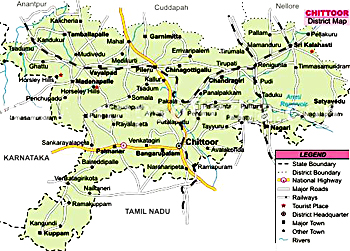
 History of Karur district deals with the rule of the Cheras, Chola dynasty, the Nayak, and the British successively. Karur is one of the ancient places in the state of Tamil Nadu state. There are evidences to suggest that the district of Karur used to be the centre for old jewellery-making and gem setting, gold being imported primarily from Rome, as seen from a number of excavations in the district. According to the Hindu mythology, Lord Brahma started his work of creation at this place and therefore it is also known as the `place of the sacred cow`. The district of Karur holds a very long history and has been sung by several poets of Sangam Age. In history, this district formed the battleground of a number of Tamil Kings like Chera, Chola, Pallavas and Pandya because of strategic location. The Karur district possesses a rich and glorious cultural heritage.
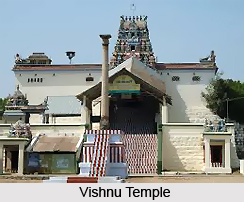
Karuvoor Thevar, born in the district of Karur is one among the nine devotees who sung the divine Music Thiruvichaippa, which is the ninth Thirumurai. He is the single largest composer among the nine authors of Thiruvichaippa. He lived during the reign of the great Rajaraja Chola I. In addition to the famous Shiva temple, there is also a Vishnu temple at Thiruvithuvakkodu, a suburb of Karur, sung by famous Kulasekara Alwar (7th-8th century AD) who was the ruler of Kongunadu. The same temple is presumably mentioned in the great epic Silappadikaram as Adaha Maadam Ranganathar whose blessings was sought by Cheran Senguttuvan before his expedition of North India.
Karur town in the district of Karur is one of the oldest towns in the state of Tamil Nadu and has played a very significant role in the history and culture of the Tamils. Its history dates back over two thousand years, and has been a flourishing trading centre even in the early
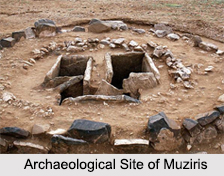
 Sangam days. Epigraphical, archaeological, numismatic and literary evidences have proved beyond doubt that Karur was the capital of early Chera kings of Sangam Age. It was called Karuvoor or Vanji during Sangam days. There has been a plethora of rare findings during the archaeological excavations undertaken in the district of Karur. These include mat-designed pottery, mud-toys, bricks, Roman coins, Pallava Coins, Chera Coins, Rasset coated ware, Roman Amphorae, rare rings, etc. Karur was established on the banks of Amaravathi River which was called Aanporunai during the Sangam days.
The names of the early Chera kings, who ruled from Karur district, have been found in the rock inscriptions in Aru Nattar Malai close to Karur. The Tamil epic Silapathikaram mentions that the famous Chera King Cheran Senguttuvan ruled from Karur. In 150 Greek scholars Ptolemy mentioned `Korevora` (Karur) as a very famous inland trading centre in the state of Tamil Nadu. After the early Cheras, Karur was conquered and ruled by the Pandyas followed by Pallavas and later the Cholas. Karur was under the rule of Cholas for a long time. Later the Nayak followed by Tipu Sultan also ruled Karur. The British added Karur to their possessions after destroying the Karur Fort during their war against Tipu Sultan in the year 1783. There is a memorial at Rayanur near Karur for the warriors who lost their lives in the war against the British in the Anglo-Mysore wars. Thereafter, Karur became a part of British India and was first belonged to Coimbatore districtand later Tiruchirapalli district.
The district of Karur is also a part of Kongunadu. The history of Kongunadu dates back to the eighth century. The name Kongunadu originated from the term `Kongu`, which means nectar or honey. Kongu came to be known as Kongunadu with the growth of civilization. The ancient Kongunadu country was constituted by a number of districts and taluks which are presently known as Palani, Dharapuram, Nammakkal, Karur, Erode, Salem, Thiruchengodu, Dharmapuri, Nilgiris, Satyamangalam, Avinashi, Pollachi, Coimbatore and Udumalpet. Kongunadu was having enormous wealth, pleasant climate and distinct features. It was ruled over by the Chera, Chola, Pandya, Hoysala, Muslim rulers and finally the British.