 History of Kanpur starts with the evidence of the settlement of the ancient Hindu king and referred to as Kanhpur. The area did not find much significance till 1765, when Shuja-ud-daulah, the Nawab of Avadh was defeated in battle by the British at Jajmau. Then Kanpur was officially transferred to the British under a treaty signed in 1801 with the ruling Nawab of Avadh and was acknowledged as a district in 1803.
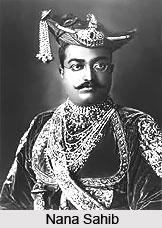
Considering the strategic location of Kanpur on the banks of the Ganga, the colonial traders decided to set up business in this calm land, thus making it a thriving garrison town. The history of Kanpur saw its most significant and probably most dreadful period during the Mutiny of 1857. Nana Sahib, one of the chief players in the events of India`s first uprising rebellion against colonial rule, declared independence on 7th June 1857 in Kanpur.
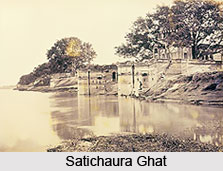
The garrison commander Brigadier General Hugh Wheeler came back into trenches dug along a canal in the cantonment area with about one thousand British residents. Towards the end of June, the garrison surrendered on the condition of safe passage to Allahabad. As they were boarding boats at the Satichaura Ghat, a group of mutineers assaulted with swords and guns. Most of the men were killed; the women and children who survived were taken prisoner and kept at the Bibighar.
The history of Kanpur narrates the event of July 15th, when substantial relief came in the form of fresh British forces under the command of Brigadier General Havelock. Guessing the possibility of defeat, the Indian soldiers also killed the couple of hundred women and children who had survived the Satichaura massacre. Their mutilated bodies were then thrown into a nearby well. The British, on their part called upon dreadful revenge, putting to death several innocent locals and shooting prisoners from the mouth of cannons. As the Mutiny was subverted, Nana Sahib escaped and possibly died in 1859. After the British took possession of Kanpur once again, the well was bricked over and a memorial was constructed on it with a cross raised at the site of the horrific massacre.
The modern history of Kanpur experienced the city to have regained its pre-eminence as an important industrial town with the establishment of leather factories and cotton mills. The Harness and Saddler Factory was started in 1860 to supply leather products to the army while the first cotton mill begun in 1862. From then on Kanpur has been one of the most important cities and came in forefront of the leather and cotton industry of north India.