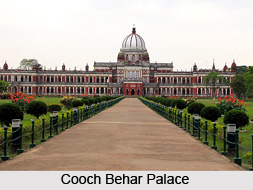
 The history of Cooch Behar is synonymous with the grandeur of the kings, palaces & temples and its influence can be noticed from the magnificent temples & palaces that are dotted over the entire region. It is deciphered from the excavated evidences and the inscription of the Allahabad Pillar, that the ancient territory of "Kamrup" (which existed in the 4th century) played an important part in the formation of the present Cooch Behar district of West Bengal. The ancient history of Cooch Behar can be traced back to the period of the Pala & the Senas (11th-12th century). During the 15th century when the incompetent successors of the Senas declined, the western part of the kingdom came under the sway of the Khen Dynasty and form a new kingdom of "Kamta". It is believed that the present Cooch Behar originates from this "Kamta". Critics opined that the "Koch" dynasty is the lineage of the successor of the Khen Dynasty. But the widely accepted fact is that Maharaja Viswa Singha was the founder of the independent Koch kingdom in1510 to 1530 A.D.
The territory of Kamta has been ruled by different kings for several years and was disintegrated till Maharaja Viswa Singh managed to consolidate all the parts and formed an integrated whole of Kamta.In the middle of the 17th century the Kamta region came under the control of the Mughals and they named it as "Cooch Behar". In the accounts of the Muhgal period Badshahnama, ShahJahannama, Tarik -I -Assam & Alamgirnama, Cooch Behar is mentioned as Kamta and the Koch Kings, the precursor of the Muslims as "Kamteswar".
Soon with the uprising of the British Raj in India, the domination of the Mughals began to be vanished and Cooch Behar was simply existed as a princely state. It was directly controlled by the British east India Company, yet placing some native rulers as their delegates. By an agreement dated 28th August 1949, the king of Cooch Behar (erstwhile a feudatory ruler of the British) yielded the whole authority to the Dominion Government of India. The transfer of the administration to the State Government implemented on 12 September 1949 and Cooch Behar started functioning with the status of a separate district of West Bengal from 19th January 1950.