
Historical Kavyas deal with the contemporary Kings and the style also depended on courtly patronage. A Kashmiri poet Jalhana was a member of the Sabha of Alarhkara. He wrote an account of the life of the king of Rajapuri, Somapalavilasa, who was conquered by Sussala. The tedious Jain monk Hem Chandra (1088-1172) wrote Kumarapala Charita or Dvyashrayakavya while the Chalukya king of Anhilvad, Kumarapala, was reigning and at the pinnacle of his fame about the year 1163.
The second name of the poem is so as it consists of two parts, one has twenty Sanskrit cantos in Sanskrit and the other has eight Prakrit sections. The poem includes some account of the ancestors of his hero. It has a distinct value for the history of Chalukyas. However Hem Chandra was a sincere Jain who saw things deformed by his devotion to his religion. His cantos (xvi-xx) celebrate Kumarapala`s rule and represents the king as a loyal follower of the principles of Jainism.
The poem Prithvirajavijaya is an account of the victories of the king of Ajmer and Delhi, Prithviraj who won over Sultan Shihab-ud-din Ghori in 1191. The poem seems to have been written just after that victory. It is an unfinished piece of composition. The author is uncertain; however there is a probability of him being a Kashmirian, as is suggested by his imitation of Bilhana`s style.
A minister of the princes of Gujarat, the Vaghelas, Lavana-prasada and Viradhavala is considered responsible for the writing of two eulogies. One being the Kirtikaumudi of Somesvara Datta (1179-1262) and the other is the eulogy of Vastupala, who was an excellent minister of a type well known in Indian history. It emphasizes on various aspects of Indian political and social life. The Surathotsava in fifteen cantos by the same author is probably a political allegory, as it ends with account of the poet`s own history. Sukrtasamkirtana by Arisinha is another panegyric of the thirteenth century that has been written in eleven cantos which is of great historical value. Sarvananda had composed a panegyric of a pious Jain layman who aided the people of his town by building new walls and providing them great support in the terrible famine of Gujarat.
Ramapdacharita of Sandhya-kara Nandin has historical events vaguely. The feats of the powerful king Ramapala of Bengal have been described. The Rajendrakarnapura of Sambhu is a panegyric of Harsha Deva of Kashmir at whose court he also wrote the Anyoktimuktalatdgataka.
Finally is the work of the Kashmir writers who continued the Rajatarangini, Jonaraja, who died in 1459. His pupil carried on the tale to some years after the annexation of Kashmir by Emperor Akbar. However their work has no originality or merit. The total of their work is not more than half that of the Rajatarangini.
Historical Kavya in Sanskrit Literature
Historical Kavya has not been created in an exceptional manner as compared to other branches of Indian Literature is concerned.
Recently updated articles in Indian Literature
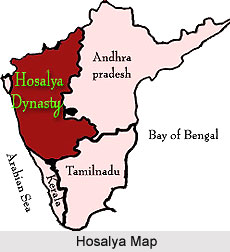
Gadyakarnamrita
Gadyakarnamrita is a 13th-century Sanskrit literary work written mainly in prose. It describes the ninety-day battle at Srirangam between the Hoysala...
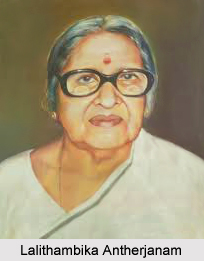
Women Writers in Malayalam Literature
Women writers in Malayalam literature have worked incessantly to make a place for their literary works. In the earlier periods, they were completely o...
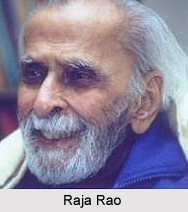
Comrade Kirillov, Novel by Raja Rao
Comrade Kirillov, a distinctive creation of Raja Rao, is presented as a brief yet incisive novelette that offers an ironic portrayal of the self-contr...
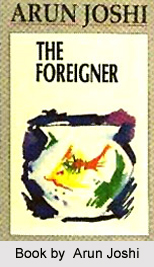
The Foreigner, Novel by Arun Joshi
“The Foreigner” is a book authored by Arun Joshi and published by Vision. It is an illustrious creation in the entire career of Arun Joshi, the famous...
Short Story in Telugu Literature
Short Story in twentieth century Telugu Literature was extremely popular and growing in and developing in a major way. Their popularity was greatly fa...
Related articles in Indian Literature
Mythological Themes in Indian Literature
Mythological themes in Indian literature have been integral to every ancient and contemporary writer and their path to f
Literature During Gupta Age
It is during the Gupta Age literature in the form of poetry, epos and drama gained a colossal importance.
Literature of Aravidu Dynasty
Sanskrit and Telugu were the popular literary medium of communication during Aravidu dynasty.
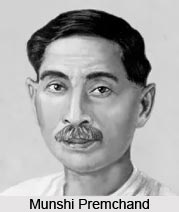
Munshi Premchand
Munshi Premchand was a legendary Indian writer notable for his modern Hindustani literature. A writer of a very high caliber, Premchand`s writings hav...
Sanskrit Poets
The names of some of the Sanskrit Poets are Bharavi, Devarshi Ramanath Shastri, Jayadeva and Srinivas Rath.