
The twenty-eighth yoga sutra explains about the adept way in which a yogi must handle the latent impressions and cautiously eradicate them. The gap or fissure between the seer and consciousness increases by the breeding of agitations and disharmonies. A yogi needs carefully to extinguish these latent impressions in order to establish peace and serenity within the soul and seer. By essential vigour and life-force in yogic practice, the punctures of consciousness can be closed.
hanam abandonment, extinction, harm, deficiency, damage
esam of these
klesavat afflictions
uktam uttered, spoken, said
In the same way as the sadhaka strives to be free from afflictions, the yogi must handle these latent impressions judiciously to extinguish them.
The gap between consciousness and the seer can rear disharmony and disturbance in one`s self. As fire is deprived of fuel, likewise, the yogi has to remove the latent impressions from the consciousness and extinguish them, for it to be in harmony with the seer.
Patanjali advises the yogi to eliminate disturbances by reintroducing yogic disciplines with faith, vigour and vitality. As the sadhaka earlier strove to rid himself of the sufferings of avidya, asmita, raga, dvesa and abhinivesa, the exalted yogi must, through practice, press, dry out and close the perforations in the consciousness.
iv. 27 stated that subconscious impressions surface in the form of intellectual pride, which hinders progress towards the goal of union with the divine seer. As roasted seeds do not germinate, so the fire of wisdom must burn out impressions and ambitions, ending their power to generate disturbing thoughts, so that the consciousness maintains its union with the seer forever.
Hanam esam klesavat uktam
This is the twenty-eighth yogic sutra that is contained in the fourth phase of the Patanjali Yoga Sutras.
Recently updated articles in Yoga
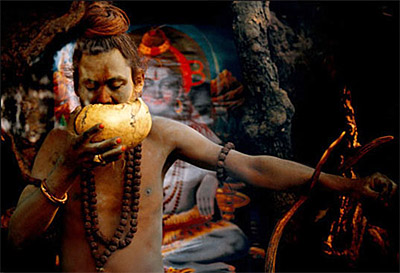
Khanda Manda Yoga
Khanda Manda Yoga is a difficult form of yoga where the Yogi cuts off his own arms and legs with a sharp cleaver, that is axe-like knife, and throws t...

Kaivalya Pada
Kaivalya Pada, the fourth chapter of Patanjali Yoga Sutra denotes an absolute, indivisible state of existence of the Yogi. The Kaivalya Pada is someti...
Vibhuti Pada
Vibhuti is the Sanskrit term for “power” or “manifestation.” In this third chapter, Patanjali introduces the final three limbs of Aṣṭanga Yoga, collec...

Sadhana Pada
Sadhana Pada in Patanjali Yoga Sutra denotes the idea of practicing yoga that leads to spiritual illumination. Sadhana, the Sanskrit term for “practic...
Samadhi Pada
Samadhi Pada is the first chapter of Patanjali Yoga Sutra. In this chapter, the author explains the essence of yoga, the nature of samadhi, and the me...
Related articles in Yoga
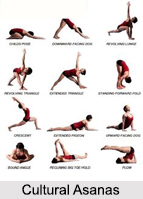
Cultural Asanas
Cultural Asanas refer to the daily physical exercise postures that train the body and mind in Yoga Practice.
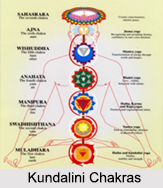
Kundalini Chakras
Kundalini Chakras are psychic energy centres or vortices, which connect between our psychic and physical energy systems.
Patanjali Yoga Sutras
Patanjali’s Yoga Sutras presents a foundational guide to the philosophy and practice of yoga. Through concise aphorisms, it outlines the nature of the...
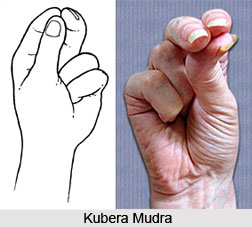
Kubera Mudra
Kubera Mudra, a form of Hatha Yoga, leads to the elevation of mental peace and physical relief by proper practice and cleanses frontal sinuses.