
Hamsa Upanishad talks about the famous Sanskrit term "Hamsa". This Upanishad is a part of the Shukla Yajur Veda. Here the individual soul is called a goose or a Hamsa.
The goose sound is repeated several times in some yoga training variants that make one weep. The meditation method of thunder-listening is a medium to awaken the goose that shines of its own harmony.
The soft sound of thunder is the sound to adjust to. The individual soul is the highest soul or paramhansa. He who listens to such thunder in his heart becomes calm. Those who are not Brahmins would refrain from using the OM mantra. The householders might benefit from other mantras to meditate upon.
Hamsa Upanisad is close to the circle of thoughts of the Nrisimhatapaniya and the Ramatapaniya Upanishads. The word Hamsa is considered as the king of mantras. Hamsa or the individual soul becomes the Paramahansa or the supreme soul through Om meditation. An individual soul is Hamsa through subtle sounds of breath. It teaches an ascent through mystical circles that include chakras, lotuses and vortexes on to the Brahmarandhra at the top of the head. Hamsa has a symbolical interpretation. The soul is conceived in the form of a bird, Hamsa.
It is considered that the Hamsa and the Paramahamsa are one. Through "Hamsa-gliding" one realizes oneness with Paramahamsa.
This article is a stub. You can enrich by adding more information to it. Send your Write Up to content@indianetzone.com
Hamsa Upanishad
Hamsa Upanishad contains assertions the mantraraja, the king of mantras. There are essential Yoga Aphorisms that are found in Hamsa Upanishad.
Recently updated articles in Indian Philosophy
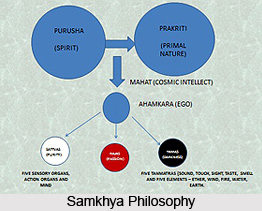
Samkhya Philosophy
Samkhya philosophy is one of India’s oldest intellectual traditions, explaining reality through the interplay of Puruṣha (pure consciousness) and Prak...
Maya, Prakriti in Hinduism
Maya or illusion is a very potent instrument of the Divine Prakriti, the Primal nature. In Hinduism one must be able to come out of Maya in order to a...
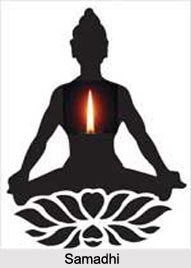
Samadhi in Hinduism
Samadhi is the result of meditation or that state of mind when there is an absence of all idea of individuality.
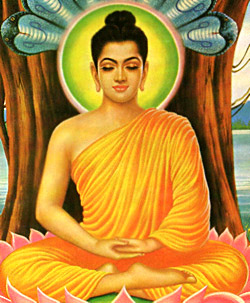
Samadhi in Buddhism
According to Buddhism, oen can only achieve samadhi through strict meditation and right concentration.

Abdul Rehman Jilani Dehlvi
Syed Abdul Rehman Jilani Dehlvi was a renowned Sufi saint of the Qadri Order in India.
Related articles in Indian Philosophy

Ajivika Philosophy
Ajivika philosophy is different from the mainstream religion
Indian Philosophy In The Vedic Period
Indian Philosophy in the Vedic Period was primarily based on the concepts of nature worship.
Achintya Bheda Abheda Philosophy
Achintya-Bheda-Abheda is a School of Vedanta that represents the philosophy of unimaginable one-ness and difference in relation to the power creation...
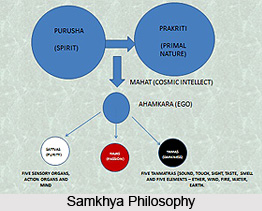
Samkhya Philosophy
Samkhya philosophy is one of India’s oldest intellectual traditions, explaining reality through the interplay of Puruṣha (pure consciousness) and Prak...
Charvaka Philosophy
The Charvaka Philosophy believes that only those things that can be perceived is the ultimate reality.