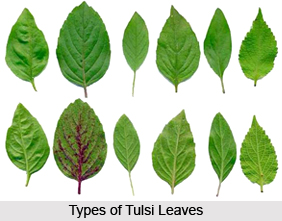
 (1) Krishna Tulsi Plants: This variety is found in almost all regions of India. It is used to treat infection of the throat and the respiratory system, cough, enteric fever, nasal lesions, infected wounds, earache, urinary disorders, skin diseases, etc.
(2) Drudriha Tulsi Plants: This variety is found mainly in Bengal, Nepal, Chatgaon and Maharashtra. Its use purifies the gaseous humour - Apaan Vayu. It relieves dryness of the" throat, lubricates it, and reduces the viscosity of phlegm. It cures inflammation of hands and feet, and rheumatism.
(3) Ram Tulsi Plants: This variety of Tulsi is found in China, Brazil, Eastern Nepal, as well as in Bengal, Bihar, Chatgaon and the southern states of India. All the parts of the plant emit a strong aroma. Ram Tulsi has a characteristic fragrance. Crushing its leaves between the palms releases a stronger fragrance than other varieties of Tulsi. This variety of Tulsi is used to treat diseases like leprosy.
(4) Babi Tulsi Plants : This Tulsi is found in hot and the temperate regions of India, from Punjab to Trivandrum. It is also found in Bengal, Bihar, etc. The plant grows to a height of one to two feet. The stem and the branches are green or light yellow. The leaves are one to two inches long, oval, pointed and sharp. The ends of branches are laden with inflorescences. The ovaries are located in the inflorescences. The seeds are small in size, black in colour, slightly elongated, round at one end and flattened at the other, with thick edges. They possess no fragrance, and have an oily and sharp, tingling taste. They become sticky when soaked in water. The plant exudes a pleasing aroma when dried.It is hot, dry, sharp and bitter. It stimulates nerve-endings causing a tingling sensation. Its leaves taste like cloves, and so are widely used for flavoring vegetables etc.
(5) Tukashmiya Plants: This Tulsi is found in western regions of India and in Persia. It is used in the treatment of throat disorders, acidity and leprosy. It imparts strength to weakened muscles.