 1. The Power To Co-operate
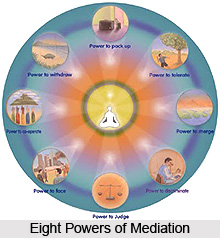
Raja Yoga Meditation imparts the power to cooperate with others. It takes away your ego and selfishness. It teaches you to give as well as accept suggestions and ideas from others.
2. The Power To Pack-Up
It gives the ability to go within learn how to pack up all wasteful thinking in a second, so that there is lightness and freedom from burdens and worries, though there may be many responsibilities. Often the mind is full of tensions, worries, and is not able to detach itself from these. Raja Yoga Meditation helps the mind to wind up its thoughts at will.
3. Power To Tolerate
Just as trees offer the same fruits even to those who pelt stones at them, a yogi tolerates all attacks on him and does well even to those who offer brickbats to him. In the light frame of mind, one will be able to tolerate all types of situations and people to the extent that there is no sense at all of having to tolerate something or someone. With the understanding that each one is simply playing their role in this immense world-drama, impatience, irritation and annoyance disappear like mists before a strong sun.
4. The Power To Accommodate
Just as the ocean accepts different rivers that flow into it, whether polluted or clean, one will be able to adjust to all that is happening around him, a yogi would be able to accommodate others with him. Even when the atmosphere is weak and impure, they would not affect the Yogi.
 5. The Power Of Judgment
Meditation enables one to take correct and quick decisions. One will get the ability to accurately assess any situation with clarity and confidence. In a detached, impartial state of mind, one can judge ones own thoughts, words and actions to see if they are beneficial. One will become a judge of the self and not of others.
6. The Power to Withdraw
Meditation makes one realize that one is not the body but a soul, which is nothing but an enlightened point of light that has various qualities. This fact allows the yogi to withdraw him or her from all the worries and tensions and enable the yogi to contract into a point. A person would be able to retract him or her from any situation and remain protected, in the same way as a tortoise would retreat into its shell in the moment of danger or just to rest.
7. The Power Of Discrimination
Just as an expert jeweler can easily distinguish the false from the pure diamonds, one will acquire the power to distinguish between right and wrong or good and bad. One can accurately discriminate between real truth and the apparent truth, between things of temporary value and those of eternal value and between superficial and the subtle. The power helps in recognizing illusions even when they are sweetly decorated and enticing.
8. The Power To Face
Meditation develops the power to endure hardships. Adversities like death of close ones may come and high storms may rage strongly, yet the yogi`s flame of equanimity does not get extinguished. Having confidence in ones spiritual state brings the courage to face any type of situation in a positive manner.