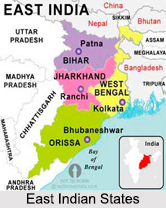
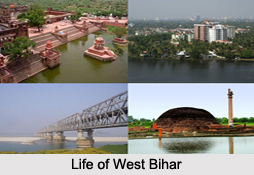
 Economic Condition during Turko Afghan Rule was unorganised, that crippled the entire economic condition of Bihar and some adjacent parts. Feudalism was the basis of all organisations during the medieval period of history. The Muslim political thinkers made the required adjustments with the prevailing financial system. Their main object was solvency and the basis of our finance was land revenue.
The state did not follow any organized economic or financial policy. It did not aim for the improvement of the condition of the people. No attempt was made to improve the method of production and the question of equitable distribution was beyond the policy of the state.
For assessment of land revenue all cultivated lands were classified into following sections:
(i) Ushri Lands were subdivided into (a) lands whose owners accepted Islam of their own accord and were left in possession of their lands; (b) all lands conquered by force and distributed among the Muslim soldiers and (c) waste land developed by the Muslims. Rulers like Qutub- Ud- Din Aibak, Muhammad Bin Tughlaq and Firoz Shah Tughlaq recognized such lands in India
(ii) Kharaji lands were settled by the state. The claims for the lands were settled by the rulers. The method was earlier practiced during the ancient times. The law books recognized the right of the king to levy taxes on land and settle the claims. This system was accepted by the Muslims when they came here.
Land Revenue System during Turko Afghan Rule
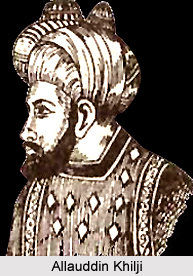
The Muslims did not try to bring about any striking reform in the land revenue system thus the normal method continued to exist. The method of assessment for the first time was adopted by Ala-ud-din Khilji. Jiziya was another source of imperial revenue. The central finance department was under the control of the Wazir. He appointed civil servants and organised agency for the collection of the revenue. There were also state factories known as Kar-khanas. Private enterprise was the order of the day. A large mass of population remained busy with the agricultural work; while others were engaged in industrial works such as textile, sugar, metal, stone, bricks and paper industries. Trade was highly organised. Bengal was the richest country in terms of cotton, ginger, sugar, grain and flesh of every kind.
However, there was no uniformity in price and it varied according to the needs. Ala-ud-din Khilji efficiently put into practice the theory of price control. The rise in the price during Muhammad Bin Tughlaq`s time is due to the fact that he organised various futile campaigns and spent extravagantly in other matters. The people had to bear the burden of heavy taxation while the nobles rolled in luxury.