
In the epic Ramayana, Khara is mentioned as a demon or a man-eating Rakshasa. Khara is the cousin brother of Ravana.
Khara, the powerful demon used to terrify the Rishis and sages living in the forest. Lord Rama was asked to assist and protect the Rishis living in the forest. Khara was allocated and given the charge by Ravana to rule this area. Khara and his army would kill rishis, disorder their yajnas, undertake sinful activities, and dominate the people.
Once Surpanaka, a demoness and the sister of Ravana was passing by Panchawati. She observed Rama, Sita and Lakshmana passing through the forest. She tries to praise and seduce Lord Rama. Rama tells her that he is married and committed to Sita, but if she wishes she can go ask Lakshmana, his younger brother. Lakshmana tells Surpanaka that he is his brother`s slave. Surpanaka feels insulted and warns to kill Sita. Then Lakshmana infuriated, cuts her nose. To take revenge, she went to her cousin brothers, Khara and Dushaan.
Khara and Dushaan with more than fourteen thousand comrades of powerful rakshasas attack Rama. Rama tells his younger brother Lakshmana to guard Sita. Then Rama all alone demolished the rakshasas. He then kills Khara and Dushaan.
Khara
Khara is the demon and the cousin of Ravana, who after several unsuccessful contests with Rama was at length slain by hi
About Khara
Death of Khara
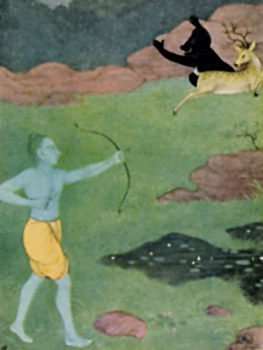 Death of Khara and the chopping of Surpanakha`s ears and nose by Rama enraged Ravana and he was determined to take revenge from the two brothers by abducting Rama`s wife, Sita. He, thus, planned to take revenge from them and summoned his most-trusted rakshasa Maricha and ordered him to go in the guise of a golden deer and deceive Rama and Lakshmana and take them far away from the hermitage.
Ravana ordered Maricha to work according to the plan but Maricha advised him to stay his hand from attempting the impossible, and Ravana, being persuaded for that time, went home to Lanka. Ravana possessed twenty arms and ten heads and he sat on his golden throne like a flaming fire fed with sacrificial offerings. He was scarred with the marks of many wounds received in battle with the gods, of royal mien and gorgeously appareled was that puissant and cruel rakshasa.
His wont was to destroy the sacrifices of Brahmins and to possess the wives of others and was blessed not to be slain by gods or ghosts or birds or serpents. Then Surpanakha came to her brother and showed her wounds, and told him of Rama, Lakshmana and Sita, and taunted him for unkindly ways in that he took no revenge for the slaughter of his subjects and his brother; then she urged him to bring away Sita and make her his wife. So he took his chariot and fared along by the sea to a great forest to consult again with Maricha, who dwelt there in a hermitage practicing self-restraint.
Maricha counseled Ravana not to meddle with Rama. He told that if Rama, once angered, he would not leave a single rakshasa alive, or held his hand from destroying the beautiful city of Lanka. But Ravana was fey, and boasted that Rama would be an easy prey. He blamed Maricha for ill-will toward himself, and threatened him with death. Then Maricha out of fear consented, though he looked for no less than death from Rama when they should meet again. Then Ravana was pleased, and, taking Maricha in his car, set out for the hermitage of Rama, explaining the trick by following which they would be able to abduct Sita easily from the hermitage.
Recently updated articles in Indian Puranas
Mandakini, Holy River
Mandakini River is a significant Himalayan river in Uttarakhand, renowned for its ecological, cultural, and religious importance. Originating near the...
Kausika, Son of Vasudeva
Kausika is a minor figure in Hindu mythology and is identified in the Vishnu Purana as the only son of Vasudeva and his wife Vaishali. He is recognize...
Tandu, Attendant of Lord Shiva
Tandu is revered as the divine attendant of Lord Shiva and the foremost exponent of the Tandava dance. According to the Natya Shastra, he instructed S...
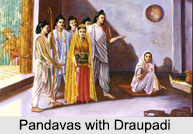
Niramitra, Mahabharata
Niramitra was a son of Nakula and Kareṇumati in the Mahabharata. A descendant of the Pandavas and the Kuru dynasty, he fought on the Pandava side duri...
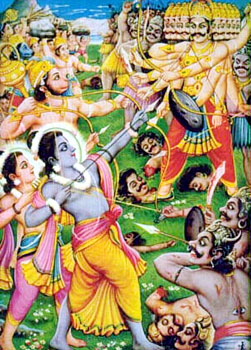
Mahodara, Ramayana
Mahodara was a prominent Rakshasa warrior, minister, and army chief who served under Rāvaṇa during the Battle of Lanka in the Ramayana. Celebrated for...
Related articles in Indian Puranas
Adhyayas in Agni Purana
Adhyayas in Agni Purana are all encompassing. The chapters have dealt with a variety of subjects related to human lives. A large number of chapters ha...
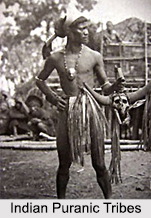
Indian Puranic Tribes
The existence of Indian Puranic tribes is often mixed with mythology and fiction that depict them as superhuman or sub.
Puranic Texts
Puranic Texts are vital according to Hindu, Jain or Buddhist religion; they describe the history of the Universe.

Puranic Shaivism
Puranic Shaivism established during the Gupta Dynasty. This puranic religion developed and expanded, and was accompanied by the development of Brahman...
Nilamata Purana
Nilamata Purana is a Kashmiri Purana that is referred by Kalhana. It is considered as one of the sources of ancient history of Kashmir.