Home > Travel > States of India > Culture of Dindori District
Culture of Dindori District
Culture of Dindori District is mainly tribal in nature. Folk songs and folk dances form an important part of the culture of Dindori District.

Share this Article:

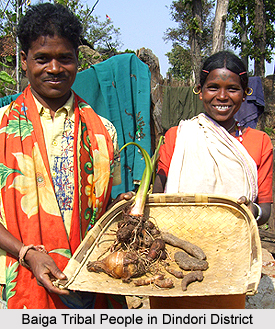
Culture of Dindori DistrictCulture of Dindori District is mainly influenced by the tribal traditions, as it is mostly inhabited by various tribal communities. Many folk dances are performed in Dindori District. The Baiga tribe and Gond tribe are considered to be fond of dances and music. For them music is a gift from God. Their dances are divided into two categories namely social and religious dances. The religious dances are performed to get blessings from God, to get rid of problems like flood and diseases.

In the religious dances there are Sua, Dussehra, Doha and Sumran whereas in the social dances Karma, Reena, Saila, Bilma, Jharpad and Tapadi are very popular among the tribes. Sua dance is performed widely on Goura Marriage in the month of October and November. The specialty of this dance is that only the female artists perform it. Dashera is the foremost dance of the Baiga tribe. This dance is performed during the festive season of Dussehra and Diwali.

Karma dance is a hereditary and social relevance dance. This dance is performed during Vijayadashmi towards the end of the year. Reena is a dance performed by the female artists only. This is a competitive dance among different villages during the festive season of Diwali. Saila dance is a male dominated dance. This dance is also a competitive dance like Reena. Bilma literally means `separation`. This dance is performed on the occasion of marriage.

Jharpat dance is performed while playing a game of asking and replying between two groups. Parghoni dance is performed at the time of marriage by a combined group of boys and girls. In this dance an effigy of an elephant is made which is used for dance purposes.

Traditional art and crafts also form an integral part of the culture of Dindori District. The art of Dindori District is predominately influenced by nature. People of this region mastered the skills in different artistic practices such as painting, sculpture and tattoo imprinting on body parts. The art of tattoo designing is prevalent in the area since time immemorial. Only women of the tribe get it designed on their body parts, believing that it would give them their identity in heaven. Thus, culture of Dindori District reflects the indigenous traditions, religious beliefs and lifestyle of the tribal people of the region.
Share this Article:

Related Articles

More Articles in States of India


East Indian States
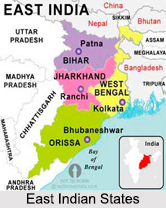
East Indian States comprises of Bihar, Jharkhand, West Bengal, Odisha and also the Union Territory of Andaman and Nicobar Islands. It defines the cultural heritage, rich historical background and the linguistic unity.
Erode District
Erode District is one of the districts in the state of Tamil Nadu. The district of Erode is having a land-locked area with no sea coast.
Purnia District in Bihar
Purnia District is located in Bihar and extends from River Ganga to Nepal. The district has a rich Hindu history and glorious past.
South Delhi District
South Delhi District is the third largest district of Delhi as far as its area is concerned. South Delhi District is known for its economic, historical, cultural and social significance.
North Indian States
North Indian States formed the cultural and religious unity in spite of having many foreign invasion and the political disturbances from the early era till the British gained supremacy in Indian sub continent.
Kendujhar District
Kendujhar District, spread over an area of 8,240 sq kms, is as varied as the whole of Orissa with waterfalls roaring gorges, mountains and minerals. The manifold expressions of nature in Kendujhar District are considered as unique.
Hooghly district
Hooghly District along the bank of the river Hooghly is one of the principal trading ports of West Bengal.
Districts of South Tamil Nadu
Districts of South Tamil Nadu consist of many tourism destinations like archaeological sites and the history of Pandyas and Cholas. Considering their proximity to the sea, many districts also boast of serene beaches and coastal beauty.
Flora of Arunachal Pradesh
Flora of Arunachal Pradesh includes infinite species and is a subject of great interests for the botanists.
Districts of South Gujarat
Districts of South Gujarat are the epicenter of Jain pilgrimages and the early Hindu kingdoms.
North West States of India
North West States of India consist of three states, which are Rajasthan, Punjab and Haryana. All of them are culturally and traditionally diverse and they have been ruled by different dynasties in historical time.
Geography Of Chittoor District
Geography of Chittoor district is spread along the topography of the land which is divided into two natural divisions; Chittoor has a dry and healthy climate.
Districts of North Rajasthan
District of Northern part of Rajasthan is dotted with ancient forts and medieval villages.
Districts of North Odisha
District of North Odisha has Bengal boundary and shares the same culture. These are reachable if one pays a weekend visit to Digha.
Districts of West Bihar
Districts of West Bihar is comprised of medieval monuments that were built by the different governors of Mughal era.
Districts of South Haryana
Districts of South Haryana consists of many cities of industrial excellence. These districts are dotted with popular tourism destinations.
Medieval History of Assam
Medieval history of Assam narrates the advent and rule of a number of kingdoms in the region. The prominent dynasties of the kingdom left an everlasting imprint on the socio cultural heritage of India.
Geography of Meghalaya
The suitable climate, highland plateaus, rivers and the flora and fauna together forms the geography of Meghalaya.
Districts of Rayalaseema
Districts of Rayalaseema in Andhra Pradesh state has urban population and rural settlements as well.
Districts of South Punjab
Districts of Southern part of Punjab depict medieval history of Punjab and the rise of Sikhs.