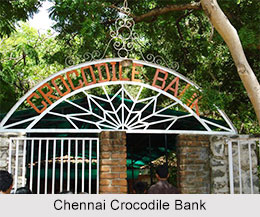
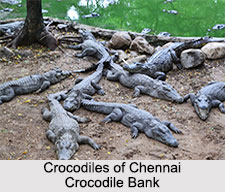
 For those who want to spend a day out in the lapse of wild flora and fauna, Crocodile Bank is the best place to visit. It is managed by The Madras Crocodile Bank Trust, established in the year 1976. It was a brainchild of Romulus Whitaker and few other people.
Being located almost forty kilometers south of the Chennai city, it has an area of 3.2 hectares in the eastern coastal region. The exotic Bay of Bengal, in the background, adds to the beauty of Crocodile Bank. Sandy coasts are all full with water bodies` thereby providing adequate water supply. To add to that, the nearby temples and beauty of Mahabalipuram, for obvious reason, attracts more and more tourists in the Crocodile Bank.
One of the important reasons that led to the germination of such a wonderful place was mainly to conserve and study three rare crocodile species of India. These are namely the Crocodylus porosus (saltwater crocodile); Crocodylus paluster, (the mugger); Gavialis gangeticus(the gharial).
It houses quite a handful of wild animals, which grew in numbers as days passed on. In the beginning there were thirty adult muggers. Afterwards the number increased to more than five thousand. Presently, the Crocodile Bank preserves more than twenty four thousand crocodiles belonging to fourteen individual categories. Siamese crocodile Nile crocodile etc are worth to note. The year was a milestone as from that year onwards the Crocodile Bank has grown by leaps and bounds. It houses the `Center for Herpetology`, the premiere organization for herpetofaunal preservation, investigation and teaching in India. According to a recent survey, apart from numerous crocodiles, the
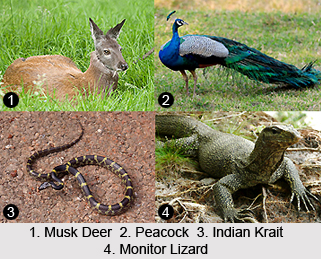
 Crocodile Bank is also a safe haven for about twelve rare There are five species of snakes, namely, the Ophiophagus hannah, King Cobra, water monitor lizards, Varanus salvator salvator, two species of pythons and albino cobras found in the nook of the bank. Ideally, the crocodile bank provides ample opportunities for the tourists to catch sight of these wild habitats, living at peace and utmost comfort in the bank.
As part of the program policy, for quite a few years, the Crocodile Bank has undertaken the venture with zoos and other related organizations by supplying crocodiles, crocodile eggs, snakes, water monitor lizards, iguanas for procreation programs and for public displays.
Crocodile Bank is also a safe haven for about twelve rare There are five species of snakes, namely, the Ophiophagus hannah, King Cobra, water monitor lizards, Varanus salvator salvator, two species of pythons and albino cobras found in the nook of the bank. Ideally, the crocodile bank provides ample opportunities for the tourists to catch sight of these wild habitats, living at peace and utmost comfort in the bank.
As part of the program policy, for quite a few years, the Crocodile Bank has undertaken the venture with zoos and other related organizations by supplying crocodiles, crocodile eggs, snakes, water monitor lizards, iguanas for procreation programs and for public displays.
At the same time they have taken the onus of supervising the task of ensuring that these wild animals should not fall in the prey of ill demands of human society. Additional reptiles at the Crocodile Bank are available for transfer and exchange to any recognized institutes.
To attract tourists within the fringes of the Crocodile bank, several school and college pupils, local and foreign tourists are being invited. For them, special talks and demonstrations are organized including the opportunity to embrace an infant crocodile or all good-natured pythons.
In addition lay person and expert herpetologists throng here both from India and outsides. Numerous visual aids like signboards, posts add to the amusement values sensitizing people to the significance of reptiles in their ecosystems. The timing to make visit to the crocodile Bank is 10.00 am to 5 pm from Tuesday to Sunday. Monday is closed for tourists who had to ether the place by paying fees of thirty rupees.
Travel system has also been improved to make Crocodile bank well connected with other regions. Chennai (42-km) is the nearest airport only forty-two kms away from the bank. It has facilities of both domestic and international passengers. The adjacent railway stations are Chengalpattu , only twenty nine kms away and also forty two kms from Chennai city.
By roads also one can reach the Crocodile Bank. There are buses accessible from place like Kanchipuram, Pondicherry, Chengalpattu and Chennai to Mahabalipuram on a regular basis. Infact The Crocodile Bank falls in the midway of Mahabalipuram for which people can even get cabs from there or also from Chennai city.