 Structure of Cotton Pygmy Goose
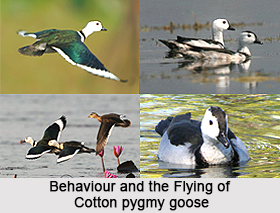
The small individuals of Cotton pygmy goose are the smallest waterfowl on earth, at as little as 160 gram and 26 centimetres. The white Cotton pygmy goose predominates in this bird`s plumage. The bill of Cotton pygmy goose is short, deep at base, and goose-like.
Genders of Cotton Pygmy Goose
The male Cotton pygmy goose in breeding plumage is glossy blackish green crown, with white head, neck, and under parts; a prominent black collar and white wing-bar. The rounded head and short legs are the salient features of Cotton pygmy goose. In flight, the wings of Cotton pygmy goose are green with a white band, making the male conspicuous even amongst the huge flying flocks of the lesser whistling duck, which share the habitat. The Female Cotton pygmy geese are pale, without both black collar and only a narrow or non-existent strip of white wing-bar. In non-breeding plumage (eclipse) male resembles female except for his white wing-bar.
Concentration of Cotton Pygmy Goose
The flocks of Cotton pygmy goose are found on the water bodies, wet lands, and the lakes of fresh waters. These are found in the rain-filled ditches, inundated paddy fields, irrigation tanks and many others. Cotton pygmy gooses are becomes very tame on village tanks wherever it is unmolested and has become inured to human proximity. The swift on the wing, and can dive creditably on occasion by Cotton pygmy goose. It is found in ponds and lakes in southern Pakistan and the western India also. However numbers are declining and it is definitely endangered.
Breeding of Cotton Pygmy Goose
Cotton pygmy goose is largely resident, apart from dispersion in the wet season, but Chinese birds make long-distance migrations to winter further south. It nests in tree holes, laying 8 to 15 eggs. This is an abundant species in Asia, although the slightly larger Australian race appears to be declining in numbers.
Feedings of Cotton Pygmy Goose
The food of Cotton pygmy goose is chiefly seeds and vegetable matter, especially water lilies; also insects, crustaceans and amny other water based plants and insects.
Nestling Season of Cotton Pygmy Goose
The nesting season of Cotton Pygmy Goose is from July to September. Its nest is a natural hollow in a tree-trunk standing in or near water, sometimes lined with grass, rubbish and feathers. It lays 6 to 12 eggs, which are ivory white.