 Local Names: Hindi Harahara; Marathi Sarpg .1oJi. Haran to/; Gujarati Mii/ana, Li/e-jad sap; Bengali Lan doga sap; Tamil Kankothi pamboo, Pachai pamboo; Malayalam Pachila pambu; Telugu Pasarika pamboo; Singhalese Ehetul/a,` Burmese Mywe sein.
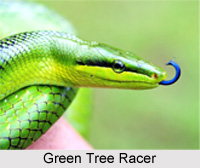
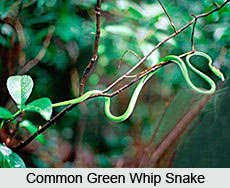
The Common Whip Snake (Ahaetulla nasutus) is green in color. The green color is produced by interaction of a yellow pigment on the scales with the blue of the skin. The blueness of the skin is itself a refractory color as the blueness of the sky.
It`s a long and slender snake with elongated pointed snout. Its eyes are large and the irises are powdered with gold and its pupil is horizontal. It has a binocular vision. Its tongue is pale pinkish with white tip. Inside its mouth it is pale pinkish. Its tail is cylindrical and is very long. Its chin and throat are white with light sky blue and yellow mottlings. When it is exited it has a striking black and white ornamentation of oblique lines exposed on the anterior two-thirds of the body. This coloration is confined to the skin and lower edges of the scale. It`s a common snake that is harmless.
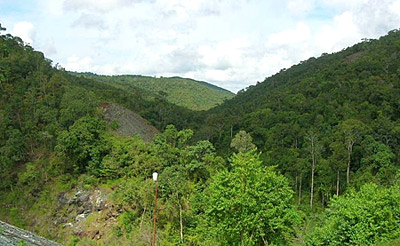
The green whip snake is found on low bushes and scrubs in jungles and gardens and groves in populated areas. It reclines on the topmost boughs of trees and escapes notice by its cryptic coloration. It is an elegant snake with a wonderful turn of speed over foliage. It is capable of obtaining support from the minutest twig and twining stem. Though a gentle snake, when disturbed it appears to be very fierce. It rears its head and fore body and the dilation of the fore body brings into vision the black and white chequering of the skin. When further exited it opens its jaws very widely and the fore body is thrown into sigmoid curves ready for striking.
The snake has the habit of striking at the eyes. The Tamil translation of the snake is "eye pecking snake". It feeds small mammals, birds, lizards, other snakes and frogs. On seeing a prey the fore body is freed, raised and coiled in a zigzag manner and it darts forward to catch the prey just behind the head keeping it dangling till its struggles cease before swallowing. Once swallowed the prey speedily passes on to the stomach by a series of shallow lateral undulation the body.
The green whip snake is viviparous and the young are born free frontal. The whip snake is mildly poisonous; there will be an occasional swelling and numbness on the bitten area.