 The Taittariya Upanishad is a part of the Taittarya Aranyaka, that is, of the Aranyaka of the black Yajur Veda. It forms a part of the seventh, eighth and ninth chapters of the Taittiriya Aranyaka. In the beginning it bears no separate title; latter it is enumerated as two distinct Upanishads, the Ananda Valli i.e. the lotus of bliss, containing the first two chapters, and the Bhrigu Valli i.e. the lotus of Bhrigu containing the third chapter.
The Taittariya Upanishad consists of two parts, viz., of what is properly called an Upanishad, the doctrine of Brahman, or of the absolutely infinite Spirit. This is formed by the first chapter or Siksha Valli, which, in accordance with the systematical exposition of the Vedanta Philosophy describes the course of instruction and of the moral and mental training, preparatory to the initiating of the student in the science of Brahman. The second chapter or the Bramhananda Valli contains the doctrine of the Taittariya Upanishad itself. To understand this one needs to know the doctrine of the Vedanta with reference to the order of creation. The Bhrigu Valli gives a narrative in confirmation of the doctrine, taught in the preceding chapter. From it is evident that the science of Brahman is not acquired at once but that there are different stages, by which a person approaches it. The three chapters have been described below:
Siksha Valli
The Siksha Valli or the first chapter of the Taittiriya Upanishad has twelve verses or Anuvakas that states about different types of meditation and ethical rules which a seeker of knowledge should practice for attain the Supreme Brahman. This chapter places great importance on meditation. The Siksha Valli deals with the discipline of Siksha or academics which comprises the study of phonetics and pronunciation. The chapter begins with a peace invocation.
Brahmananda Valli
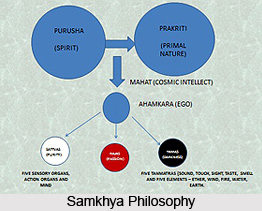
The second chapter of the Taittiriya Upanishad or the Brahmananda Valli has nine verses or Anuvakas. According to it the cause of the world, according to the Vedanta, the source of all reality, and all reality itself, is Bramhan, the supreme soul. He consists of the three qualities of goodness (Satwa), passion or foulness, or activity, (Rajas), and darkness (Tamas). These denote the three degrees of its existence, or of its power of manifestation. The knowledge of the Supreme Being is the ultimate knowledge for a living being. The Brahmananda Valli has said that the all pervading Brahman exists within the inner self of the individual but the human mind is not conscious of that existence because the inner self is periled with obscurity and ignorance. One who realises the Supreme Brahman attains eternal Bliss.
Bhrigu Valli
Bhrigu Valli or the third chapter of the Taittiriya Upanishad has ten verses or Anuvakas. Here the knowledge of the Brahman has been explained through a dialogue between a teacher and the student. Here the student is guided by the teacher so that he can reach the transcendental state or gets unified with the Atma. The notion of Brahman, as the supreme spirit and as wholly distinct from the material world, is clearly defined in this section.