Sahaja Yoga is a way of special meditation based on the experience of Self Realization or Kundalini awakening which might occur within the human body. Shri Mataji advocates that self-realization is the highest achievement of human being. Through Sahaja Yoga, an inner transformation takes place in human being, which helps one to become moral, united, balanced and integrated. Sahaja Yoga is the way to arouse divine power as the cool breeze. This power inherits the spiritual tradition of the world.
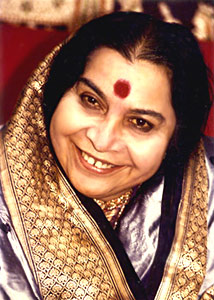
Shri Mataji Nirmala Devi
Shri Mataji Nirmala Devi introduced "Sahaja Yoga" in 1970 among the commoners in India as well as abroad. She is an erudite woman who took active part in the freedom movements of India. Shri Mataji possessed spiritual power from her very childhood but she adopted the path of spiritual mission only after fulfilling her familial duties. Mataji rediscovered the ancient art of Sahaja Yoga, which brought her worldwide recognition.
Concept of Sahaja Yoga
Sahaja Yoga is an ancient practice, which brings the sensation of all pervading divine powers in the human being. By practicing Sahaja Yoga one can reach the absolute understanding about oneself. The aim of this method of meditation is to achieve self realization through Kundalini Awakening.
Method of Sahaja Yoga
Sahaja Yoga is a very easy method to achieve self-realization. One can feel gentle cool breeze in the palms and above head after Sahaja yoga method is done. Sahaja Yoga brings relaxation in mind and body. It is very important to forgive everyone before performing the Sahaja yoga.
Self Realization in Sahaja Yoga Meditation
The awakening of Kundalini is the ultimate goal for all the ancient spiritual cultures all over the world. Shri Nirmala Mataji, the founder of Sahaja Yoga describes that the Kundalini has the power to cure one and improve one and to keep one free from all the problems of material world.
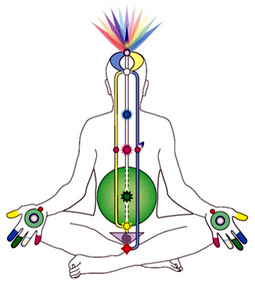
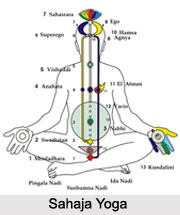
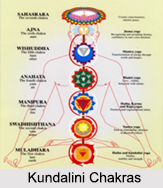
Self-Realization is the awakening of Kundalini through the Central Channel. The Kundalini awakes from the base of sacrum and gradually pierces the six Chakras located along the central line of the body and finally emerges at the top of the head at the fontanel area as a gentle fountain of Coolness. The word `fontanel` means `little fountain` that again indicates about the ancient knowledge about this phenomenon of self-realization.
Self Realization was extreme difficult to achieve. But Sahaja Yoga has made it easier to attain self-realization and this is Shri Nirmala Mataji`s gift to human society. In her words "Self-Realization is the first encounter with Reality. We have the Mother within ourselves, in our hearts, and if She is awakened, She is going to look after us. She is going to give all the protection that is needed. And there is nothing to be frightened of. Kundalini cures you, She improves you. She bestows all the blissful things upon you. She takes you away from all the worries of the grosser level." The Kundalini energy is manifested through vibration and in Sanskrit this is called "Chaitanya". Shri Nirmala Mataji says " Chaitanya is the integrated force of your physiological, mental, emotional and religious Selves."
After Self-Realization, the vibration is felt on the central nervous system. This phenomenon allows one to identify the state of the energy channels and centers or charkas of the autonomic nervous system and improve them by the application of Sahaja Yoga.
The general rule is that the sensation of lightness and coolness always means that the center or channel is clear and in the good state. Tingling sensation and a warm or hot breeze means that the Kundalini energy is working on clearing that specific center or channel.
Channels in Sahaja Yoga Meditation
The human body consists of vast and intricate subtle channel system. Which is made up of thousands of channels that carry energy throughout the body. The concentration of energy in the subtle system i.e parasympathetic nervous system is called the Chakras or energy center. The Channels that carry energy are known as `Nadis` in Sanskrit. Three primary vertical channels of energy and seven main charkas govern the entire system of human body. Our subtle system is fully activated with the awakening of the Kundalini. The Kundalini cleanses and balances the system as well as activates the charkas to impart their pure quality in the human body.

The three main channels of the body are-Sushumna Nadi, Pingala Nadi, Ida Nadi.
Sushumna Nadi : The central channel is Sushumna Nadi, also called the middle path. It begins where the Kundalini resides and passes straight up along the spine to the highest Chakra or the seventh or the Sahasrara Chakra.
The central channel is the passage for the parasympathetic nervous system, that coordinates our involuntary or autonomic nervous system activities. We do not have any conscious control over these activities. All the organs of human body have their own functions, which are performed autonomously regardless of where our attention is focused. These functions do not need our conscious control. Yet the involuntary activities of our body function according to an organized operating plan with complex interactions, synthesis and communications.
The activities that take place through the parasympathetic system are spontaneous happenings i.e. they take place naturally without our direct involvement. The rising of the Kundalini and other spiritual activities are also spontaneous. Hence the term `Sahaja` was coined to label this type of Yoga as the term means spontaneous. The implication of the parasympathetic nature of the middle path is that the rise of Kundalini is beyond our Control. This is the reason why Shri Mataji Nirmala Devi acts as the catalyst to arouse the Kundalini.
Once the Kundalini is aroused and has traveled through the Central Chanel (sushumna Nadi) upto the top of the head, one can be aware of the vast internal system. The initial self-realization is thus the beginning of a higher journey.
Pingala Nadi: The right channel or Pingala Nadi is also called the Sun Channel. It begins at the Swadhisthan Chakra or the second center and travels up the right side. The Pingala Nadi crosses over to the left temple (ego) at the Agnya Chakra. This passage provides pathway for the mental and physical energy.
When the demand for energy in the Pingala Nadi increases the left side is weakened and the desire to have joy of the spirit evaporates. When the right side dominates the personality of that person then he becomes very dry and aggressive. Excess pressure has the effect in the left temple and in the ego, which causes the channel to inflate into a balloon that blocks the central channel. The entire system affects the balance. When our sensitivity is blinded by ego, sensitivity to our own emotion is diminished. This is the reason why right-sided behavior leads to heart disease.
Sahaja Yoga practices are useful to remove negativity and balancing the charkas and channels. The charkas can be opened by various methods like using simple meditation techniques such as footsoaking, lying on the ground, sweeping the aura etc that ultimately brings the balance.The state of right channel is felt on the right side of the body. In the beginning it can be more easily felt on the right palm.
Ida Nadi: The left Channel is Ida Nadi, which is also called Moon Channel. The Ida Nadi begins at the first Chakra or Mooladhara and runs along the left side of the body, passing the Agnya Chakra or the sixth Chakra and goes straight to the temple and ten enters into the right side of the brain. It provides the passage for the energy of our desire.
The emotions are triggered from the desire or wishes. Rather emotions are desires that have not yet materialized. These desires and the related feeling travel through this left channel to the appropriate places in the body to bring about the actions to the fulfillment. Our desires are also necessary for action.
The greatest quality of the left side is to provide joy that brings a steady condition to the spirit. This can be explained from the behavior of the young children. They might wake up in the morning happily. If they experience any physical or emotional pain they do not remember it for the long time. They cry immediately but recover early and resume the state of joy. The desire of joy within a grown up man is same as it was when he was infant. Sometimes the joy is hindered from emotional or physical injuries experienced in life. Sahaja yoga provides the most effective techniques for clearing away the hurts and blows of the daily lives. Sahaja Yoga thus helps to remove tensions and recover the joy as the steady state of being.
Problems of the left side results in passivity of emotions that ultimately leads to a mental state between joy and depression. With this type of imbalance, self-discipline becomes difficult and bad conducts cannot be corrected. In the worst case one becomes lethargic and self obsessed. The Ida Channel feeds also in the skull area. So imbalance in this channel leads to excessive pressure in the brain. This cycle causes the problems like mental breakdown, epilepsy and senility or decay of the brain.
The state of the left channel is always felt on the left side of the body. In the beginning the effect of Ida Nadi is most easily felt on the left palm.
Chakras in Sahaja Yoga Meditation
There are innumerous tiny vital life forces whirling through the body, which are concentrated into centers called Chakras. Chakra is a Sanskrit term that means wheel. They are named as wheels as energies spin at these points, rotating clockwise with certain frequencies or vibration. This system has a resemblance with galaxy of planets, each spinning on its own axis. The seven main Chakras are located along the spinal cord and are energized and felt after Self-Realization. This Chakras control various parts and organs of our body. Each Cahkra is designed to maintain the perfect operation of the bodily system under its control.
The Chakras are responsible for the well being of the human body. So it is important to understand the functioning of each chakra and also the factors, which disturb Chakra balancing. Every thought and action influences the sensitivity and performance of these chakra centers. To start with Chakra balancing in Sahaja Yoga meditation, one has to eliminate the gross negativity. This might take time but the result will be felt from the beginning. Once, Self-realization is achieved and the charkas are cleared, the source of all this information will be available.
Each subtle center inside a human being has projections on different parts of the bodies. For example if one feeling a tingling sensation on the left middle finger then there is an imbalance in the left aspect of the third Chakra or the Nabhi Chakra. On the other hand a cool and light sensation on the right thumb means the right aspect of the second Chakra or the Swadhisthana Chakra is in a balanced state. Thus the knowledge of Chakras and the associated organs governed by the charkas help one to realize all the obstacles inside that bring imbalance in the subtle system.

Mooladhara Chakra: It is made up of the earth element and represents the beginning of life. When nourished and awakened this Chakra manifests a magnetic force. The people who have very strong Mooladhara Center have a good inner sense of direction. This Chakra is at the root or foundation of the subtle system. The fundamental quality of this Chakra is innocence, which forms the basis of all the moral characters. It represents action without motive or desire for the ultimate personal gain. By awakening the qualities of Mooladhara by sahaja Yoga meditation, the innocence is regained and one can take proper decisions in life. Mooldhara Chakra also governs the excretory and reproductive organs and thus directly influences the sexual behavior in human life.
The week Mooladhara Chakra is manifested in a number of ways- like poor sense of direction, poor memory, poor sense of gravity or imbalance, certain incurable disease and also the mental problems.
Swadhisthan Chakra: This chakra is suspended like a satellite on a cord from the Nabhi chakra. The fundamental quality of the Swadhisthan Chakra is creativity. After the realization one discovers that the true creativity can be achieved through thoughtless awareness (nirvichara samadhi), which can be reached through meditation. One becomes creative instrument of the collective consciousness, without ego to reveal the purity of the creativity.