 Bugun Liocichla is an Indian bird that bears a scientific name of"Liocichla bugunorum" is a passerine bird species from the Leiothrichidae family. Bugun liocichla was found in Indian states in the year 1995.
Description of Bugun Liocichla
Bugun Liocichla was first spotted in 1995 in Arunachal Pradesh. This bird was described as a new species in 2006. The description was made without the collection of a type specimen as they were too few to risk killing one. It is thought to be an endangered species, with the only known population estimated to consist of 14 individuals and commercial development threatening the habitat of this population.
Structure of Bugun Liocichla
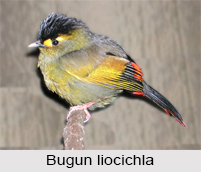
Bugun Liocichla is a small babbler with olive-grey plumage and a black cap. The face is marked with prominent orange-yellow lores, and the wings have yellow, red and white patches. The tail is black with crimson coloured under tail coverts and red tips. The feet are pink and the bill is black at the face fading to pale white. A second duller individual was mist netted, which was probably the female. The voice is described as fluty and distinctive.
 Habitat of Bugun Liocichla
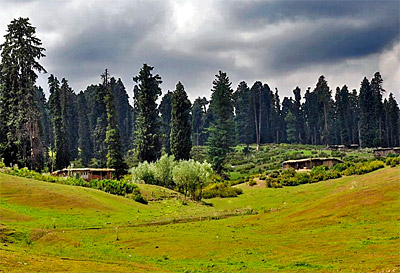
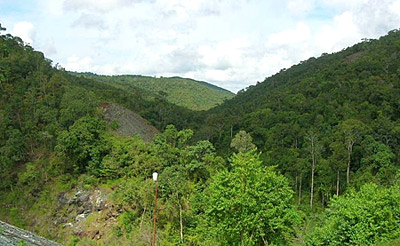
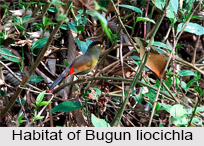
All sightings of Bugun Liocichla have been at an altitude of 2,000 m on disturbed hillsides covered with shrubs and small trees, with the exception of one sighting on the edge of primary forest. It lives in a territory similar to that of the Emei Shan liocichla. Small flocks were observed during January, whereas pairs were observed in May, with an estimated total of 14 individuals. It is thought that pairs may hold and defend territories. The Bugun liocichla is only currently known from just one location. Populations may be discovered in other areas of Arunachal Pradesh or neighbouring Bhutan.
Discovery of Bugun Liocichla
Bugun Liocichla was described in 2006 after being discovered in Eaglenest Wildlife Sanctuary in Arunachal Pradesh, India, by an astrophysicist, Ramana Athreya. Bugun liocichla was first spotted in the sanctuary in 1995 but was not seen again for ten years. Athreya spotted them again in January 2005 but did not publicize it until he was able to confirm it to be a new species. It was initially identified as appearing most similar to an Emei Shan liocichla. Liocichla omeiensis, a species of Liocichla is endemic to China. It was however distinctly different and the full description was finally made by capturing and examining two individuals using mistnets, in May 2006. Due to the apparent rarity of the species no type specimen was collected, instead feathers from the mist net, and photographs, recordings and notes were used as the holotype.