
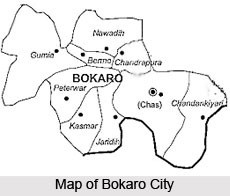
 Bokaro Steel City is the industrial city of Jharkhand, with the capital Ranchi. It is the 4th largest city in India, covered with full of industries of secondary importance. Bokaro Steel City is the district headquarters of Bokaro with several other large, medium and small industrial sectors.
Bokaro Steel City
Bokaro Steel City has one of the largest steel mills in Eastern India and it is the headquarters of the Bokaro District of Jharkhand.
Introduction
Location of Bokaro Steel City
Bokaro Steel City is located in the Bokaro (main city) of Bokaro District in the eastern part of India at 23.29 degree North and 86.09 degree east. The elevation of the town is 210 m (689 ft) above sea level.
History of Bokaro Steel City
Bokaro Steel City has a significant history. In the past, there was a village named Maraphari deep within the jungles of Chota Nagpur. The nearby village cluster was Chas. Purulia was the nearest town and the Maharaja of Kashipur ruled the region.
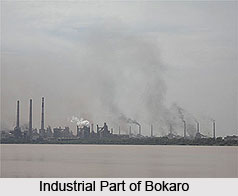 It travels in the mouth of the folk singers that this region came under Mughal rule after the conquests of Man Singh. The area was called Man Bhoom after him. This almost inaccessible place came into eminence when Pt. Jawaharlal Nehru sanctioned the construction of the first native steel plant with the help of the Soviets. The easy availability of coal, iron ore, manganese, and other raw materials made it a perfect place for building a steel plant. The steel plant was initially included as a limited company on 29th January 1964, and was later amalgamated with SAIL and came to be known as Bokaro Steel Limited (BSL). The late 1960s and early 1970s saw serious construction of the steel plant and also the township. The first blast furnace was initiated on 2nd October 1972.
It travels in the mouth of the folk singers that this region came under Mughal rule after the conquests of Man Singh. The area was called Man Bhoom after him. This almost inaccessible place came into eminence when Pt. Jawaharlal Nehru sanctioned the construction of the first native steel plant with the help of the Soviets. The easy availability of coal, iron ore, manganese, and other raw materials made it a perfect place for building a steel plant. The steel plant was initially included as a limited company on 29th January 1964, and was later amalgamated with SAIL and came to be known as Bokaro Steel Limited (BSL). The late 1960s and early 1970s saw serious construction of the steel plant and also the township. The first blast furnace was initiated on 2nd October 1972.Geography of Bokaro Steel City
Bokaro Steel City lies amidst natural beauty on the southern bank of river Damodar in the Chhotanagpur Plateau. Garga, one of the tributaries of the Damodar River, wanders along the southern and eastern fringes of the city. On the north, the city is bordered by the high ranges of the Parasnath Hills and on the south just ahead of the river Garga; there lie the Satanpur hillocks.
Economy of Bokaro Steel City
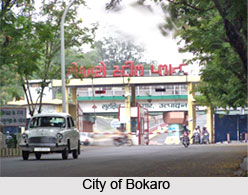
 Bokaro Steel City is the district headquarters of the Bokaro District. Bokaro harbours one of the largest steel mills in India, and several other medium and small industries. There are two man-made cooling ponds, which are utilised, in steel making. River Garga has a dam built on it that supplies water to the township and also to the steel plant. Due to the continually increasing demand the Tenughat dam is complementing it. The entire city is very technically planned with trees planted all along the roads to give shelter to the passers by during the summers. In the late 1990s, many parks and schools were built in the town. With the triumph of Bokaro`s students in all India level competition exams, especially IITs, the city emerged as the eastern nucleus for studies for engineering after high school. The financial market of Bokaro is to a great extant dependant upon the Steel Plant, which is the major basis of income for the employees. The key economy is also considerably supported by the services sector. The city market positioned at the heart of the city has a number of shops selling the essential requirements of groceries and furniture. Recently a number of shops selling computer hardware and a lot of computer training institutes have sprouted making Bokaro a core of computer studies for the area.
Demography of Bokaro Steel City
 The 2001 census records a population of 394,173 in the town and a population density of 8,760 persons per square km. Out of the males who comprise 54% of the population, 82% are literate. Females make up 46% of the total population while the female literacy rate is 64%. Thus Bokaro Steel City has an average literacy rate of 73%, greater than the national average of 59.5%. 12% of the population constitutes children less than 6 years of age.
Education of Bokaro Steel City
The first private school, known as the St. Xavier`s School was built by the Jesuits. The 1980s saw speedy enlargement of the town with new schools, parks, zoos and other public facilities. Bokaro Steel City cumulatively consists of 12 sectors. Bokaro Steel City has plenty of high quality schools affiliated to the central and state education boards. Some of the notable schools are Chinmaya Vidyalaya, DAV Public School, Delhi Public School, Holy Cross School, Guru Govind Singh Public School, MGM Senior Secondary School, Kendriya Vidyalaya, Pentecostal Assembly School and St. Xavier`s School and five bokaro ISPAT senior secondary schools. Then there are some other schools run by the steel plant management, and some run by the state government. The Bokaro General Hospital situated in this town has specialised units like Critical Care Unit, Intensive Coronary Care Unit, Haemodialysis Unit, Nuclear Medicine Laboratory and many others.
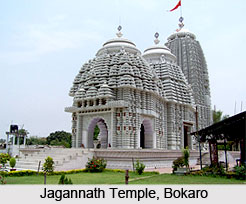 On the whole, with its beautiful topography adorned with magnificent valleys and flowing streams, the city of Bokaro is a fine place to stay as well as to visit.
On the whole, with its beautiful topography adorned with magnificent valleys and flowing streams, the city of Bokaro is a fine place to stay as well as to visit.Culture of okaro Steel City
The old `chas bazaar` is present even now as a cheap option of wholesale market, and `dundi baad` is one of the biggest vegetable markets in the region. The City Centre of Bokaro Steel City is the foremost shopping place of the city. As far as agriculture is concerned, the villagers grow small quantities of paddy in the peripheries of the city. The languages spoken by the people are Hindi language, Urdu language, Bengali language (Khortha), Kurmali language, Maithili language, English language, Bhojpuri language, Santhali language and Murmu language.
Bokaro Steel Plant
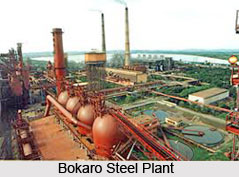
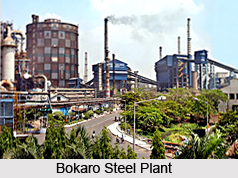 Bokaro Steel Plant is the fourth integrated plant in the Public Sector. It began taking shape in the year 1965 in collaboration with the Soviet Union. This steel plant in Jharkhand was originally incorporated as a limited company on 29th January 1964, and was later merged with SAIL, first as a subsidiary and then as a unit, through the Public Sector Iron and Steel Companies (Restructuring & Miscellaneous Provisions) Act 1978. The construction work started on 6th April 1968.
Bokaro Steel Plant is considered to be the first swadeshi steel plant in India. it has been built with maximum indigenous content in terms of equipment, material and know-how. Its first Blast Furnace started on 2nd October 1972 and the first phase of 1.7 MT ingots steel was completed on 26th February 1978 with the commissioning of the third Blast Furnace. All units of 4 MT stage have already been commissioned and the 90s` modernisation has further upgraded this to 4.5 MT of liquid steel.
The new features added in modernisation of SMS-II include two twin-strand slab casters along with a Steel Refining Unit. The Steel Refining Unit was inaugurated on 19th September, 1997 and the Continuous Casting Machine on 25th April, 1998. The modernisation of the Hot Strip Mill saw addition of new features like high pressure de-scalers, work roll bending, hydraulic automatic gauge control, quick work roll change, laminar cooling etc. New walking beam reheating furnaces are replacing the less efficient pusher type furnaces. A new hydraulic coiler has been added and two of the existing ones revamped. With the completion of Hot Strip Mill modernisation, Bokaro is producing top quality hot rolled products that are well accepted in the global market.
Bokaro Steel Plant is designed to produce flat products like Hot Rolled Coils, Hot Rolled Plates, Hot Rolled Sheets, Cold Rolled Coils, Cold Rolled Sheets, Tin Mill Black Plates (TMBP) and Galvanised Plain and Corrugated (GP/GC) Sheets. Bokaro has provided a strong raw material base for a variety of modern engineering industries including automobile, pipe and tube, LPG cylinder, barrel and drum producing industries.
The prime objective of Bokaro Steel Plant as a company is to work towards becoming a one-stop-shop for world-class flat steel in India. Further modernisation plans are aimed at increasing the liquid steel production capacity, coupled with fresh rolling and coating facilities.
Tourism in Bokaro Steel City
There are many places of tourist interest in Bokaro Steel City. The Bokaro Steel Plant is surely one of them.
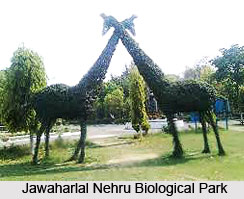 The plant is being largely modernised, with the increasing demand for steel, so much so that all the blast furnaces in the company have often become operational together. If a person visits the steel plant, he or she can get a direct experience of the different aspects of steel making like Raw Material Handling, Coke Ovens, Blast Furnace, Steel Melting Shops and Rolling Mills. The Garga Dam located at a distance of about 12 km from the Bokaro Steel City, is a famous picnic spot for tourists. The place with its radiant green atmosphere and a variety of aquatic fauna is a favourite spot for school excursions and biological expeditions. Then there are the Parasnath Hills. These are a series of hills found in the Giridih district of Jharkhand, at a little distance from Bokaro. The highest peak has an altitude of 1350 metres. It is one of the most significant pilgrimage places for Jains who also call it Sammet Sikhar.
The plant is being largely modernised, with the increasing demand for steel, so much so that all the blast furnaces in the company have often become operational together. If a person visits the steel plant, he or she can get a direct experience of the different aspects of steel making like Raw Material Handling, Coke Ovens, Blast Furnace, Steel Melting Shops and Rolling Mills. The Garga Dam located at a distance of about 12 km from the Bokaro Steel City, is a famous picnic spot for tourists. The place with its radiant green atmosphere and a variety of aquatic fauna is a favourite spot for school excursions and biological expeditions. Then there are the Parasnath Hills. These are a series of hills found in the Giridih district of Jharkhand, at a little distance from Bokaro. The highest peak has an altitude of 1350 metres. It is one of the most significant pilgrimage places for Jains who also call it Sammet Sikhar.Recently updated articles in Cities of India
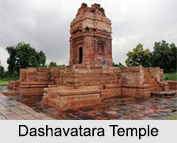
Places of Interest in Deogarh Uttar Pradesh
A place of historical and archaeological significance, Deogarh is a site with few popular places of interest.
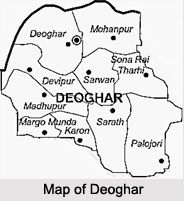
Deoghar in Jharkhand
Deoghar is the divisional headquarters of Santhal Parganas located in Jharkhand and is popular for the famous Baidyanath temple and Shiva Temples.
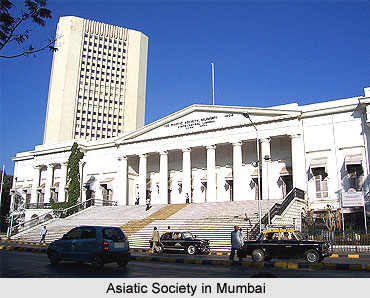
The Asiatic Society of Mumbai
Asiatic Society in Mumbai is the temple of Asian Studies from the time of British rule in India.
Vasco da Gama / Vasco City
Vasco da Gama / Vasco is the biggest city of Goa and is one of the most visited for its perfect amalgamation of business as well as leisure options.
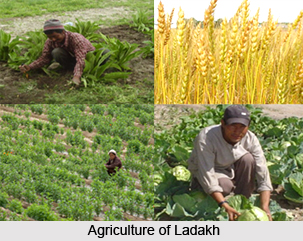
Agriculture of Ladakh
Agriculture in Ladakh is primarily practiced in the short summer season due to its cold desert climate. Farmers grow hardy crops like barley, wheat, p...
Related articles in Cities of India
Holy Cities of North India
Holy Cities of North India are having the rich history of Hinduism and the entire civilization was grown up with the hands of beliefs, rituals and the...
Holy Cities of South India
Holy Cities of South India gives the detailed cultural formation of Dravidians from the early era, which later developed to the world by the Pallavas...
Holy Cities of West India
Holy Cities in West India were established by the rulers of Rajputs and the Satvahana Dynasty and the medieval rulers of Junagadh.
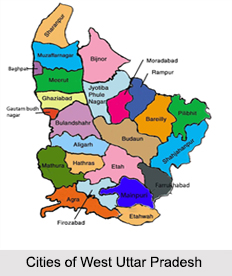
Cities of West Uttar Pradesh
Cities of West Uttar Pradesh include Meerut, Bulandshahr, Ghaziabad, Saharanpur, Muzaffarnagar, Bijnor, Bareilly, Rampur, Agra, Aligarh, Mathura and m...
Port Cities of South India
Port Cities of South India are developed from the early phase of colonial era when the Portuguese and the French traders came to India