Architecture Of Chittorgarh
Architecture of Chittorgarh encompasses the Rajput, Jain and Hindu architectural styles.

Share this Article:

Architecture Of Chittorgarh, RajasthanChittorgarh in Rajasthan presents a wide array of architectural specimens which ranges from Jain temples, Hindu temples, palaces and forts. Tower architecture which is very rare in India is seen in Chittorgarh. There are many towers in India but other than the shikharas crowning temples, independent towers are found only in Chittorgarh.

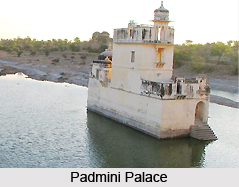
On the plains of Chittorgarh, there is a hill where the Mewar Fort was situated. Though the fort fell in an attack of the Mughal army, but remains of the fort can still be seen in the palaces, Hindu temples and Jain temples. The Fort is constructed in the Rajput architectural style. There are seven gates on the way up to the fort, of which the last gate, Ram Pol leads one into the fort. The gate, as well as the entrance to the palace is not a true arch. The oldest is a large, L-shaped palace constructed by Emperor Rana Kumba in the 15th century. This magnificent, completely plaster finished palace is a departure from the usual constructions. A fascinating sight towards the north of the fort is the Ratna Singh Palace with a tank built in the 16th century. The Padmini palace is also a spectacle to behold. It is positioned towards the south of the fort and the architecture of the palace is noteworthy. The palace in the middle of the fort is now a museum which houses royal artifacts.

Though the rulers of Mewar were Hindus but they were tolerant towards other religions. There are a number of Jain temples in Chittorgarh. The Tower of Fame, also called Kirtistambha, is a Jain memorial tower built in the 13th century. Statues of Tirthankaras have been sculpted on the tower. This seven-storey high, twenty four meters tall tower stands on a foundation platform. There is a staircase inside which enables one to climb to the top and enjoy the scenery. The Sat Bees temple, built in the architectural style of the Mount Abu Temples, is excellent. These temples are built of sandstone and not white marble. The Hindu Jayastambha or the Tower of Victory was built in the 15th century by Rana Kumba after his triumph in the battle against the Muslim army. The structural design of the tower is very slender from its exterior. It has a unique spiral staircase that weaves in and out of the structure, all the way to the top, an architectural design not seen anywhere else in the world.
Share this Article:

Related Articles

More Articles in Cities of India


Ancient North Indian Cities
Ancient North Indian Cities were developed in the early era that is from the time of Mahabharata, and after the decline of Hindu kings in Northern parts. Some have become desolated and some became the archaeological ruins.
Ancient South Indian Cities
Ancient South Indian Cities witness the rise and fall of many empires from the early era.
Ancient Cities of North West India
Ancient Cities of North West India show the Rajput culture from the early phase, but in medieval era it showed the prominence after having a good relation with Mughals.
Ancient West Indian Cities
Ancient West Indian Cities are now completely in ruins, because of the heavy earthquake in some of the regions.
Holy Cities of North West India
Holy Cities of North West India are grown up in the midst of dry and thorny desert lands with Rajputana art and architecture.
Holy Cities of North India
Holy Cities of North India are having the rich history of Hinduism and the entire civilization was grown up with the hands of beliefs, rituals and the evolution of religion.
Holy Cities of South India
Holy Cities of South India gives the detailed cultural formation of Dravidians from the early era, which later developed to the world by the Pallavas and the Cholas.
Holy Cities of Central India
Holy Cities of Central India have the excellence of art and architecture in temples in the early era.
Holy Cities of East India
Holy Cities of East India refer the places of religious importance. Hinduism, Islam, Christianity and Buddhism are widely spread.
Holy Cities of West India
Holy Cities in West India were established by the rulers of Rajputs and the Satvahana Dynasty and the medieval rulers of Junagadh.
Cities of West Uttar Pradesh
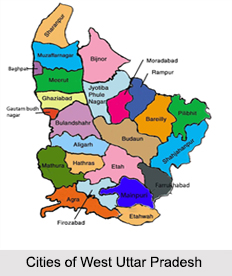
Cities of West Uttar Pradesh include Meerut, Bulandshahr, Ghaziabad, Saharanpur, Muzaffarnagar, Bijnor, Bareilly, Rampur, Agra, Aligarh, Mathura and many others. It comprises the western parts of Uttar Pradesh.
Architecture of Ladakh
Architecture of Ladakh is very typically Buddhist due to the strong influence of the religion here. The architecture is in keeping with the geography and climate of the region.
Architecture Of Madurai
Architecture of Madurai reflects the Hindu architectural pattern as is seen in the lakes, temples and palaces.
Port Cities of South India
Port Cities of South India are developed from the early phase of colonial era when the Portuguese and the French traders came to India
Vaishali Ancient City
Vaishali was an ancient prosperous metropolis, which was probably the first republic of the world.
Kudra City
Kudra, the city in Kaimaur District where agriculture is the prime occupation and in this city there is present Asia’s largest seed cold storage.
Thuraiyur in Tamilnadu
Thuraiyur is a municipality town where the inhabitants are mostly dependent on agriculture and handloom industries.
Dharapuram - Tiruppur
Dharapuram is a town located in Tiruppur district in Tamil Nadu. It is said that the Pandavas resided here in the town.
River Ghats in Haridwar
There are several river ghats in Haridwar, which are considered as popular spots among tourists.
Mataundh - Banda District
Mataundh is a prominent `panchayat town` situated in Banda district of Uttar Pradesh.