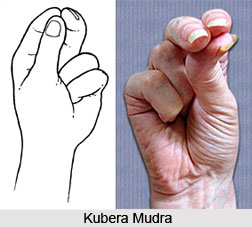
 Anguli Mudras are the gestures of fingers which are performed during Pranayams and meditations. These mudras are the gestures that direct the flow of energy into an individual"s body. According to Yogic Tantra, these mudra yoga techniques stimulate different areas of the brain. Yoga is not only an exercise but a form of spiritual practice to improve physical, mental and spiritual well being of a human body. It doesn"t only refer to twisting and curling of the body into different shapes and poses, but it also involves some specific mudras posed during meditations.
There are many different yoga mudras and each of them has a different benefit. Some of them are listed below:
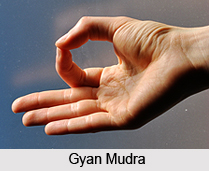
1. Gyan Mudra
Gyan Mudra is the first mudra pose which is also known as the "Mudra of Knowledge". This mudra is practiced while doing meditations early in the mornings with a fresh mind.
•Touch the tip of the index finger with the tip of the thumb.
•The other three fingers are kept straight or free. It doesn"t matter even if they are slightly bent.
Benefits of Gyan Mudra
As the name suggests, this mudra is meant to increase concentration and memory power. It has the ability to cure insomnia. This mudra is practiced regularly to heal all mental and psychological disorders like anger, stress, anxiety or even depression.
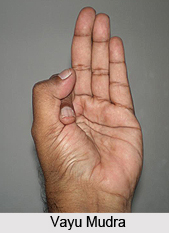 2. Vayu Mudra
Vayu Mudra can be practiced in a standing, sitting or lying down posture. There is no compulsion of doing this at an empty stomach. One may also practice this mudra with a full stomach. Once the benefits from this mudra are achieved, stop doing it.
•Fold the index finger. As one folds the fingers one can see 2 bones. These are called phalanx bones.
•Press the phalanx bone with the base of the thumb.
•The rest of the three fingers should be kept extended as much as possible.
 Benefits of Vayu Mudra
As the name suggests Vayu mudra, it balances the air element within a human body. This mudra releases excess wind from stomach and body thereby reducing rheumatic and chest pain.
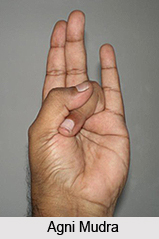
3. Agni Mudra
Agni Mudra should be practiced only in sitting position early in the morning with an empty stomach. Maintain this mudra for at least 15 mins every day. But if one is suffering from acidity or indigestion, avoid this mudra.
•Fold the ring finger.
•Press the second phalanx with the base of the thumb.
•Keep the rest of the fingers straight.
 Benefits of Agni Mudra
Agni Mudra helps to dissolve the extra fat boosting metabolism and controls obesity. This mudra quickens digestion, improves body strength, reduces stress and tension. It also controls high cholesterol levels.
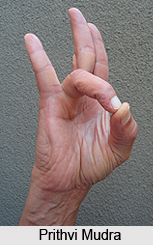
4. Prithvi Mudra
Prithvi Mudra is also performed in the early morning while doing the meditation. However it can be done at anytime and for any duration. This mudra should be performed in Padmasana position. Padmasana accompanied by this mudra will immediately perk up.
•Touch the tip of the ring finger with the tip of the thumb.
•Pressing the tips of these two fingers, keep the rest of the fingers extended out.
Benefits of Prithvi Mudra
Prithvi Mudra helps to improve blood circulation throughout the body. This mudra increases patience, tolerance and concentration while meditating. It also helps to strengthen weak and lean bones. Prithvi Mudra also increases weight of people suffering from low weight, reduces weakness, exhaustion and dullness of mind.