 Ancient Kashmiri currency system consisted of a copper coinage, with cowry shells serving for small transactions. The mean weight of 107 specimens was 5.74 g, with a coefficient of variance of 8.1 per cent. The composition of Ancient Kashmiri currency was virtually pure copper, with a variety of natural impurities. Even large sums were nominally composed of the copper panchavimsati. Although it is clear that references to coin denominations often referred to a value in goods to that amount, rather than a sum of coins. By all accounts the Kashmiri economy was chronically under-monetised, the salaries of even great officers of state being paid in paddy or other forms of grain. This was true of the kingdom from the ninth century on; in fact it was still the case with officers of the Maharaja of Kashmir in the nineteenth century. Grain is an inconvenient medium of exchange for transactions carried on over distances; to avoid this difficulty the Kashmiris developed bills of exchange (hundikas) denominated in coins or grain, and negotiable at whatever place and time was agreed.
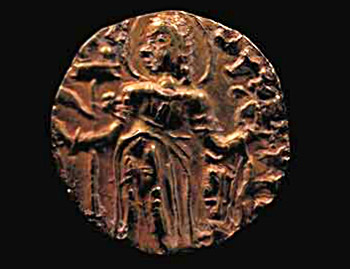
Nevertheless, and paradoxically, coinage was plentiful in Kashmir. There were considerable resources of copper in the surrounding mountain ranges, which the king exploited as a royal prerogative. This permitted a exuberant copper coinage, which, circulating within circumscribed geographical boundaries, free of the influence of contemporary coinage, was perhaps the most stylistically conservative of any issues in the subcontinent. The prototype for this copper panchavimsati was an issue of Toramana, around AD 520, featuring a standing king on the obverse and seated goddess on the reverse. The type was borrowed from later Kushana and Gupta gold dinars. Initially the copper coins of later authorities continued to be issued in Toramana`s name. From the mid-eighth century, highly stylised copper coins of this pattern were produced in the name of each individual king. The series continued virtually unchanged through twenty-nine rulers in succession, terminating only with the accession of a Muslim ruler in the second quarter of the fourteenth century
There are several manifestations of this monetary conservatism in addition to the maintenance of primitive fabric in the ancient Kashmiri currencies themselves. The limited area of coinage circulation, general awkwardness of transportation for masses of copper coinage, and use of credit notes against coins on deposit, had the effect of greatly reducing the money velocity in medieval Kashmir. The normal absorption rate or rate of loss of coins in circulation, for most ancient Kashmiri currency systems calculated as a geometric progression, does not seem to apply to Kashmir. Literary accounts indicate that as late as the fifteenth century, the Toramana copper coins of 520-855 were still in circulation.