
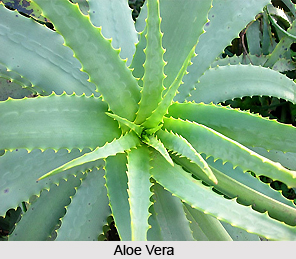
Indian aloe is an upright plant, 30 to 150 cm in height. It has polished, pale green, fleshy leaves, convex below, narrowing to a blunt point, with horny spikes at the perimeters. It has yellow to orange coloured cylindrical flowers. The acrid juice of the pulpy leaves is used in manufacturing medicine.
 The vigorous principle of aloe is a combination of glycosides, called aloin. The ratio of aloin varies in diverse specimens of aloes. The principal element of aloin is barbaloin, a pale-yellow crystalline glycoside, soluble in water. The other components comprise isobarbaloin, aloe-emodin (a hydrolytic product of barbaloin), resins and some water soluble substance. The distinguishing odour is due to hints of a volatile oil.
Indian aloe comes to requisite use in everyday sicknesses like, liver enlargement, cold, arthritis, indigestion, skin irritations, or sciatica.
Indian Aloe Vera
Indian Aloe, growing to moderate heights, appears glossy, with pulpy leaves, essential in making drugs.
Introduction
Healing Power of Indian aloe
Liver Disorders cured by Indian aloe
The herb energises the liver and is useful in liver and spleen disturbances. It can be utilised in jaundice and enlargement of liver, spleen and other glands. The flesh of one leaf should be consumed with black salt and ginger every morning for 10 days in the treatment of such disorders.
Colds healed by Indian aloe
The drug is indispensable in instances of cough and cold. Juice of the roasted leaf should be had with honey for treatment.
Rheumatism healed by Indian aloe
Indian aloe is pretty handy in lumbago, sciatica and rheumatism. The flesh of one leaf needs to be consumed everyday to obtain relief.
Indigestion cured by Indian aloe
The herb is useful in stomach upsets. The leaves reinforce the functioning of stomach and encourages its action. A salad of its leaves is advantageous in instances of indigestion, constipation and gas.
Intestinal Worms healed by Indian aloe
The leaves have the capability to kill intestinal worms in children. The concentrated leaf juice, after boiling the leaves in water, is a well-admired and efficacious household remedy.
Skin Disorders remedied by Indian aloe
The use of the herb in mending swelled and aching parts of the body is widespread in Indian medicine. The fresh juice from its leaves should be administered externally.
Aloe Barbadensis Mill
 Aloe Babadensis Mill was introduced to India from the American tropics and grown in gardens. The plants are largely used almost throughout the country for its commercial medicinal products. Apart from being a medicinal plant, Aloe Babadensis Mill or Indian Aloe is used in many beauty products. Applying these on the face brings a fresh look and improves the skin type. The plant is now naturalized in many parts of the country near where it has been planted.
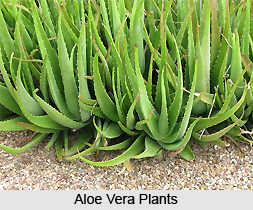
The leaves of Aloe Babadensis Mill are sessile, erect, and crowded in a basal rosette, succulent and glaucous-green. They are 30-60 cm long, narrowly lanceolate, apex long acuminate, smooth except for the spiny teeth on the margins. The flowers are reddish-yellow, borne in dense racemes at the end of a tall, scaly, branched stalk (scape) longer than the leaves; bracts short lanceolate, longer than the pedicel.
The fresh juice obtained from the cut bases of the Aloe leaves is cathartic and cooling. The juice is often used to treat eye diseases, liver and spleen ailments, muscular pain, dermatitis, burns, cutaneous leishmaniasis and other skin problems. To relieve burns, insect and fish bites, skin ailments, arthritis, myopathies, Aloe babadensis mill is used as external application. The plant is also used for manufacturing beauty products as hair conditioners and skin creams. The rural inhabitants of Gujarat use the pulp of the leaf to cure piles, boils, burns and swellings. It is considered effective to reduce excessive body fats.
The dried juice of Aloe Babadensis Mill is an efficacious ingredient of a large number of Ayurvedic preparations, especially for the treatment of diseases that are associated with the digestive system. Apart from being of large use in Ayurveda and cosmetics the plant plays an important role in treating menstrual diseases, stomach pain, or relieving constipation and as a tonic after pregnancy. The root of the plant is also in huge demand for its utilization in the treatment of acute abdominal pain. In Gujarat the leaves and flowers are eaten after pickling. Not only as an ayurvedic ingredient, the leaves of Aloe yield a useful fibre, and a dye is prepared from the plant. The dye made out of the plant imparts a purple colour to silk, black to wool and pink to linen.
Aloe Babadensis Mill is popular as `ghritakumari` in West Bengal. In Gujarati it is called in many names such as dadv-inahani, kadvikunvar, kumarpathu, kunvar, kunwarpathu. The inhabitants of Kannada specify the plant as kolasoare, komarika, lolisara and maulisara and are popular as elwa in Punjab.
Recently updated articles in Flora & Fauna
Indian Aloe Vera
Indian Aloe, growing to moderate heights, appears glossy, with pulpy leaves, essential in making drugs.
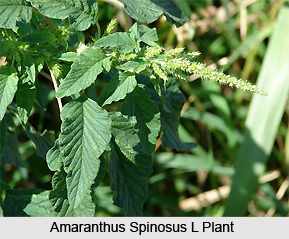
Amaranthus spinosus
Amaranthus spinosus is a medicinal herb found in India and is commonly known for its medicinal value.
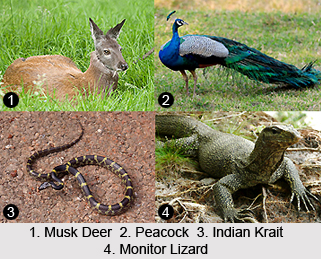
Shilli Wildlife Sanctuary
Shilli Wildlife Sanctuary in Himachal Pradesh was established in 1963 in order to preserve the Himalayan Black Bear which is an endangered creature. D...
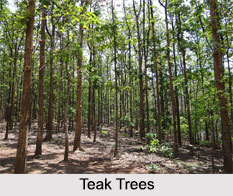
Flora and fauna of Karnataka
Karnataka boasts a remarkable diversity of flora and fauna, nurtured by its varied landscapes ranging from the Western Ghats to dry plains. The state’...

Vedanthangal Bird Sanctuary
Known to be the oldest water bird sanctuary in the country, Vedanthangal Bird Sanctuary is home to myriad types of migratory birds including 26 rare s...
Related articles in Flora & Fauna
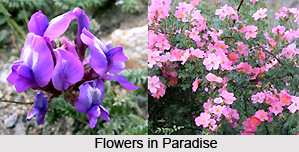
Flora and Fauna of Ladakh
Flora and Fauna is typical to t he kind of mountainous terrain which dominate the entire landscape of the region. Though some varieties of fauna are t...

Flora and Fauna in Meghalaya
70 percent of Meghalaya is forested. Meghalayan forests are considered to be among the richest botanical habitats of Asia. These forests receive abund...
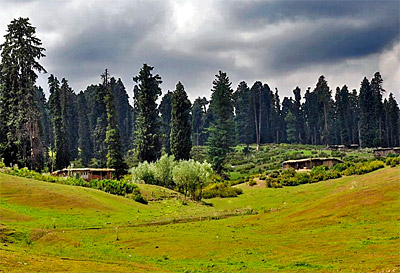
Flora and Fauna of Jammu & Kashmir
Jammu and Kashmir is rich in flora and fauna. Flora includes thorn bush type of the arid plain to the temperate and alpine flora of the higher altitud...
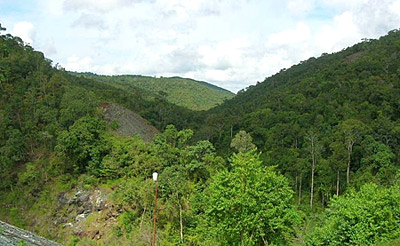
Flora and fauna in Andaman and Nicobar Islands
Economy of this region is primly based on agriculture. In Andaman island, paddy is the main food crop, while in Nicoabar island coconut and areca nut...
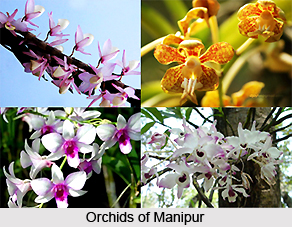
Flora and Fauna of Manipur
Flora and fauna of Manipur are known to be the assemblage of a huge variety including the endangered ones. The place is especially famed for orchid sp...