 Aliar is an Indian medicinal plant mostly used in central parts of India. The scientific name of this popular medicinal plant is Dodonea viscose. Aliar is known by different names in different regions of the country. Like for instance, its other names in Hindi language are sanatha, sinatha, sonalta and walaytinahndi; whereas in Kannada it is known as bandara, ban-darike, bhandaru. Aliar is known as unnataruvi, virali and vralli in Malayalam language; in Marathi it is known as bandari, bandurgi and lahan lokhandi. Other popular names of Aliar in Oriya language it is known as mohra; in Punjabi, it is known as banmendu, mendar, mendru, sanatta, santha; in Tamil, it is known as valari, velari, virali and in Telegu its names are ban-daru, bandedu and bhandaru.
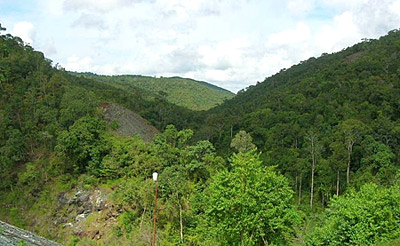
Aliar is mostly occurring naturally throughout most of the parts of India. Gregarious in the Western Himalayas, Aliar originates at an elevation of 2000 metres in the under storey of Pinus rox-burghii forests, and in dry forests in peninsular India, especially on sandstone-derived soils.
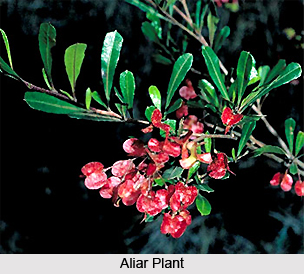
Aliar is a variable evergreen shrub or a small tree up to 3 metres tall with light green foliage, the young shoots and leaves sticky with a bright yellow resin. Its leaves are sub sessile, simple, alternate, oblanceolate, around 3.8 to 10 cm long and 0.6 to3.8 cm wide. Further, leaves are apex sub acute or shortly apiculate, glabrous, shining, tapering towards the base. Flowers of this medicinal plant are basically greenish or yellowish in colour, and are small, borne in few-flowered axillary cymes. Fruit are membranous, compressed, capsule around 1.2 to 2 cm long and slightly broader, with a wide, marginal wing notched at the base and apex, viscid, orange-brown; seeds black. In central India flowering and fruiting occur mainly between October and March.
Aliar is widely known for its medicinal properties and uses. Like for instance, the powdered leaves are used to promote healing of wounds, swellings and burns. The leaves are also used as a febrifuge in treating gout and rheumatism. An embrocation of the leaves is applied to sprains and bruises; in northeastern Karnataka paste of the leaves is used externally to promote healing of bone fractures. Among the tribal inhabitants of Prakasm District in southern Andhra Pradesh, the leaf paste is used in the form of a plaster to heal wounds; the dried seeds pounded with black pepper are used to induce sterility in women. The bark is used in astringent baths and fomentations. In Siddha, the bark and leaf are used to treat inflammatory conditions.