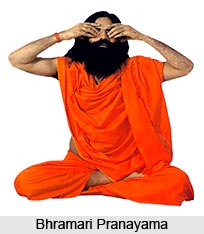
 In the soils of India, Bhramari has a wide acceptance amongst its people. The term Bhramari too has an etymological significance. Deriving from an adjective, this feminine word Bhramari means a bee. This particular exercise got its name because it produces a sound resembling to the buzzing sound of a bee. Due references are being found in various ancient yoga books like Gheranda-Samhita and Sive Samhita.
The techniques that are being followed too are significant. Puraka, Recaka are done thereby producing a very high-pitched and low down humming sound respectively. This sound resembles to that of a snoring of a man as well as the nasal sound that is created while pronouncing `N`.
In the soils of India, Bhramari has a wide acceptance amongst its people. The term Bhramari too has an etymological significance. Deriving from an adjective, this feminine word Bhramari means a bee. This particular exercise got its name because it produces a sound resembling to the buzzing sound of a bee. Due references are being found in various ancient yoga books like Gheranda-Samhita and Sive Samhita.
The techniques that are being followed too are significant. Puraka, Recaka are done thereby producing a very high-pitched and low down humming sound respectively. This sound resembles to that of a snoring of a man as well as the nasal sound that is created while pronouncing `N`.
To be specific, during Bhramari exercise, the practitioner while trying the task of imitating snoring and also observe the movement of the soft palate in his mind. Actually the soft palate is being lifted and then drawn towards the nasal part of the throat. This movement can actually be felt inside the mouth. Then drawing the soft palate a bit closer to the throat, he needs to breathe in air.
A beautiful sound is thus created by this mishmash of gentle vibrations of the `soft palate`. Then the nasal friction will also be heard. Although in the initial stage it seems to be very difficult for an exerciser to adept this process. However, with vigorous practice one can do it easily and smoothly. So much so that Bhramari expert can even produce such melodious sound which to a listener it seems as if it is the sound has been produced from a string instrument. Some Yoga scholars claim that serene sound produced by this Bhramari asana can give the feel of divine bliss to any of the diligent exerciser.