
 Chief Ministers of Indian States refer to the elected leaders of Government at the State level and generally occupy executive powers. The Chief Ministers of India are selected by legislators of the political party or alliance, commanding an assembly majority, and serve a term of 5 years. There is also provision for re-election. India is a nation of 7 Union Territories and 29 States. There are actually 29 Chief Ministers for the states and two for the Union Territories. Chief Minister of Indian State is the constitutional head of the state. They have complete power of control over the state.
Puducherry - V. Narayanasamy (Indian National Congress)
Chief Ministers of Indian States refer to the elected leaders of Government at the State level and generally occupy executive powers. The Chief Ministers of India are selected by legislators of the political party or alliance, commanding an assembly majority, and serve a term of 5 years. There is also provision for re-election. India is a nation of 7 Union Territories and 29 States. There are actually 29 Chief Ministers for the states and two for the Union Territories. Chief Minister of Indian State is the constitutional head of the state. They have complete power of control over the state.
Puducherry - V. Narayanasamy (Indian National Congress)
Chief Ministers of Indian States
Chief Ministers of Indian states are the elected heads of respective State Government. They are entrusted with executive powers and serve a 5 years term.
Introduction
Chief Ministers of Indian States refer to the elected leaders of Government at the State level and generally occupy executive powers. The Chief Ministers of India are selected by legislators of the political party or alliance, commanding an assembly majority, and serve a term of 5 years. There is also provision for re-election. India is a nation of 7 Union Territories and 29 States. There are actually 29 Chief Ministers for the states and two for the Union Territories. Chief Minister of Indian State is the constitutional head of the state. They have complete power of control over the state.
Puducherry - V. Narayanasamy (Indian National Congress)
Role and Responsibilities of a Chief Minister
The role and responsibilities of a Chief Minister extend beyond the overarching governance of the state, encompassing a spectrum of crucial tasks that shape the political and administrative landscape. One pivotal responsibility lies in the formation of the cabinet. The Chief Minister wields the authority to compile a list of ministers, with appointments made by the Governor based on their recommendations. The meticulous selection of suitable candidates is a key aspect of this process, determining the composition of the state`s executive branch.
Central to the Chief Minister`s duties is the administration of the state. Collaborating with the Council of Ministers, they navigate the intricate web of policies and laws, ensuring alignment with the directives of the legislature. The Chief Minister assumes a crucial role in the allotment of portfolios, wielding the sole right to distribute and reshuffle departments among ministers. This strategic allocation of responsibilities plays a pivotal role in optimizing the efficiency of the state`s governance machinery.
Appointment and removal of ministers fall within the purview of the Chief Minister, underscoring their authority in shaping the state`s leadership. Advising the Governor on the appointment of high dignitaries further solidifies their role in executive decision-making. Notably, the resignation of the Chief Minister has broader implications, potentially leading to the collapse of the government, highlighting the centrality of this position in the state`s political stability.
Beyond the political spectrum, the Chief Minister assumes the position of Chairman of the state planning board. This multifaceted role involves presiding over council of ministers` meetings, steering the agenda, and contributing to the state`s developmental priorities. The Chief Minister also takes an active leadership role in both houses, providing insights in the absence of clear views from cabinet ministers.
In financial matters, the Chief Minister emerges as a key decision-maker, wielding influence over critical aspects such as budgetary allocations, financial planning, and prioritization of infrastructure and developmental projects. Their decisions play a pivotal role in shaping the economic trajectory of the state, influencing growth and sustainability.
Crucially, the Chief Minister is at the forefront of law formation. They actively engage in framing state laws and policies, reviewing and either approving or rejecting bills introduced by ministers in the legislative assembly. The Governor`s ability to summon or dissolve the state legislature is contingent upon the advice of the Council of Ministers, further emphasizing the Chief Minister`s role in the legislative process.
Central to the Chief Minister`s duties is the administration of the state. Collaborating with the Council of Ministers, they navigate the intricate web of policies and laws, ensuring alignment with the directives of the legislature. The Chief Minister assumes a crucial role in the allotment of portfolios, wielding the sole right to distribute and reshuffle departments among ministers. This strategic allocation of responsibilities plays a pivotal role in optimizing the efficiency of the state`s governance machinery.
Appointment and removal of ministers fall within the purview of the Chief Minister, underscoring their authority in shaping the state`s leadership. Advising the Governor on the appointment of high dignitaries further solidifies their role in executive decision-making. Notably, the resignation of the Chief Minister has broader implications, potentially leading to the collapse of the government, highlighting the centrality of this position in the state`s political stability.
Beyond the political spectrum, the Chief Minister assumes the position of Chairman of the state planning board. This multifaceted role involves presiding over council of ministers` meetings, steering the agenda, and contributing to the state`s developmental priorities. The Chief Minister also takes an active leadership role in both houses, providing insights in the absence of clear views from cabinet ministers.
In financial matters, the Chief Minister emerges as a key decision-maker, wielding influence over critical aspects such as budgetary allocations, financial planning, and prioritization of infrastructure and developmental projects. Their decisions play a pivotal role in shaping the economic trajectory of the state, influencing growth and sustainability.
Crucially, the Chief Minister is at the forefront of law formation. They actively engage in framing state laws and policies, reviewing and either approving or rejecting bills introduced by ministers in the legislative assembly. The Governor`s ability to summon or dissolve the state legislature is contingent upon the advice of the Council of Ministers, further emphasizing the Chief Minister`s role in the legislative process.
Position of the Chief Minister
The Chief Minister is the pivot of the State Executive in the real sense and its chief architect. He is a link between the State government and the Union government. It is the Chief Minister who maintains the link between the State Governments and the Union Governments. He maintains the relation between the State Legislature, the Council of Ministers and the Governor.
Eligibility Criteria of a Chief Minister
The eligibility criteria for a Chief Minister in India are defined by the Constitution of India. To qualify for this position, an individual must be a citizen of India and at least 25 years old. Furthermore, they must be a member of the state legislature, either the Legislative Assembly or Legislative Council. The individual must possess the support and confidence of the majority of the members in the legislative assembly, without which they cannot assume the role of Chief Minister.
Election Process of a Chief Minister
The Chief Minister is not directly elected by the public but is chosen through an indirect process. After a general election, political parties or coalitions that secure a majority in the legislative assembly select their leader, who is then appointed as the Chief Minister by the Governor. In cases where no party secures a clear majority, post-poll alliances are formed to establish a majority, and the leader of the coalition with the most significant support becomes the Chief Minister. The Governor, as the constitutional head of the state, appoints the Chief Minister.
Oath of Office
Upon selection, the Chief Minister takes the oath of office, pledging allegiance to the Constitution of India and committing to discharge their duties with utmost sincerity and dedication. The oath is administered by the Governor of the state, emphasizing the solemnity of the responsibilities that accompany the position. The Chief Minister, in taking the oath, signifies their commitment to upholding the democratic principles and values enshrined in the Constitution.
Constitutional Limitations of the Chief Minister
There are certain constitutional limitations. The Chief Minister has to function under the threat of the following constitutional limitations:
(a) The discretionary powers of the Governor: Under Article 164 (i), the Ministers shall hold office during the pleasure of the Governor. The Governor, under Article 163, can exercise his power in his discretion without seeking the advice of the Council of Ministers.
(b) Failure of the Constitutional Machinery: On the basis of the report submitted by the Governor or on the basis of the report received from other sources, the President can dissolve the Council of Ministers of a State under Article 356 on the ground of the failure of the constitutional machinery in the State.
(c) Absolute Majority in the Legislative Assembly: The enjoyment of the confidence of the Legislative Assembly is a condition for the proper discharge of functions as Chief Minister. Unless the Chief Minister is always backed by a stable majority in the Assembly, he cannot go ahead taking the confidence of the Legislative Assembly/or granted.
(d) Distribution of limited Power to States: The Constitution of India assigns limited power to the States as specified in the State List in the Seventh Schedule. This limited power assigned to the State imposes restriction in becoming a real head by the Chief Minister.
(a) The discretionary powers of the Governor: Under Article 164 (i), the Ministers shall hold office during the pleasure of the Governor. The Governor, under Article 163, can exercise his power in his discretion without seeking the advice of the Council of Ministers.
(b) Failure of the Constitutional Machinery: On the basis of the report submitted by the Governor or on the basis of the report received from other sources, the President can dissolve the Council of Ministers of a State under Article 356 on the ground of the failure of the constitutional machinery in the State.
(c) Absolute Majority in the Legislative Assembly: The enjoyment of the confidence of the Legislative Assembly is a condition for the proper discharge of functions as Chief Minister. Unless the Chief Minister is always backed by a stable majority in the Assembly, he cannot go ahead taking the confidence of the Legislative Assembly/or granted.
(d) Distribution of limited Power to States: The Constitution of India assigns limited power to the States as specified in the State List in the Seventh Schedule. This limited power assigned to the State imposes restriction in becoming a real head by the Chief Minister.
Resignation Process of a Chief Minister
The Chief Minister can resign from their position by submitting their resignation to the Governor. The resignation may be prompted by various reasons, including personal or political considerations. Once the Governor accepts the resignation, the Chief Minister and the Council of Ministers are deemed to have resigned, and the state government is considered dissolved. A resignation can trigger a realignment of political forces, leading to the formation of a new government or necessitating fresh elections.
Remuneration of a Chief Minister
The remuneration of a Chief Minister in India is determined by the respective state legislature. The salary and allowances are reviewed and revised periodically. Generally, the Chief Minister receives a fixed monthly salary along with allowances for accommodation, travel, and other official expenses. The remuneration reflects the status and responsibilities associated with the position and is subject to changes based on the economic conditions and legislative decisions of the state.
Deputy Chief Minister
In some states, a Deputy Chief Minister is appointed to assist the Chief Minister in the discharge of their duties. The Deputy Chief Minister is usually chosen from the same political party or coalition as the Chief Minister. The role of the Deputy Chief Minister varies across states and is largely determined by the Chief Minister. They may be assigned specific portfolios or responsibilities, contributing to the efficient functioning of the state government. The Deputy Chief Minister may act as the Chief Minister in their absence or when the Chief Minister is unable to perform their duties.
Chief Ministers of North Indian States
The present Chief Ministers of Indian states of the Northern region are as follows:
Jammu and Kashmir - Governor"s Rule
Himachal Pradesh - Jai Ram Thakur (Bharatiya Janata Party)
Punjab - Amarinder Singh (Indian National Congress)
Uttarakhand - Trivendra Singh Rawat (Bharatiya Janata Party)
Haryana - Manohar Lal Khattar (Bharatiya Janata Party)
Rajasthan - Ashok Gehlot (Indian National Congress)
Uttar Pradesh - Yogi Adityanath (Bharatiya Janata Party)
Jammu and Kashmir - Governor"s Rule
Himachal Pradesh - Jai Ram Thakur (Bharatiya Janata Party)
Punjab - Amarinder Singh (Indian National Congress)
Uttarakhand - Trivendra Singh Rawat (Bharatiya Janata Party)
Haryana - Manohar Lal Khattar (Bharatiya Janata Party)
Rajasthan - Ashok Gehlot (Indian National Congress)
Uttar Pradesh - Yogi Adityanath (Bharatiya Janata Party)
Chief Ministers of South Indian States
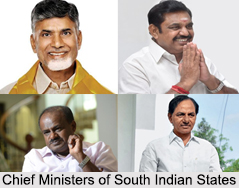 The present Chief Ministers of Indian states of the southern region are provided below:
Andhra Pradesh - N. Chandrababu Naidu (Telugu Desam Party)
Karnataka - H. D. Kumaraswamy (Janata Dal, Secular)
Kerala - Pinarayi Vijayan (Communist Party of India, Marxist)
Tamil Nadu - Edappadi K. Palaniswami (All India Anna Dravida Munnetra Kazhagam)
Telangana - K. Chandrashekhar Rao (Telangana Rashtra Samithi)
Chief Ministers of East Indian States
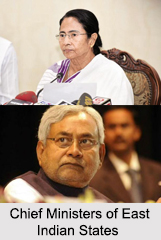
The present Chief Ministers of Indian states of the eastern region are shown below:
West Bengal - Mamata Banerjee (All India Trinamool Congress)
Bihar - Nitish Kumar(Janata Dal, United)
Jharkhand - Raghubar Das (Bharatiya Janata Party)
Odisha - Naveen Patnaik (Biju Janata Dal)
West Bengal - Mamata Banerjee (All India Trinamool Congress)
Bihar - Nitish Kumar(Janata Dal, United)
Jharkhand - Raghubar Das (Bharatiya Janata Party)
Odisha - Naveen Patnaik (Biju Janata Dal)
Chief Ministers of West Indian States
 The list of present Chief Ministers of Indian states of the western region is given below:
Goa - Pramod Sawant (Bharatiya Janata Party)
Gujarat - Vijay Rupani (Bharatiya Janata Party)
Maharashtra - Devendra Fadnavis (Bharatiya Janata Party)
Chief Ministers of Central Indian States
The present Chief Ministers of Central Indian States and their respective parties are given below:
Chhattisgarh - Bhupesh Baghel (Indian National Congress)
Madhya Pradesh - Kamal Nath (Indian National Congress)
Chief Ministers of North-East Indian States
The present Chief Ministers of Indian states of the north-eastern region are given below:
Arunachal Pradesh - Pema Khandu (Bharatiya Janata Party)
Assam - Sarbananda Sonowal (Bharatiya Janata Party)
Manipur - N. Biren Singh (Bharatiya Janata Party)
Meghalaya - Conrad Sangma (National People"s Party)
Mizoram - Zoramthanga (Mizo National Front)
Nagaland - Neiphiu Rio (Nationalist Democratic Progressive Party)
Sikkim - Pawan Kumar Chamling (Sikkim Democratic Front)
Tripura - Biplab Kumar Deb (Bharatiya Janata Party)
Chhattisgarh - Bhupesh Baghel (Indian National Congress)
Madhya Pradesh - Kamal Nath (Indian National Congress)
Chief Ministers of North-East Indian States
The present Chief Ministers of Indian states of the north-eastern region are given below:
Arunachal Pradesh - Pema Khandu (Bharatiya Janata Party)
Assam - Sarbananda Sonowal (Bharatiya Janata Party)
Manipur - N. Biren Singh (Bharatiya Janata Party)
Meghalaya - Conrad Sangma (National People"s Party)
Mizoram - Zoramthanga (Mizo National Front)
Nagaland - Neiphiu Rio (Nationalist Democratic Progressive Party)
Sikkim - Pawan Kumar Chamling (Sikkim Democratic Front)
Tripura - Biplab Kumar Deb (Bharatiya Janata Party)
Chief Ministers of Union Territories
The present Chief Ministers of Union Territories and their respective parties are shown below:
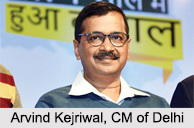
Delhi - Arvind Kejriwal (Aam Aadmi Party)
Delhi - Arvind Kejriwal (Aam Aadmi Party)
Recently updated articles in Personalities in India

Governors of Mizoram
The Governor of Mizoram is the constitutional head of the state and is appointed by the President of India. The Governor performs various constitution...
Governors of Jharkhand
Governors of Jharkhand have served as the constitutional heads of the state since its formation on 15 November 2000. Appointed by the President of Ind...
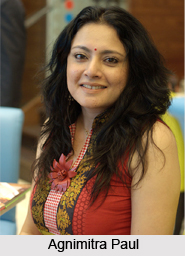
Agnimitra Paul
Agnimitra Paul is an Indian fashion designer and politician serving as a Member of the West Bengal Legislative Assembly from Asansol Dakshin. A senior...
Governors of Uttarakhand
Governor of Uttarakhand is the nominal head of the state. The Governor is also the representative of the President of India in the state of Uttarakhan...
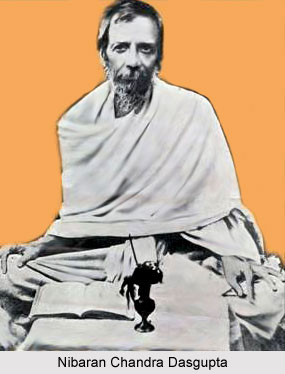
Nibaran Chandra Dasgupta
Nibaran Chandra Dasgupta was a distinct personality of Bengal who became famous for the establishment of ‘Shilpashram,’ a rural industry within the ma...
Related articles in Personalities in India

Sanskrit Theatre Personalities
Sanskrit Theatre Personalities was the main elements of Indian theatre with culture, customs and ethnicity.
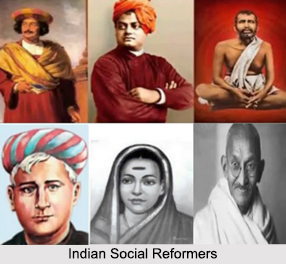
Indian Social Reformers
The Indian Social Reformers are responsible for liberating the nation of several social and religious evils.
Raja Ram Mohan Roy
Raja Ram Mohan Roy is a great Indian social reformer who is celebrated all over the country. He has done many operations for the liberation of women....