
Barog
Barog is located in the Solan District of Himachal Pradesh. Barog is the fast gaining immense popularity among enthusiastic tourists of both national and international level.
Introduction
Barog is situated in Solan District of the Indian state of Himachal Pradesh. Barog is located on Kalka - Shimla Highway. It has grown from a mere stopover to a full-fledged destination. Barog is surrounded by pine and oak forests. Barog has a commanding setting. Barog makes a conveniently accessible destination and a travel stopover to or from Shimla, Shimla District of Himachal Pradesh. Barog is located at 30 degree 53 minutes 24 seconds North to 77 degree 4 minutes 55 seconds East, at a distance of 60 km from Chandigarh, Haryana. Shimla, the capital city of Himachal Pradesh is another 65 km from Barog.
History of Barog
 Barog is a place, now a major tourist location in Himachal Pradesh. This place has the history of colonial past. Barog is not only a hill station, but also it provides the early English settlement in this hilly terrain village.
The 96.54-km long Kalka-Shimla narrow gauge track has 102 operational tunnels that constitute about 8 per cent of the total length of the route. This rail track or the Barog tank, which was open to passengers on November 9, 1903, is a living tribute to those engineers who dared to bore a total of 107 tunnels and set an example of how a railway line could pass through a rough mountainous terrain without destroying the splendour and beauty of the hills of Barog. The tunnels were renumbered in the year 1930, as some of them were found to be defunct. From 107, their number was reduced to 103, and this was further came down to 102 when tunnel no. 46 near the Solan Brewery had to be demolished.
Barog was settled in the early 20th century during the building of the narrow gauge Kalka-Shimla Railway.
Barog is named after Colonel Barog, an engineer involved in building the railway track in the year 1903. Currently, there are many semi residents have there long stays in there houses and flats in Barog. Mostly they are Sikh`s from Punjab residing there.
Barog Tunnel Entrance
Barog is the engineer, was responsible for designing a tunnel near the railway station. He commenced digging the tunnel from both sides of the mountain, which is quite common as it speeds up construction. However, he made mistakes in his calculation and while constructing the tunnel, it was found that the two ends of the tunnel did not meet. Barog was fined an amount of one rupee by the British Government in India. Unable to withstand the humiliation, Engineer Barog committed suicide. He was buried near the incomplete tunnel. The area came to be known as Barog after him. Later it was constructed under Chief Engineer H.S. Harrington`s supervision guided by a local sage, Bhalku, in a short period from July 1900 to September 1903 at cost of 840,000 rupees.
Climate of Barog
Barog is located at a height of 1560 metres above the mean sea level. Due to its height, temperatures here range between 23 to 10 degree Celsius during summers and between 15 to 5 degree Celsius during winters. The summers last from April to July. Winters set in during December and typically last up to February. During the winter season, the temperature of Barog can drop near to freezing point when heavy woollens are required and in summers light woollens / cottons are recommended.
Barog Tunnel
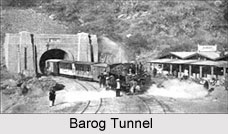
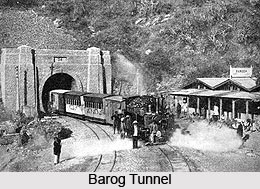 Barog Tunnel is a 96.54-km-long Kalka-Shimla Narrow Gauge track has 102 operational tunnels that constitute about 8 percent of the total length of the route.
This rail track was open to passengers on November 9th, 1903, is a living tribute to those engineers with Barog Sahib, who dared to bore a total of 107 tunnels and set an example of how a railway line could pass through a rough mountainous terrain without destroying the splendour and beauty of the hills in Barog.
Barog Tunnel is renumbered in the year 1930. Some of them were found to be defunct. From 107, their number was reduced to 103, and this further came down to 102 when tunnel no. 46 near the Solan Brewery had to be demolished.
The two of the longest tunnels on this track are at Barog and Tara Devi. All the tunnels were built between 1900 and 1903. L. Edwards, Executive Engineer of Dharampur division, completed work on as many as 30 tunnels.
Barog Tunnel is 1143.61 metres long tunnel of which passes through fissured sandstone, has a tragic story associated with its construction. Barog, who was in charge of this tunnel, committed the mistake of digging the tunnel from both ends of the hill. Both the ends of Barog Tunnel could not meet due to wrong alignment.
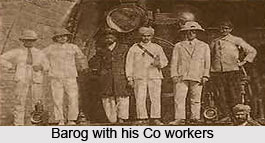 It is said that the British Government in India, fined Barog Re.1 for wasting government money in Barog tunnel. The British engineer, Barog could not digest this humiliation and during a walk along with his pet dog, shot himself in sheer desperation. Barog killed himself near what now is the state government-run Barog Pine Wood Hotel. It is said that his dog upon seeing his master bleeding profusely ran in panic to a village, near the present Barog railway station for help. However, by the time people reached the spot, Barog had breathed his last. The tomb of Barog was erected just near the Barog Tunnel.
After the death of Barog, the chief engineer of British Railway System, H.S. Harrington was given the charge to dig a new tunnel. The new tunnel was constructed about 1 km away from the earlier point with the guidance of Bhalku, a local saint from Jhaja, near Chail. Bhalku possessed natural engineering skills. It was believed that he also helped the British engineers to bore other tunnels on the track. The Viceroy of India at that time presented Bhalku, the local saint a medal and turban which are still treasured by his family. As much as 8.40 lakh rupees were incurred on the Barog tunnel.
The construction of the Barog Tunnel started in July 1900 and completed in September 1903. Many workers, most of them Indians, died during its construction. The trains are running at 25 kilometres per hour. That is it can take 2.5 minutes to cross Barog tunnel.
There is another tunnel of 992-metre-long called Tara Devi (no. 91) tunnel that was built at a cost of Rs.3.04 lakhs by British East India Company. Since a shrine of Tara Devi Tunnel stood on top of the Tara Devi mountain.
Tourism in Barog
Barog is a place where one can see a number of tourist"s importance. Some of the place in Barog is Dagshai which is a one time British cantonment. This is small town surrounded by pine trees and has an old church, Solan, which is nestled on the National Highway - 22, Solan Brewery, which is in existence since 1855 AD. Formerly Dyer Meakin Brewary, it is not only known in the country but also in foreign countries for its products, Jatoli, Karol Goofa, Horticulture and Forestry University, Gaura and many other places.
Visiting Information
The closest airport is at Jubbar-Hatti which is 65 km away. The nearest narrow gauge railhead is at Barog itself. By road Chandigarh is 62 km and Shimla is 55. On of the most attractive station in the Scottish style on the Kalka - Shimla rail route is the rail accessible area in this region.
Visiting Information
The closest airport is at Jubbar-Hatti which is 65 km away. The nearest narrow gauge railhead is at Barog itself. By road Chandigarh is 62 km and Shimla is 55. On of the most attractive station in the Scottish style on the Kalka - Shimla rail route is the rail accessible area in this region.
Recently updated articles in Hill Stations in India
History of Male Mahadeshwara Hills
The history of the Male Mahadeshwara Hills is deeply rooted in legend and devotion, tracing back nearly six centuries. Associated with Saint Mahadeshw...
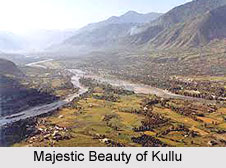
Kullu - Himachal Pradesh
Kullu is located in Kullu District of Himachal Pradesh. Kullu is one of the most beautiful hill stations of the country. Kullu is popularly known as t...
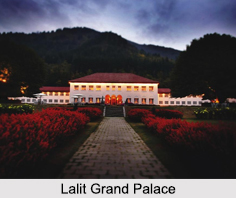
Lalit Grand Palace
Lalit Grand Palace is 5 Star Hotel, which was earlier the summer residence of Maharaja Pratap Singh of Dogra Dynasty.
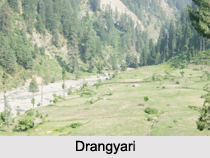
Drangyari
Drangyari is hill station in Kashmir Valley of Jammu and Kashmir which attracts tourists for the natural beauty.
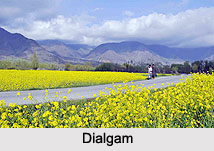
Dialgam
Dialgam is a hill station in Jammu and Kashmir. For its location, this hill station is noted to the tourists as the spot of refreshment.
Related articles in Hill Stations in India
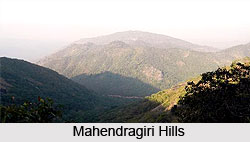
Mahendragiri Hill
Mahendragiri is a place of great scenic beauty. The place is surrounded on three sides by hills and thick growth of wild trees.
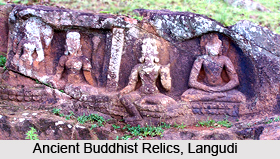
Langudi Hill
Langudi Hill, Odisha is a significant Buddhist archaeological site containing ruins of Pushpagiri University, rock-cut caves, Buddhist stupas and nume...
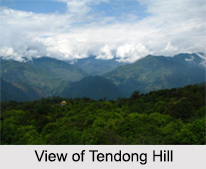
Tendong Hill
Tendong Hill in South Sikkim is located at an altitude of 8530 ft. The hill is deeply revered by the local villagers.
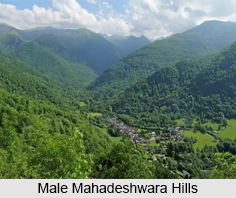
Male Mahadeshwara Hills
The Male Mahadeshwara Hills is one of the popular sites of tourism in the state of Karnataka and is known for the sacred Male Mahadeshwara Hills Templ...
Thakurani Hill
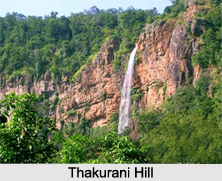
Thakurani Hill is a residual sedimentary hill in Odisha and it is the place of attraction in Keonjhar District.