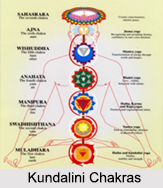
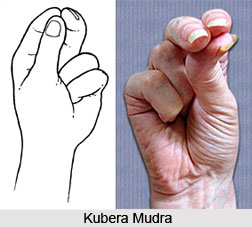
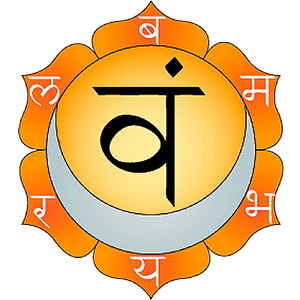
 Exercises for opening the Svadhisthana Chakra or the second chakra involve working with movement in the hips and lower abdomen. Few exercises aim to merely open the chakras while others are aimed at stimulating and moving energy in and through this area.
Meditation in Swadhisthana Chakra
The practitioner must begin his exercise with a large glass of water sitting quietly while drinking it. He needs to feel it pouring down inside himself. He must feel the coolness of it while it hits his stomach.
The next step involves in cleaning oneself. This is a ritual water cleansing and should be both thorough and enjoyable. For this one can use a shower, a bath, a lake, stream, or even a hot tub.
As one soaks himself in water, one must keep saying to himself "Now my hands shall be clean; now my feet shall be clean; now my face shall be clean," etc. as one completes this process he must visualize the water taking away any negativity that he does not want. If one is near a natural environment, he could throw some non-polluting element in the water to signify that negativity. One can also imagine of things that he wishes to get rid off like the habits, tendencies, hurts, or fears.
The practitioner also needs to think of the things he would like to have in his life like new patterns, people or events.
Yemaya is an African Goddess of the sea, the great Mother. "She is envisioned as a large and beautiful woman, radiant and dark; nurturing and devouring; crystal clear and mysteriously deep." She is the nurturer, the consoler, the healer, the maternal one whose belly is as big as all life. Thus as one takes the bath he needs to imagine himself being rocked and nurtured by this great sea-mother. After having completed the bath one must dress in clean clothes and pour a glass of water and drink it silently.
Goddess Pose in Swadhisthana Chakra
Here the practitioner needs to lie flat on his back and relax, especially in the legs, pelvis, and lower back. He must bend his knees, bringing his feet in close to his buttocks. He must then slowly allow his knees to part, allowing the weight of the legs to stretch the inner thighs. One must hold to this position for two minutes or more.
After sometime he must bring his knees together again. This should be done very slowly and smoothly, at all times breathing deeply and relaxing.