
Antaryami avatara is the fifth kind of manifestation of the Supreme Being. Here God is seen as indwelling in a subtle form in the inner recess of the human heart for the purpose of meditation. The tem antaryami also refers to the indwelling spirit, that is the Supreme Being who is immanent in all sentient as well as non-sentient entities in the universe and who as the inner self, controls everything from within (niyamayati), as stated in the Antaryami Brahmana of Brhadaranyaka Upanishad. In this sense, Antaryami means the Supreme Being known as Narayana.
When Vaishnavism speaks of antaryami avatara, it is believed that the Supreme Being as residing in the inner recess of the heart assumes a subtle divine bodily form (vigraha-visista) so as to enable the upashakti to meditate on God. In Yoga system, meditation is twofold- salambana and niralambana. The former type which is the first stage of samadhi needs an object that could be visualised, whereas the latter which is the next higher stage can be done on a formless entity (svarupa). Before proceeding to the higher stage of upasana, it is necessary to meditate on a divine vigraha. It is believed that for such yogis as wish to do the meditation on the divine Being which is present within one`s own heart, God, out of love and compassion, takes on a bodily form (vigraha). This is the purpose and justification for manifestation of God as antaryami.
This theory is admitted on the strength of the scriptural and Smriti texts. The Taittiriya Upanishad refers to the heart as the abode of the Supreme Lord and says that at the centre of it, Paramatman resides in a subtle form. It also gives a physical description of Paramatman as having the complexion of dark blue (nila-megha) lustre similar to the lightning. In a later passage of the same Upanishad, it is stated that the Paramatman resides in the heart which is of the size of a person`s thumb. The implication of all these statements is that Paramatman dwelling in the heart of the upasaka has assumed a spiritual subtle bodily form to enable the yogi to perform the meditation on Him. One of the thirty - two vidyas or upasanas laid down in the Vedanta includes dahara-vidya, which according to Ramanuja is nothing other than the upasana on the Paramatman within one`s heart. If it were pure formless or undifferentiated svarupa of Brahman, which is vibhu (omnipresent), it will not serve the purpose of meditation. To meet this purpose, God assumes a bodily form. This is the significance of antaryami avatara, which is distinct from all the other kinds of manifestations. This fact has been well brought out by the Satvata Samhita which states: `For those individuals who have already reached a stage in the upasana by following the eightfold yoga discipline, and who wish to do further upasana on the Paramatman residing inside the heart, this Paramatman as antaryami becomes the object of meditation.`
Antaryami Avatara
Antaryami Avatara is the fifth incarnation of Lord Vishnu, the Supreme Being. Here, God is seen residing in the depth of the human heart which enables the upashakti to meditate on God.
Recently updated articles in Religion in India
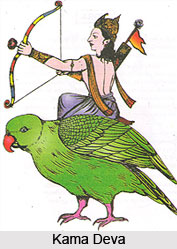
Kusumayudha
Kusumayudha is a name of Kamadeva, the Hindu God of Love. Depicted with a sugarcane bow and flower-tipped arrows, he represents attraction and longing...

Bhoyar Caste
Bhoyar Caste is largely found in the Central Provinces of the country. Traditional occupation of Bhoyars is agriculture. They are good cultivators and...

Chasa Caste
Chasa caste is a prominent agrarian community native to Odisha. Traditionally associated with cultivation and farming, Chasas have historically played...
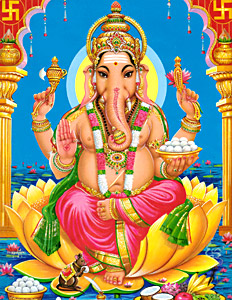
Vigneswara, A Form of Lord Ganesha
Lord Vigneswara is another form of Lord Ganesha or Vinayaka, prominently worshipped as the God of intelligence and good luck in the Indian subcontinen...
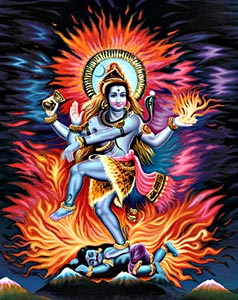
Maheswara
Maheswara, meaning “the Great Lord,” is a revered name of Lord Shiva in Hindu tradition. It represents Shiva’s supreme authority over creation, preser...
Related articles in Religion in India
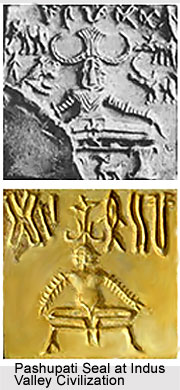
Religion in Indus Valley Civilization
Religion in Indus Valley Civilisation included Hinduism, Buddhism and Jainism. Details about the religion in Indus Valley Civilization have been gathe...
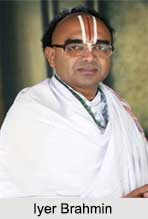
Iyer Brahmin
Iyer Brahmins are originally from Tamil Nadu of South India. They are known for their adherence to Advaita philosophy and Smarta traditions. Tradition...
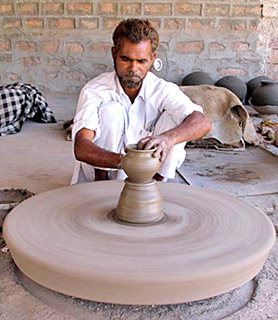
Kumbhakar / Kumhar Caste
Kumbhakar or Kumhar caste is a traditional artisan community in India known for pottery making. Derived from Sanskrit word Kumbhakar, meaning potter,...

Gujjars in Mughal Era
Gujjars in the Mughal era enjoyed great power. Further their power increased with the decline of Aurangzeb, Mughal emperor.
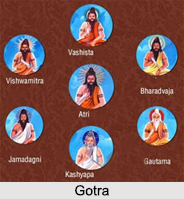
Gotra in Hinduism
In Hinduism, gotra refers to a lineage system tracing descent from ancient sages, primarily through the paternal line. Originating from Vedic traditio...