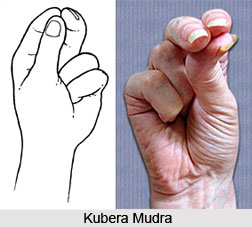
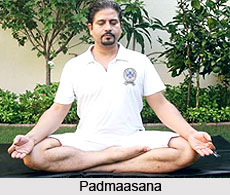
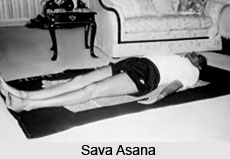
 Shavasana and Makarasana are two important relaxative asanas, which bring about relaxation of the body and mind. This is mentioned in the Hatha Yoga Pradipika and it has also been added that these asanas are practiced in supine and prone position of the body respectively. This is not only a resting posture or sleeping condition but a conscious relaxation. It is also not an idle or a lazy state of mind. On the contrary Shavasana makes the individual more fresh and energetic. It overcomes physical as well as the mental fatigue or exertion. Relaxation in Shavasana renders the mind more calm and tranquil.
They eliminate the physical as well as mental tensions and work at the level of chitta (subtle aspect of consciousness). This process of tranquilization further helps in pranayama, dhyana, etc., as it contributes in increasing one`s concentration.
Mental tensions are often reflected on the nerves and muscles, making them tense. Muscles under such tension remain contracted. They obstruct the normal blood flow and therefore get exhausted very easily. The tense nervous system cannot coordinate various functions of the body and thus a disharmony is produced. Long-term derailment in the vital functions would lead to the `disease` condition.
The yogic relaxation aims at the release of tensions working at the level of super consciousness (chitta). A complete relaxation of the body achieved in Shavasana The name Shavasana indicates the total relaxation of the nervous system, although it`s literal translation is the `corpse pose`. It is also mentioned as Mrutasana in Gherand Samhita.
Relaxative Asanas provide the most natural horizontal and comfortable position of the body that contributes to the physical as well as mental relaxation at the first instance. All the joints are consciously loosen and therefore the tension and tremor in their muscles is reduced. Moreover, horizontal and relaxed position of the body facilitates efficient and easy blood circulation. Blood pressure and heart rate are reduced and maintained at a minimal level as there is no need to circulate the blood with force. Now the flexor and extensor muscles need not work against the gravity. There is no need to hold the body against gravity.
 As a result these big muscles relax and the metabolic rate is reduced. Breathing becomes slower, slightly deeper, rhythmic and mostly abdominal in nature, as one progresses in relaxation. In Makarasana, the abdomen cannot move since it is fixed to the ground and hence one can watch the up and down movement of the lower part of the lumbar and upper hip portion during inhalation and exhalation respectively.
During abdominal breathing the diaphragm also moves slowly and rhythmically which has got a soothing effect on the higher brain centers. One immediately feels relaxed. The abdominal breathing gives rhythmic and gentle massage to the abdominal organs, removing their congestion if any. The abdominal muscles are toned and the blood circulation in the pelvic and abdominal region is increased.
In the Relaxative Asanas, one experiences a reduction in the number of thoughts entering in the mind. One can easily then develop an attitude of a witness towards one`s own thoughts. In this way, instead of getting involved in any thought process, one observes or watches them, as a third person, coming in and going out of the body-mind complex. As one forgets about the rest of the body, the whole body relaxes completely. The muscle tone is extremely reduced. This resolves the tensions in the nervous system. The mind becomes quieted and one feels very peaceful. One gets gradual training for withdrawal of the mind from all the sensory as well as motor organs (functions) and also for focusing on the thoughts as an observer or seer. In this condition analytical activities of the cerebral cortex are decreased to a great extent.
Effects of Relaxative Asanas:
The Relaxative Asanas have been found effective and most suitable in the treatment of hypertension and insomnia since it removes psychological tensions, reduces anxiety, brings about tranquility, rejuvenates the neural functions and establishes balance in all the functions of the body. It gives rise to the sense of well-being and a mental poise. It is highly effective for patients suffering from high blood pressure. It also acts as a supportive treatment in various diseases like diabetes, asthma, hyperacidity, arthritis, etc. In short it is the most effective therapeutic measure against stress disorders.
According to a scientific study one can relax and restore oneself to a normal resting condition in just 8 minutes if they practice Shavasana after running on treadmill for five minutes.