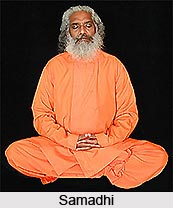
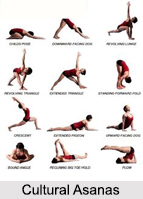
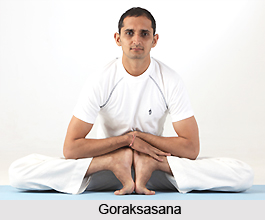
 Goraksasana is an important meditative asana practiced for various mental and health benefits. This cultural asana is named after Gorakshanath, a legendary Nath yogi credited with founding the Hatha Yogic tradition along with his guru, Matsyendranath. It has been found to be effective in correcting nocturnal seminal discharges.
Yoga Texts and Goraksasana
Goraksasana is a fairly well known asana, first mentioned in the Hatha Yoga Pradipika (1400 AD), although the text merely mentions Goraksasana as an alternate name for Bhadrasana. The first text to describe it as an independent asana is the Hatha Ratnavali (1600 AD), wherein it is included in the list of 84 classic yoga asanas taught by Lord Shiva. It was subsequently mentioned in the Gheranda Samhita and other significant Asana compendia.
Steps of Goraksasana
The steps of this asana are simple to perform but in the beginning it is advisable to practice under the patronage of some expert.
•Firstly, sit with the legs outstretched in front.
•Then, bend the knees, hold the feet and place the soles together.
•Draw the heels up to the perineum.
•Raise the heels, the balls of the feet touching on the floor. With the hands support lever the body forward until the feet become vertical.
•Balance in such a way that the knees remain on the floor.
•Cross the wrists in front of the navel. Hold the left heel with the right hand and the right heel with the left hand.
•Now, straighten the spine and face forward. Hold this posture for as long as comfortable.
•Goraksasana may be practiced both in the morning and evening. Five minutes at each sitting is enough, but in the evening the duration of practice may be increased to ten minutes.
Benefits of Goraksasana
•This posture, by working upon the connective muscles of the groin and thigh, indirectly stretches both the superficial as well as the deeper urogenitial muscles, aids elasticity of the respective muscular fibres and increases the circulation of blood.
•This asana prevents development of hernia and relieves sciatica.
•It strengthens leg muscles and tones up the reproductive organs.
•Goraksasana also improves concentration and helps relax the mind.
Caution about Goraksasana
People with spinal cord deformities, disabilities of hip joints should avoid Goraksasana.