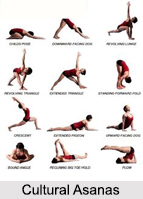
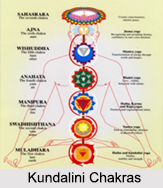
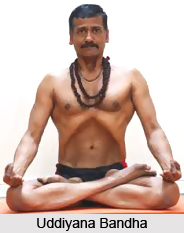
 Uddiyana Bandha is a yoga bandha that has been described and mentioned in several yoga manuals. It is a very potent breathing exercise and is occasionally classified as cultural asana. The term "Uddiyana" means upward and "Bandha" means bonding. Uddiyana Bandha is specified among the three bandhas of Maha Bandha. Uddiyana Bandha is said to activate the Manipura Chakra and channels the Pranic energy upwards.
The "Gheranda Samhita" states that the Uddiyana Bandha is one of the best and the complete practice of this asana enables the yogi`s emancipation. According to "Hatha Yoga Pradipika", regular practice of Uddiyana Bandha helps in retaining one"s youth.
Practice of Uddiyana Bandha
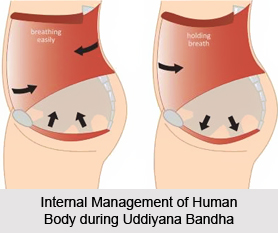
Uddiyana Bandha is practiced by pulling the abdomen inwards after exhalation and holding the breath outside. The following are the steps to practice Uddiyana Bandha:
1. One should stand erect and spread out the legs.
2. The distance between two legs should be around 15" to 18".
3. One should lean forward, place hands on the thighs or knees and then exhale completely, holding the breath out.
4. One should expand the chest so that the abdomen would be drawn in and the practitioner can feel the upper portion of the abdomen being pulled towards the ribs.
5. After pulling it completely, the posture has to be maintained for 5-10-15-20 seconds (according to the practitioner"s capacity) and then returned to the earlier position.
6. Next, the person should slowly relax the abdomen and stand erect after inhalation.
 Effects of Uddiyana Bandha
There are several benefits of Uddiyana Bandha asana. It removes constipation, invigorates digestion, pressurises the navel plexus and helps to make retention of breath stable. This asana strengthens the abdominal muscles and diaphragm and massages abdominal viscera, the solar plexus and the heart and lungs. The Uddiyana Bandha increases gastric fire; improves digestion, assimilation and elimination, and purifies the digestive tract of toxins. It also stimulates blood circulation in the abdomen and blood flow to the brain. Practicing this asana stimulates and lifts the energy of the lower belly (apana vayu), to unite it with the energies localized in the navel (samana vayu) and heart (prana vayu).
Precautions in Practice of Uddiyana Bandha
During practising Uddiyana Bandha, the waist should not lean much while bending forward. The legs should not be bent more at the knees and the abdomen should be kept tight and relaxed. The person should exhale fully and this asana should be practised in an empty stomach. Persons suffering from stomach ailments, heart troubles or problematic blood circulation should not attempt to perform the bandha. Persons suffering from diseases like hernia too should not perform this bandha.