|
|
|
| Free E-magazine |
| Subscribe to our Free E-Magazine on Indian Religions. |
| Learn More |
|
|
|
|
|
|
|
Latest Updates on Indian Religions |
|
| |
|
| - Bahurupa, Rudra
Bahurupa is one of the eleven Rudras or lords of the three worlds.
|
|
| |
|
|
Popular Topics on Indian Religions |
| Indian Religions |
|
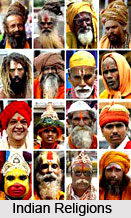
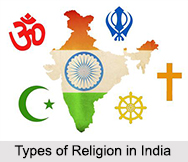
The English word religion is derived from the word "Religioun". It may have been originally derived from the Latin word "Religo" which means "good faith", "ritual" and other similar meanings. Indian religion as the name suggests, is a category of religion that originated in the Indian subcontinent.Religions that are originated in India are Buddhism, Hindusim, Jainism and Sikhism. These Indian religions share similarities in beliefs, methods of worship, and practices due to their common history of origin, and some mutual influences.
|
|
| Indian Customs and Rituals |
|
India has a diverse culture of many faiths and religions, which makes it the most unique country in the world. Every Indian religion has its own customs and traditions, which traverse the boundary of religion, cast and creed and India is no different! The Indian customs and rituals attract many tourists to this country. Right from the birth to death, there is hardly any occasion that does not have an elaborate ceremony.
|
|
| Gods of India |
|
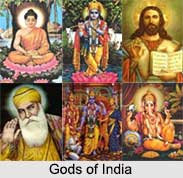
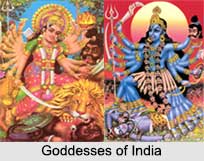
India is known as a land of Gods and goddessess. In indian Religion Gods and goddesses are revered and worshipped. Hinduism as a religion is called as `apauruseya` which means of impersonal origin. Hindu Gods are also known as such, they are eternal deities appearing to be sovereign and different. Some of the famous Gods and goddessess in Indian religion ars Brahma, Vishnu, Maheshwear, Indra, Varuna, Ganesh Jagannath, etc.
|
|
| Indian religion; Namkaran |
|
In Indian Religion, the birth of a child is always considered auspicious and every child has got a different identity and hence, it is required to provide a name to the child. The naming ceremony of the child marks the beginning of the journey of his life. The Namkaran ceremony means just that and it is the first real ceremony held for the newborn child by the Hindus. "Nama" literally means name and "Karana" means to make, to effect.
|
|
|
|
|
|
| Incarnations of Vishnu |
|
The most dominant religion in India is Hinduism.In Indian religion , Lord Vishnu is worshiped primarily as Avatar, or incarnations.These are various forms he assumed while engaged in the task of preserving the universe and destroying the forces of darkness.The ten most famous incarnations of Vishnu are collectively known as the Dasavatara . These avatars are Matsya ,Kurma,Varaha, Narasimha, Vamana, Parashurama, Rama,
Krishna, Buddha and Kalki. |
|
| Vastu Shastra |
|
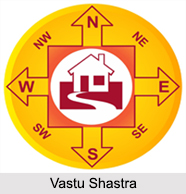
Vastu is the ancient Indian tradition of architecture. The word `Vastu` refers to a shelter, either for the self or deity. Vaastu Shastra means the science (shastra) of construction. Vastu Shastra helps in making a congenial setting or a place to live and work in a most scientific way taking advantage of the benefits bestowed by nature, its elements and energy fields for enhanced wealth, health, prosperity and happiness. Vastu Shastra unifies the science, art and astrology. In Indian religion Vastu plays an important role. |
|
|
|
| Days of the Week |
|
|
According to Indian Religion and Hindu Shashtra and belief all weekdays have distinct significance. The weekdays are named as Somvar (Monday), Mangalvar (Tuesday), Budhvar (Wednesday), Vrihaspativar (Thursday), Shukravar (Friday), Shanivar (Saturday) and Ravivar (Sunday).Each weekday is associated with a specific god and ruled by a specific planet. The days also have various color significance and fasting are observed on those days for special purpose. |
|
|
|
|