| Ancient History of India |
|
|
|

India, a meeting ground between the East and the west, was an invader`s paradise. At the same time its natural isolation and appealing religious doctrines allowed it to adapt to and absorb many of the peoples who penetrated its mountain passes. No matter how many Greeks, Persians, ,Chinese nomads, Arabs, Portuguese, British and other invaders had their way with the land, local Hindu kingdoms invariably survived their ravage, living out their own sagas of conquest and collapse. Ancient History of India witnesses rule of major kingdoms, like maurys, guptas, vardhans, etc.
|
|
| |
| Cities of Indus valley |
|
|
|

It is believed that History of India begins with Indus valley civilization. Indus valley civilization was spread over an area of some 1,260,000 km, comprising the whole of modern day Pakistan and parts of modern-day India and Afghanistan. To date, over 1,052 cities and settlements have been found, mainly in the banks of the Ghaggar-Hakra River and its tributaries. The major urban centers of the Indus valley civilizations were Harappa, Mohenjo-daro, Lothal, Dholavira, Ganweriwala, Kalibanga, Banwalli etc.
|
|
| |
| Vedic Civilization |
|
|
|
Vedic Period is one of the important period in the History of India. Vedic civilization is one of the earliest civilizations to make a head start in India. It is referred to the period when sacred Vedic Sanskrit texts like Vedas were composed Vedic being synonymous with Aryans and Hinduism, which are otherwise known as religious and spiritual thought, has evolved from the Vedas. It made its way along the river Saraswati, centered on the Indo-Gangetic plain, the regions that we presently better know as Punjab and Haryana in India. Vedic period is known to be into the 2nd and 1st millennia BC.
|
|
| |
| Sepoy Mutiny |
|
|
|
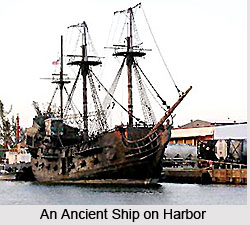
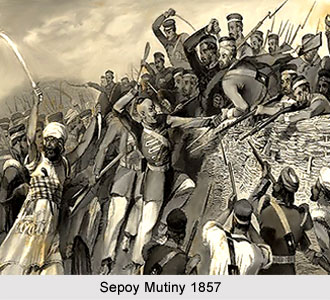
History of India wittnessed a number of revolts , wars and battles. Among them the Sepoy Mutiny was the first Indian war of Independence. The ship of independence is sailed by the mutiny of its sailors, rocking to and fro with the waves obstructing it. India sought such independence but like the ant who took many attempts to climb the wall, India took many movements to reach the final goal of free India. India came under complete control of British in the year 1857 and the constant urge and spirit of freedom started to in built itself in the natives of India.
|
|
| |
|
|
| Indian National Army |
|
|
|
The Indian National Army was formed during World War II by Indian nationalists and prisoners of war, in the course of service in Indian Army who were looking forward to win India`s independence from British empire. Supported by the Japanese 15th army and led by Subhash Chandra Bose, the INA brought up its own government and initiated an attack against British in India.History of India witnessed the strong fight of the INA agnist the British.
|
|
| |
|
|
| Shimla Agreement |
|
|
|

Get the shimal agreement in the history of India on your fingertips in this section.Simla Agreement on Bilateral Relations between India and Pakistan signed by Prime Minister Indira Gandhi, and President of Pakistan, Z. A. Bhutto, in Simla.The agreement followed from the war between the two nations in the previous year that had led to the independence of East Pakistan as Bangladesh. The agreement laid down the principles that should govern their future relations.
|
|
| |
| Slave Dynasty |
|
|
|
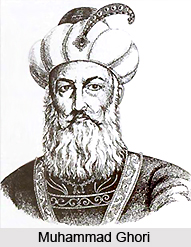
History of india witnessed a number of attacks from foreign kings and emperors. They fought and conquered the indian territory and ruled the country. The Muslim religion was introduced in India with the establishment of Slave rule. Delhi became the first capital under Turkish rule. Muhammad of Ghur used to raid in India and eventually conquered Delhi. Qutb-ud-din Aybak was the first ruler of this slave dynasty.
|
|
| |
|