Indianetzone: Largest Free Encyclopedia of India with thousand of articles Ayurveda


in  
Art & Culture | Entertainment | Health | Reference | Sports | Society | Travel
RSS Feeds  | Free E-magazine
Ayurveda : Ayurved in India l Ayurveda l Ayurvedic Pharmas in India l Ayurvedic Herbs l Kerala Ayurveda l History of Ayurveda l Development of Ayurveda l Diseases in Ayurveda l Ayurvedic Hospitals & Practitioners l Physiology of Ayurved l Panchakarma l Keraliya Pancha Karma l Ayurvedic Tastes l Malas in Ayurveda l Elements of Ayurveda l Branches of Ayurveda l Ayurveda Medication l Seven dhatus in Ayurveda l Concepts of Ayurveda l Treatment in Ayurveda l Ayurvedic Diet l Indian Ayurvedic Spas l Tridosha System in Ayurveda l Origin of Ayurveda l Astrogenetics l Panchagavya l Tastes in Ayurveda l Ayurvedic Massage l Ayurvedic Skin Care l Asthanga Ayurveda l Panchabhuta in Ayurveda l Ayurvedic Recipes l Gurukul System of Ayurveda l Ayurvedic Practitioners in India l Ayurvedic Hospitals in India l Principles Of Ayurveda
Ayurveda

The science of life- ayurveda is one of the traditional medicines in India. It is the art of healthy living which enables one to create harmony in daily life whilst applying self knowledge and self care. The ayurvedic approach to life involves listening to and addressing the needs of the body, recognizing the emotional state and above all deepening the connection with the essential self. The primary emphasis of Ayurveda is on ways to promote health rather than just to treat the ailment

Latest Articles : Administration of BastiTypes of Basti TherapyAdministration of VirechanaAdministration of NasyaNasya
Ayurveda
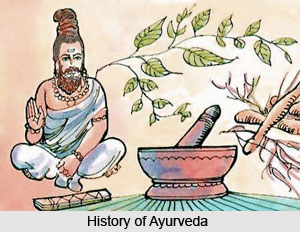
Widely regarded as the oldest form of health care in the world, Ayurveda is the ancient Indian medical science, the origin of which can be traced back to more than 5000 years. The source of Ayurveda are the vedas .Ayurveda is a great gift to the mankind by the ancient Indian medical scholars. It is based on the principles of Pancha Mahabhuta .All the Ayurvedic formulations are plant based and every medicinal plant contains natural chemicals which are easily decomposed by the body. This section provides information on ayurved, ayurved science and ayurveda medical science, history, Keral Ayurveda, herbal Ayurved, ayurvedic traetments, etc.

 
Ayurved in India
India is known worldwide for its Ayurvedic treatment. Ayurveda is refered as a holistic system of medicine and health native to ancient India. Ayurveda has not restricted itself as the path, which treats diseases but being the science of life has, covered all the aspects necessary to maintain health and to restore it when suffering with a disease. Indian Ayurved is a ultimate source of treatment, time and scientific approaches will be able to prove it. There are certain rules and regulations of Ayurveda, which are nothing but guidelines, which are to be followed to remain fit, refrain from diseases and lead a healthy life. Ayurveda is the traditional natural healing system of India.

 
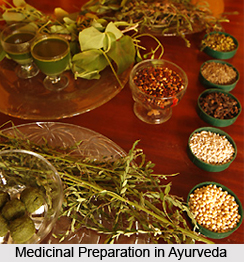
Indian Ayurvedic Herbs
Ayurveda is a system of medicine that combines natural therapies with a personalized approach to the treatment of disease. This form of healthcare focuses equally on the wellness of the body, mind, and spirit. Ayurvedic physicians in India ascertain the overall health of people by looking at their unique strengths and susceptibilities and by identifying their metabolic type (vata, pitta, or kapha).Indian Ayurvedic Herbs harbors the concept of Total Quality Medicine right from ancient times. Its detailed planning is reflected in the various terms that are used for treatment in Ayurveda..

 
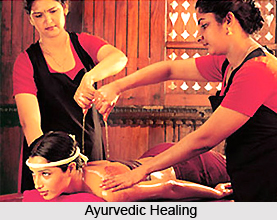
Ayurvedic Massage
In Ayurveda massage is a form of treatment for various age related and other common disorders. Ayurvedic massage works on both the physical and mental levels, transmitting a life-giving energy that assists all systems of the body . Regular massage in Ayurveda is the key to good health, and is necessary both for prevention and cure of diseases. Regular Ayurvedic massage is very beneficial for maintaining overall health and well-being. With regular Ayurveda massage, body flexibility increases and fat reduces .


Kerala Ayurveda
Ayurveda originated in India and is best flourishing in Kerala. Kerala is the only State in India which practises Ayurveda with absolute dedication. Kerala have its own schools preaching this age old science, but it also provides practitioners with the potion that makes this science so effective: Kerala`s own herbal massage oils. The warm, humid tropical climate in Kerala is conducive for the growth of certain herbs that possess immense healing potential when used with the right techniques in Ayurveda.

 
Tridosha System in Ayurveda
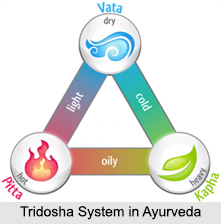
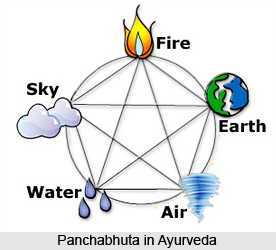
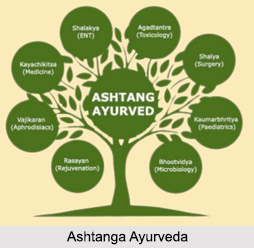
According to Ashtang Ayurveda, the body is constituted of five elements - ether, air, fire, water and earth. These elements give rise to the three bodily humors or the three doshas - Vata, pitta and kapha. The mainstay of Ayurveda is built on the se tridoshas. Every living thing can be characterized by these three doshas, or elements, and they can be distinguished by their attributes. By noticing what attributes are predominant one can determine the dosha in Ayurvedic treatments.

 
Diagnosis & Treatment in Ayurveda
In ayurveda, diagnosis is always done of the patient as a whole. The physician takes a careful note of the patient`s internal physiological characteristics and mental disposition. The Ayurvedic Physician studies all factors of the affected bodily tissues, humours, the place at which the disease is located, patients resistance and vitality, his daily routine, dietary habits, the importance of clinical conditions, condition of digestion and details of personal, social, economic and environmental situation of the patient. The treatment of disease in Ayurveda can be classified as 1. Shodhana therapy
2. Shamana therapy
3. Pathya Vyavastha
4. Nidan Parivarjan
5. Satvavajaya
6. Rasayana therapy


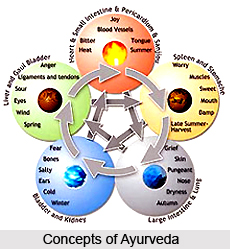
Concepts and Principles of Ayurveda
What is naturally healthy living the principles of Ayurveda are an invaluable link to know about Ayurveda. According to ayurvedic philosophy an individual bundle of `spirit`, desirious of expressing itself, uses subjective consciousness or Satwa to manifest sense organs and a mind. Spirit and mind then project themselves into a physical body, created from the five (Pancha) great (maha) eternal elements (bhutas) - together called the Panchamahabhutas -, which arise from Tamas. The body becoming the minds vehicle, its physical instrument for intellectual satisfaction.

 
Ayurveda Sitemap
Contact Us   |   RSS Feeds
Copyright © 2008 Jupiter Infomedia Pvt. Ltd. All rights reserved including the right to reproduce the contents in whole or in part in any form or medium without the express written permission of Jupiter Infomedia Pvt. Ltd.