
Traditional Dresses of Meghalaya show the ethnicity of the tribes namely the Garo tribe, Khasi and the Jaintias. Nestled in the peaceful hills of the north-eastern part of India, the beautiful state of Meghalaya houses these three famous hilly tribes of India. It is interesting to note that the Garos are the most skilled weavers of the region. Probably, every family earns their livelihood through weaving. The popular traditional costume for women, called “Jainsenâ€, is an unstitched garment wrapped around to cover the body. It is woven from mulberry silk cultivated in the local region. The crowning glory of the costume of Meghalaya is the Endi silk shawl.
Traditional Dress for Women in Meghalaya
The weaver-ace Garos cater to different forms of costume, in keeping with the air of the ambiance they are residing in. In the remote areas of Garo hills` villages, the women drape eking, a short cloth around the waist. The Garo women go for a longer version of cotton attire in the crowded zones. A Garo woman dons a blouse and wears a Lungi like the mantle of unstitched cloth called Dakmanda, by fastening it around the waist. The “Dakmanda†is an example of hand-woven cotton fabric. Its specialty is the six to ten-inch broad borders embellished with attractive motifs or floral patterns.
The element of the tradition is much alive in the costume of the Khasi women. It entails a Jainsen, concealing till the ankles, which is topped off by a blouse. Above these garments, women tie the edges of “tap-moh khliehâ€, a cotton shawl, round her neck or pins at the shoulders, to serve somewhat like an apron. During occasions, “Ka Jainsem Dharaâ€, a long piece of Assam Muga silk, is added to this attire, to assume a radiant appearance. But the base-material for these costumes is mill-manufactured, as the Kashis is not so much attached with weaving today.
Another strip of woolen cloth called Jainkup is used by senior women. Jainkup is not so much in vogue among the younger generation. Khasi women have the affordability to deck themselves in ornaments of pure gold and silver, made by local jewelry-smiths. The costume of the Jaintia women in Meghalaya is a little different from the other groups.
A Jaintia woman envelops her head with a cloth-piece with checks called "Kyrshah", at the times of harvest-work in the field. She covers herself from the shoulders to the ankles, with a velvet blouse, along with a sarong called "Though Khyrwang" wrapped around her waist. She also ties around her shoulders an Assam Muga silk cloth, flowing down to the ankles. There exists a practice among Jaintia men and women, to present themselves in gaudy, resplendent costumes, on festivals and celebrations.
Dressing without the embellishments of ornaments is lustreless for Jaintia women. They adorn themselves with earrings and other ornaments of gold and silver. It is a custom to dress in head ornaments, like, a silver circlet worn around the head as a forehead -decoration. Both the Khasis and the Jayantis, flaunt themselves in a pure gold pendant known as “Kynjri Ksiarâ€.
Traditional Dress for Men in Meghalaya
The Garo men put in a loincloth as a traditional dress. The traditional costume of the Khasi man in Meghalaya is unstitched lower apparel, akin to Dhoti, completed by a jacket and headgear or turban. However, in recent times, men display themselves in traditional garments only on social festivals and ceremonies, to keep the flame of tradition, glowing. The costume of the male members of the Jaintia tribe bears similarities with that of the Khasi men.
Western concept of dressing has entered the realms of costume-design in Meghalaya. However, the elegance and grace inherent to the ethnic costumes of this state complement the scenic beauty of the picturesque landscape of Meghalaya.
Traditional Dresses of Meghalaya
The authentic and traditional dresses of Meghalaya reflect the cultural and social life of the tribal population of the state. The Khasi, Jaintias and Garos are the predominant tribes of Meghalaya region.
Recently updated articles in Costumes in India
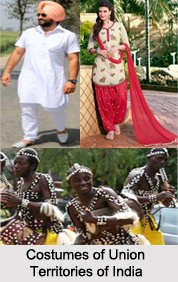
Costumes of Union Territories of India
Costumes of the Union Territories are as different as their culture. These eight union territories are equally vibrant in their dressing as compared t...
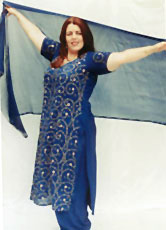
Costumes of Delhi
Costumes of Delhi embody the rich cultural heritage of the city while showcasing a unique fusion of traditional elements and modern trends. From the p...
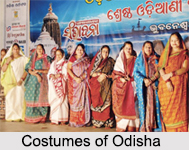
Traditional Dresses of Odisha
Traditional Dresses of Odisha reflects the unique culture of the state. Odisha has an ancient culture and popular for classical dance. It is also home...
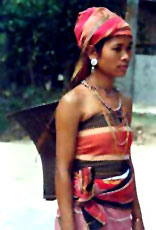
Traditional Dresses of Tripura
Traditional Dresses of Tripura have their own traditional ethnicity. The traditional costumes of Tripura, such as Risa, Rignai, and Rikutu Gamcha, ref...
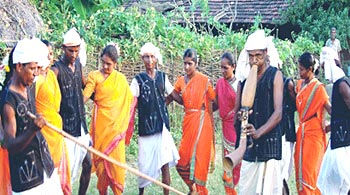
Traditional Dresses of Dadra and Nagar Haveli
The traditional dresses of Dadra and Nagar Haveli reflect the region’s tribal heritage. Women often wear saris, chaniyas (skirts) with blouses, or dra...
Related articles in Costumes in India
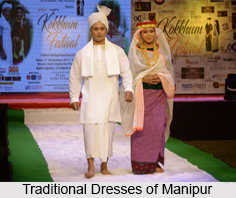
Traditional Dresses of Manipur
Traditional Dresses of Manipur are simple and easy to wear. The patterns and designs on the costumes are very unique and colourful. Manipuris are sett...
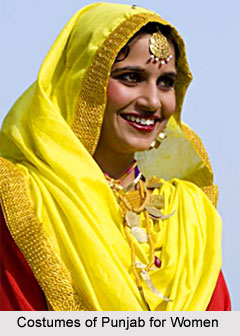
Costumes of Punjab
Costumes of Punjab breathe vibrancy. Tradition marks the dress of the women:; colourful Salwar Kameez while Kurta-Pyjama or Lungi is worn by men.
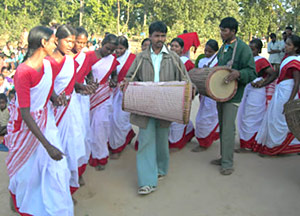
Traditional Dresses of Jharkhand
Traditional Dresses of Jharkhand embody the simplicity and elegance of its inhabitants. From the one-piece Bhagwan worn by men to the sarees and Tussa...
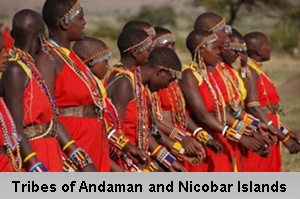
Costumes of Andaman and Nicobar Islands
The costumes of Andaman and Nicobar Islands showcase a fascinating blend of indigenous tribal traditions and influences from modern settlers. While th...
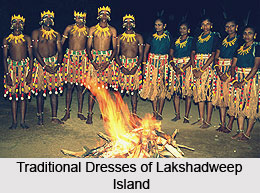
Costumes of Lakshadweep
Costumes of Lakshadweep reflect a blend of tradition and cultural identity. Women typically wear the Kachi with a Thattam and embroidered jacket, whil...